
Bai Ding Ceramics Studio 白丁瓷坊
Contemporary Jian Ware Studio • Jianyang, Fujian
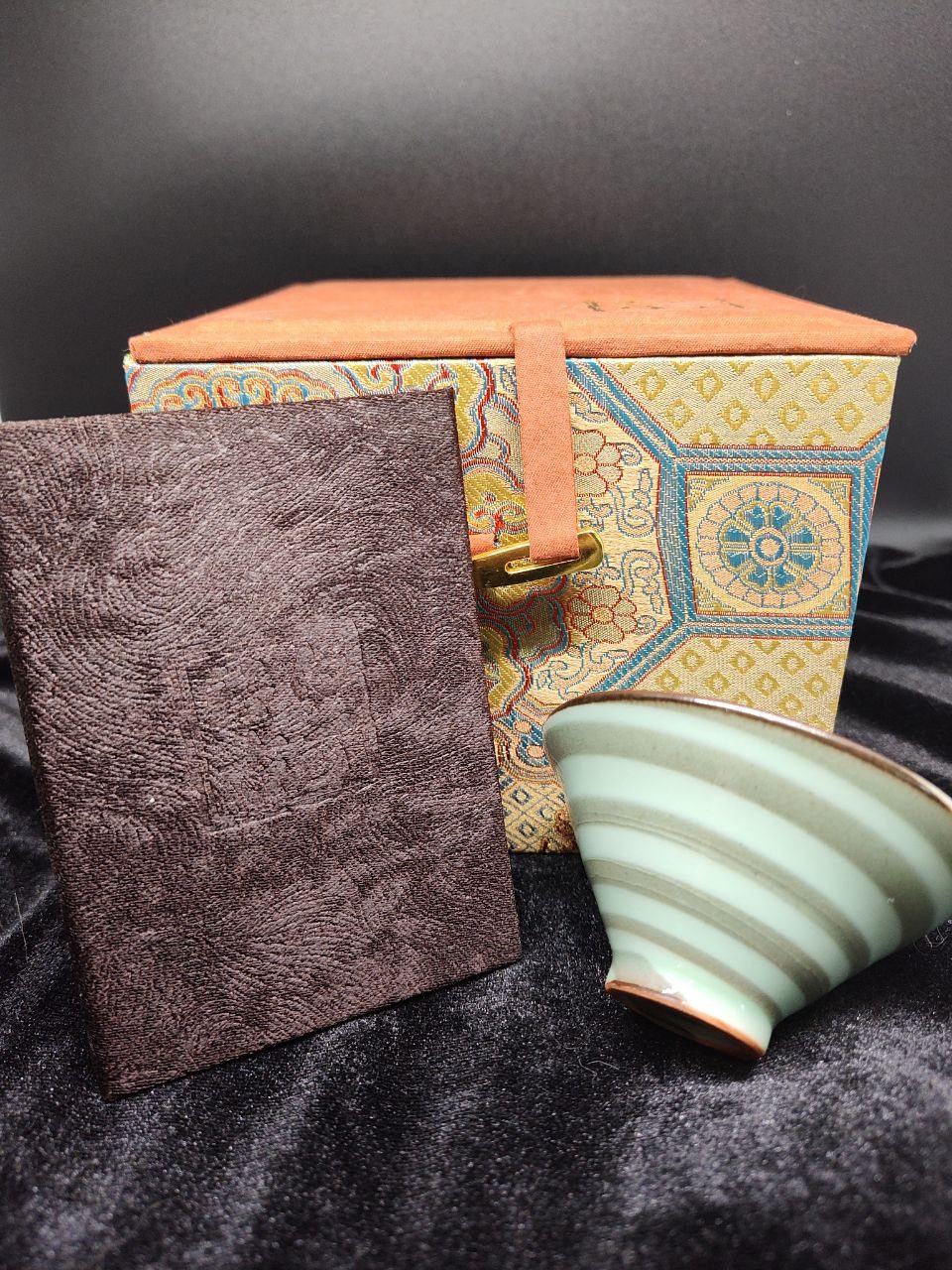
Quick Facts
About Bai Ding Ceramics Studio
Bai Ding Ceramics Studio, 白丁瓷坊, is a contemporary Jian ware workshop associated with Jianyang, Fujian Province, the historic center of Jian ware production.
Studio material describes Bai Ding as having been established in 2015 with the goal of combining traditional Jian ceramic craftsmanship with modern aesthetics. The workshop describes its materials as including locally sourced mineral ingredients and red clay used in the production of black-glazed teaware.
The name Bai Ding is best understood as the identity of the studio rather than the personal name of one individual artist. This distinction is important for collectors because individual craftspeople can be associated with works carrying the Bai Ding studio name.
Studio Philosophy
The original Bai Ding material emphasizes learning, experimentation and the continuation of traditional craft through contemporary design.
“The studio stays true to its original aspirations: to continuously learn and innovate, letting seasoned hands give rise to fresh inspiration.”
This philosophy is reflected in Bai Ding’s willingness to work beyond the familiar Jian tea-bowl silhouette. Studio pieces can include unusual feet, pulled or flared forms, carving, metallic decoration and modern vessel shapes while retaining the dark glazes and iron-rich ceramic character associated with Jian ware.
Associated Craftsmen
Huang Xiangdi 黄祥迪
Huang Xiangdi is directly connected with Bai Ding in Chinese collector material. One documented example is identified as 白丁瓷坊黄祥迪油滴茶盏, describing a Huang Xiangdi oil-spot tea bowl from Bai Ding Ceramics Studio.
This helps explain how the Bai Ding name functions. A piece may belong to the Bai Ding workshop while also being attributable to a particular craftsman.
Workshop & Techniques
Bai Ding’s original studio description emphasizes a mixture of traditional ceramic practice and more experimental contemporary techniques.
Techniques named in that material include 托底烧 and 护烧, along with carving and decorative work using copper and silver.
托底烧 · Tuō Dǐ Shāo
托底烧 refers to a supported firing approach that can allow glaze to extend farther toward the lower portion of the vessel than on a conventionally fired Jian bowl. It is particularly suited to contemporary forms in which the lower body and foot are part of the finished visual design.
These modern firing methods should not automatically be confused with traditional dragon-kiln wood firing. For more information about traditional long kilns and wood firing, see the Dragon Kiln reference page .
Glazes & Named Series
Bai Ding’s studio material identifies several named glaze or design series. Public material from the studio’s 白丁造器 account also uses these names in connection with Bai Ding pieces.
银丝水芽 · Silver Thread Water Bud
银丝水芽 is one of the names most clearly associated with Bai Ding. Studio material includes pieces identified with the 银丝水芽 name and the 白丁瓷坊 workshop.
The name also carries a historical reference. 银丝水芽 was used in connection with exceptionally fine tea buds in Song dynasty tribute-tea culture. Historical descriptions evoke fine, pale bud material resembling shining silver threads.
For this reason, Silver Thread Water Bud is a more useful English rendering than the earlier “Silver Thread Water Sprout.”
忆江南 · Memory of Jiangnan
Bai Ding studio material also identifies 忆江南 as a signature glaze or series. The poetic name can be translated as Memory of Jiangnan or Remembering Jiangnan.
Forms & Decorative Style
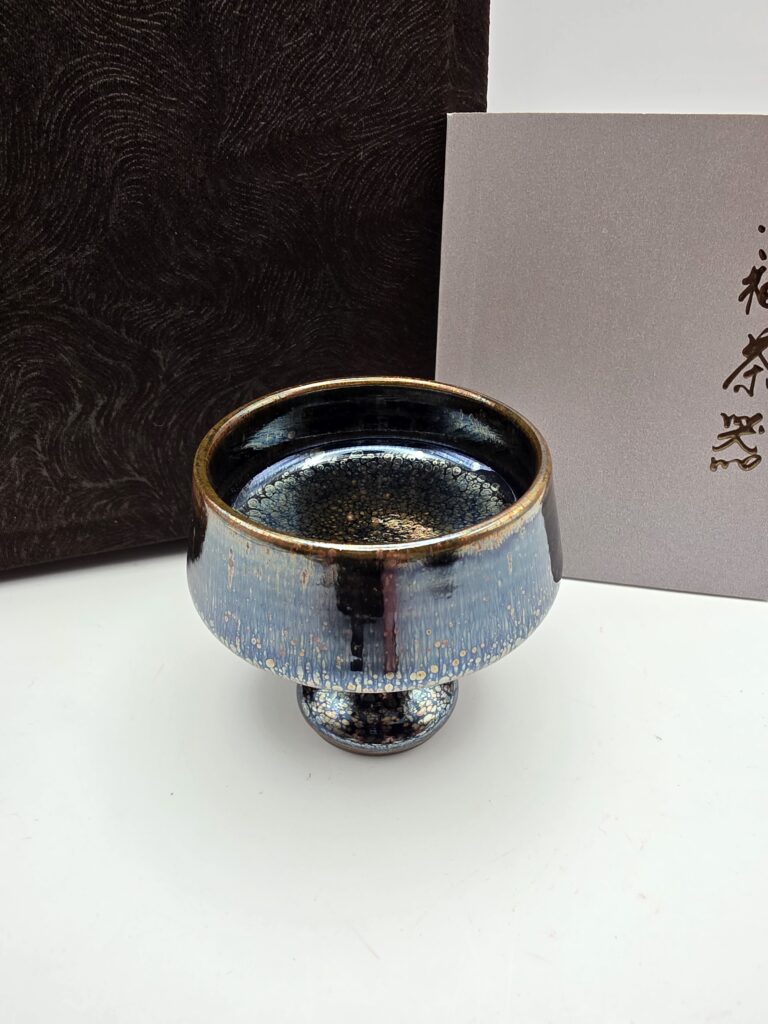
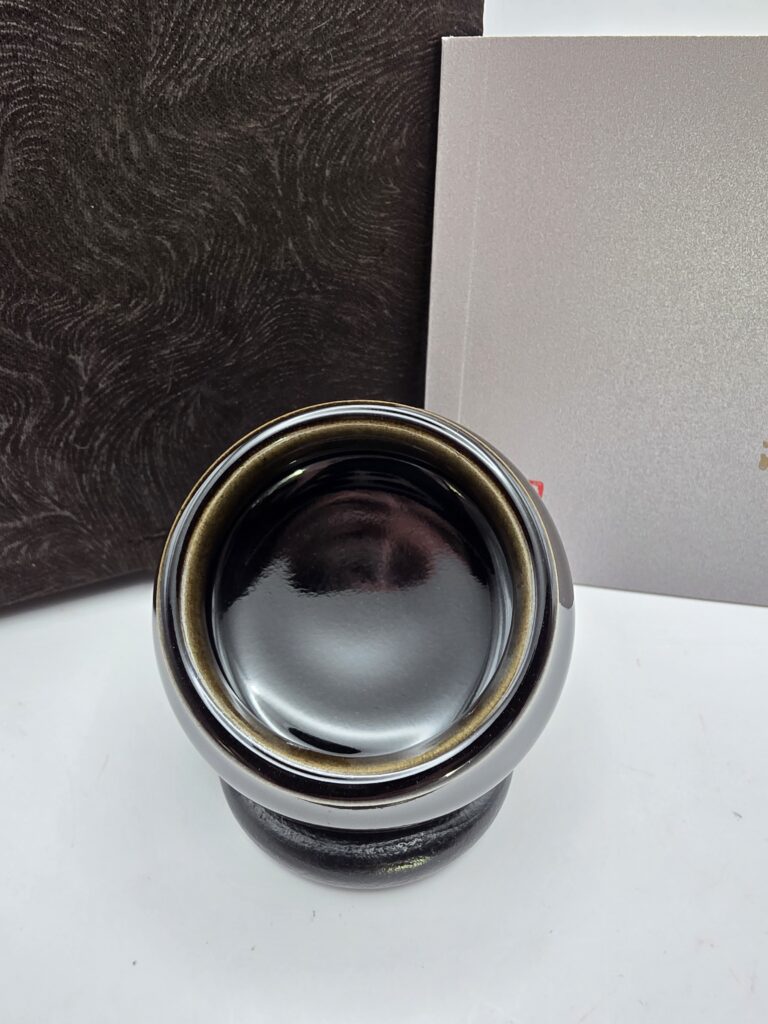
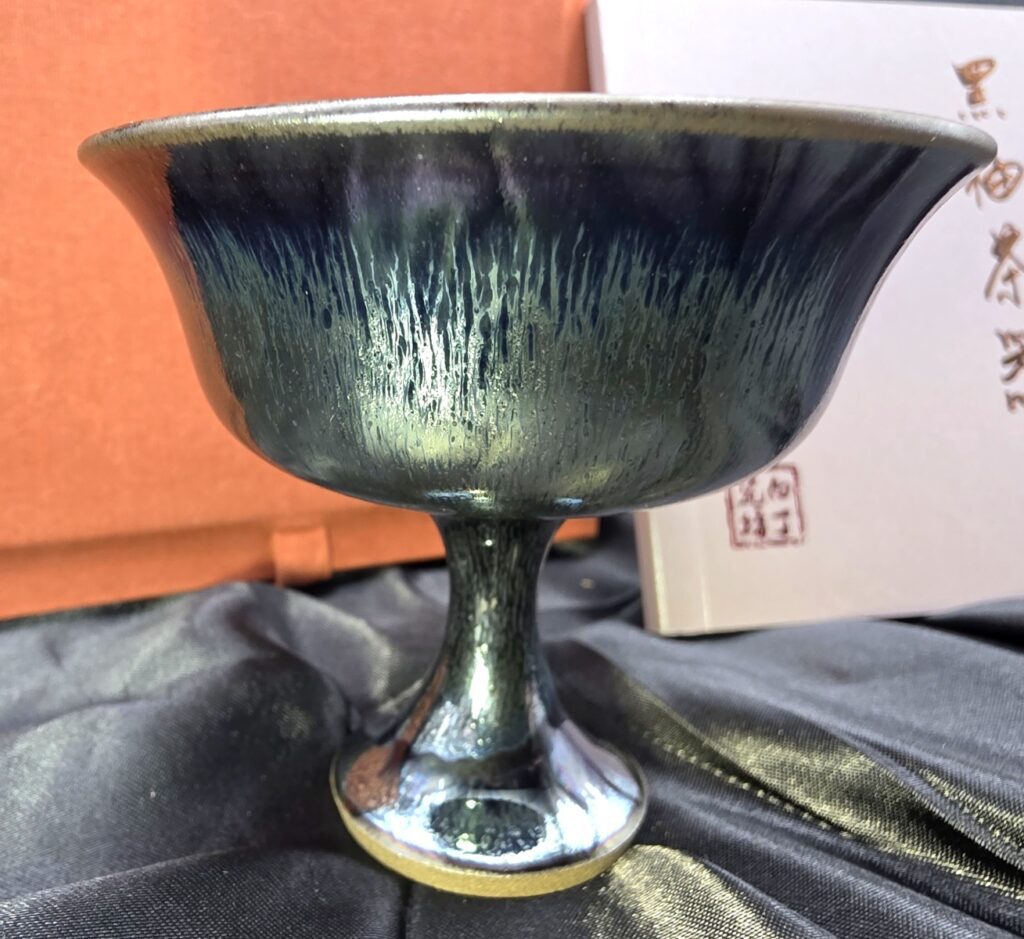
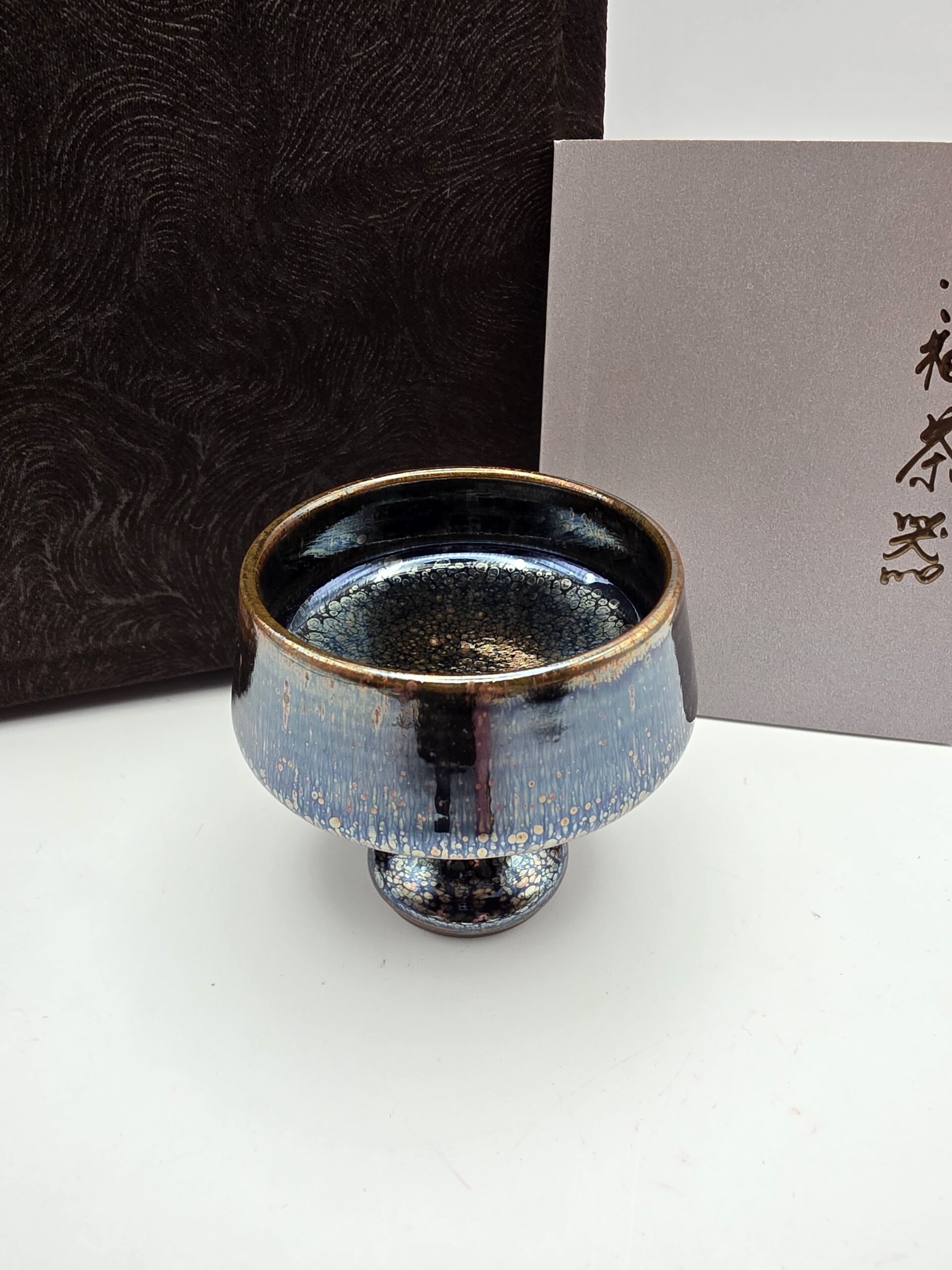
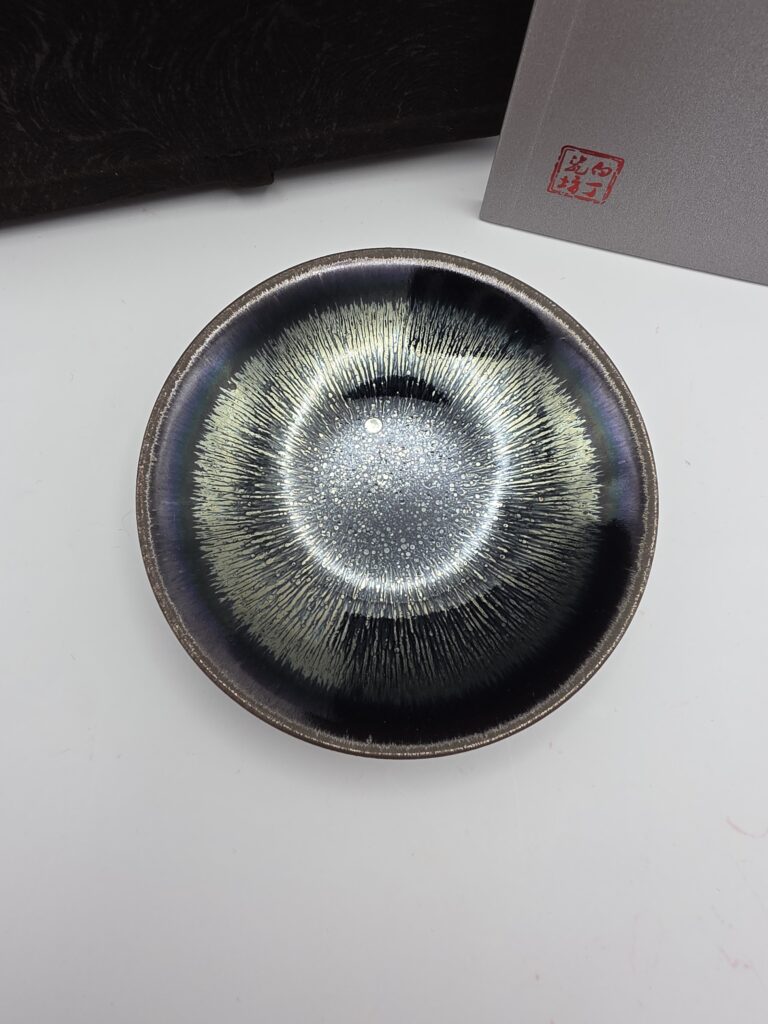
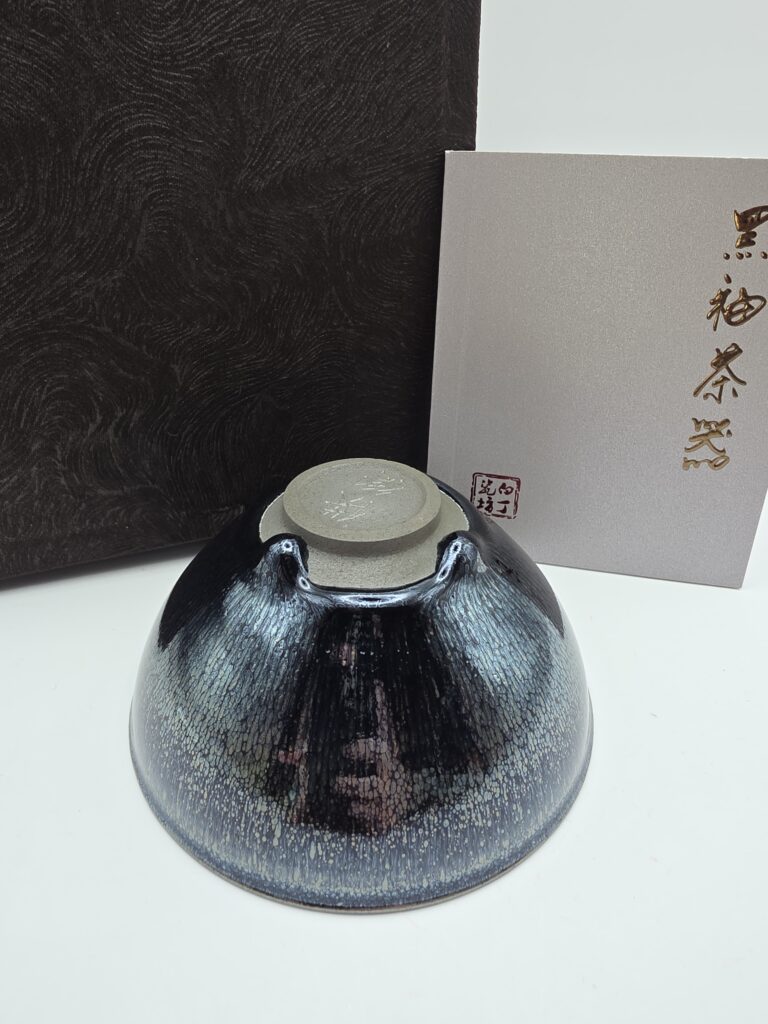
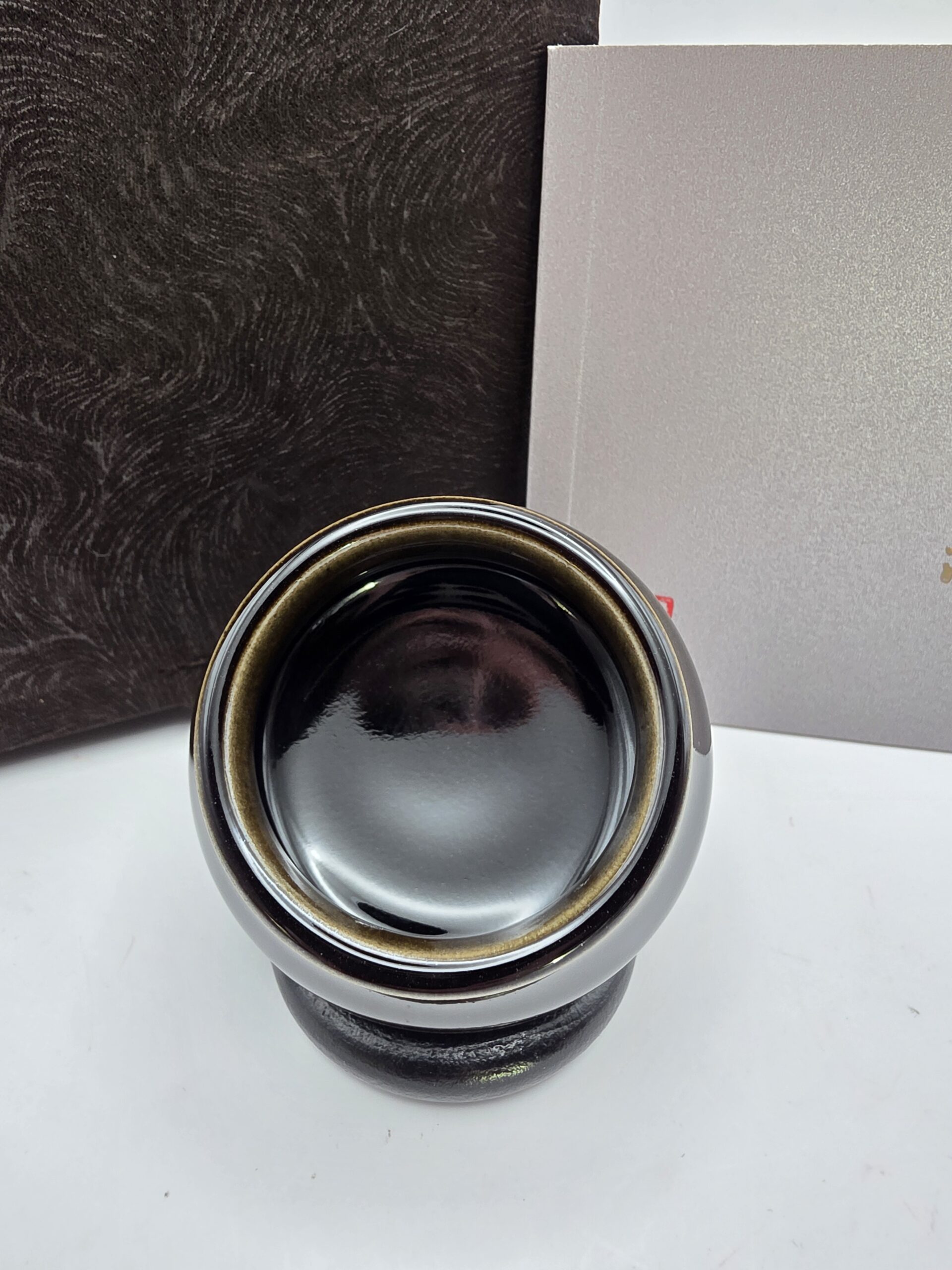
Bai Ding’s work is notable for the variety of forms encountered under the studio name. Collector examples include conventional tea bowls alongside pedestal cups, small plates, pulled-rim vessels, compact rounded forms and carved designs.
Decorative approaches can also extend beyond glaze alone. Studio material refers to carving and the use of copper and silver decorative techniques, reinforcing Bai Ding’s preference for combining the Jian tradition with contemporary design.
Marks, Packaging & Identification
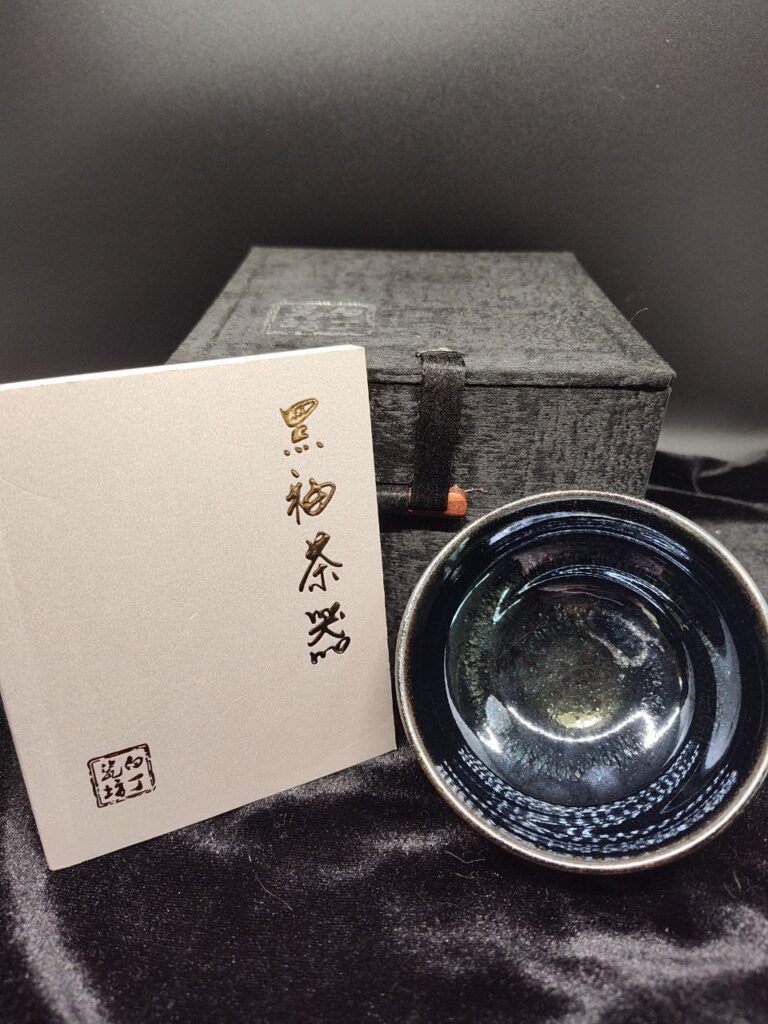
Bai Ding pieces are encountered with studio presentation material and packaging carrying the 白丁瓷坊 identity.
Because Bai Ding represents a workshop rather than a single personal name, collector documentation is especially useful. Certificates, cards, base marks and packaging can help identify both the studio and any individual craftsman associated with a particular piece.
Current & Online Presence
Bai Ding has appeared online using both 白丁瓷坊 and 白丁造器.
The 白丁造器 profile describes its focus as “建窑建盏,黑瓷的魅力”, referring to Jian kiln ware, Jian Zhan and the appeal of black porcelain. Public posts include Bai Ding cups and works associated with the 银丝水芽 series.
Original Studio Material
Earlier information preserved on Fifty Shades of Clay was based in part on descriptive material from Bai Ding. That material remains useful because it discusses the workshop as a group of artists rather than creating a biography for one person named Bai Ding.
“With responsibility in their hearts and craftsmanship in their hands, the artists at Bai Ding continue to push forward.”
The wording is consistent with understanding 白丁瓷坊 as a workshop identity while recording individual makers separately whenever reliable documentation provides their names.
Collector Notes
Bai Ding can be difficult to research in English because marketplace listings sometimes present “Bai Ding” as though it were the personal name of a single master.
Chinese-language searches using the workshop name and the names found on original certificates are usually more useful.
Useful search terms include 白丁瓷坊, 白丁造器, 黄祥迪 建盏, 银丝水芽 建盏 and 忆江南 建盏.
Examples of Work
Collector examples of work from Bai Ding Ceramics Studio.
References & Further Reading
Bai Ding / 白丁造器
Public short-video profile preserving Bai Ding studio works, the 白丁瓷坊 identity and examples associated with the 银丝水芽 series.
Guanfu Jian Zhan · Huang Xiangdi
Collector reference identifying an oil-spot tea bowl as 白丁瓷坊黄祥迪, directly associating Huang Xiangdi with Bai Ding Ceramics Studio.
View Huang Xiangdi / Bai Ding reference
Jian’ou News · Song Tea History
Historical discussion of Song tribute tea and the 银丝水芽 term associated with extremely fine tea-bud preparation.
Fifty Shades of Clay · Dragon Kiln
Our reference page covering traditional dragon-kiln construction and wood firing.
Research compiled for Fifty Shades of Clay using preserved Bai Ding studio material, collector documentation, Chinese-language sources and publicly available studio accounts.