Wang Yunlon (王运龙)
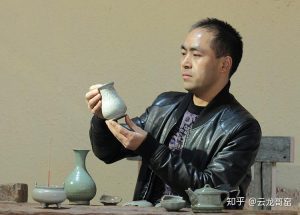
Wang Yunlong (王运龙) is a contemporary Ge ware ceramic artist from Longquan, Zhejiang Province, China. Born in 1967 in Damei Village, an area known for its long history of celadon production, he is recognized as one of the leading figures involved in the preservation and revival of traditional Ge ware firing techniques.
As a fourth-generation member of a Ge ware family, Wang Yunlong has dedicated his career to researching, restoring, and advancing the techniques associated with Ge ware, one of the most celebrated ceramic traditions in Chinese history. His work combines traditional Song Dynasty aesthetics with modern craftsmanship while remaining faithful to the distinctive appearance of historic Ge ware.
Titles and Recognition
- Chinese Traditional Arts and Crafts Master
- Lishui Intangible Cultural Heritage Inheritor of Handmade Ge Ware Firing Techniques
- Lishui Arts and Crafts Master
- Cultural Relics Appraiser and Authentication Specialist
- Director of the Longquan Yunlong Ge Ware Research Institute (龙泉云龙哥窑研究所)
Wang Yunlong is regarded as one of the representative figures involved in the restoration and continuation of traditional Song-style Ge ware production techniques.
Artistic Style
Wang Yunlong’s work is known for reproducing many of the characteristics traditionally associated with Ge ware. His ceramics often display:
- Dense crackle patterns (开片)
- “Golden Thread and Iron Wire” crackles (金丝铁线)
- “Purple Mouth and Iron Foot” features (紫口铁足)
- Moon-white glazes (月白釉)
- Black-bodied Ge ware clay
- Song Dynasty inspired forms and proportions
Collectors often describe his work as combining soft, jade-like glaze surfaces with dramatic crackle networks that develop additional character over time.
Ge Ware Tradition
Ge ware (哥窑) is traditionally considered one of China’s Five Great Kilns. It is especially famous for its crackled glaze surfaces created through differences in shrinkage between the glaze and clay body during firing and cooling.
The exact location and production methods of the original Song Dynasty Ge ware remain a subject of scholarly debate. Because of this, modern artists such as Wang Yunlong have played an important role in researching historical examples and attempting to recreate the appearance and spirit of historic Ge ware ceramics.
Collections and Exhibitions
Wang Yunlong’s works have been collected by museums, cultural institutions, and private collectors both within China and internationally. His pieces have appeared in exhibitions and educational programs focused on the study and appreciation of Ge ware and traditional Chinese ceramics.
Examples of his work include tea bowls, teapots, vases, incense burners, scholar’s objects, and sculptural pieces. Several of his works have been recognized for their faithful interpretation of traditional Ge ware aesthetics.
Signature Characteristics
- Moon-white and celadon-toned glazes
- Natural crackle patterns
- Traditional black-bodied Ge ware construction
- Handcrafted forms inspired by Song Dynasty ceramics
- Strong emphasis on traditional firing methods
- Balance between functional teaware and collectible art
Collecting Notes
Collectors may encounter Wang Yunlong’s work under the names “Wang Yunlong,” “Yunlong Ge Ware,” or “Longquan Yunlong Ge Ware.” His pieces are particularly sought after by collectors interested in Ge ware, Longquan celadon, Song-style ceramics, and traditional Chinese tea culture.
Because many livestreams and sales platforms translate names phonetically, the artist’s name is sometimes mistakenly written as 王云龙. The Ge ware master discussed on this page is generally identified as 王运龙.
References
- Taohuren Artist Profile – Wang Yunlong
- Yunlong Ge Ware Collection and Biography
- The Paper – Yunlong Ge Ware and Cultural Heritage Activities
- Zhihu Article – Revival of Traditional Ge Ware Techniques
- Palace Museum Academic Symposium on Ge Ware
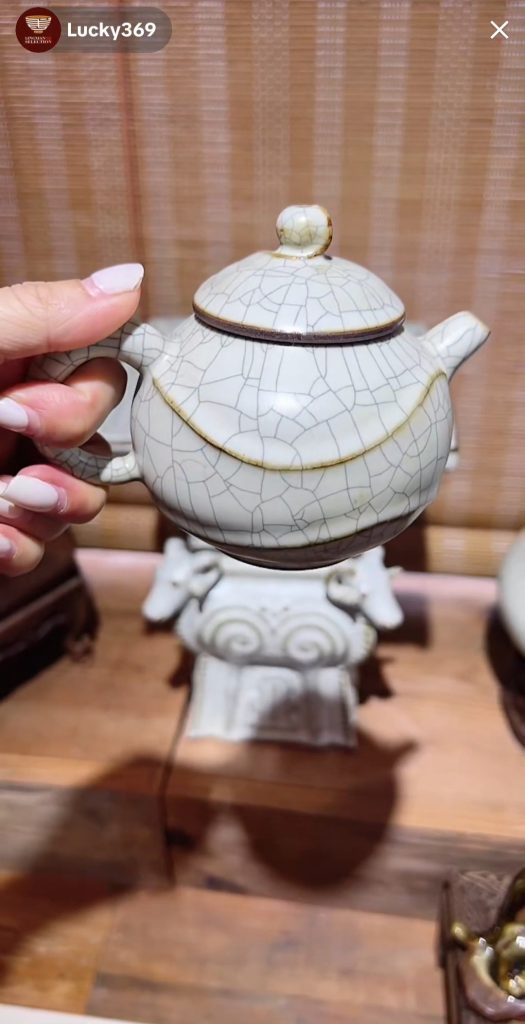
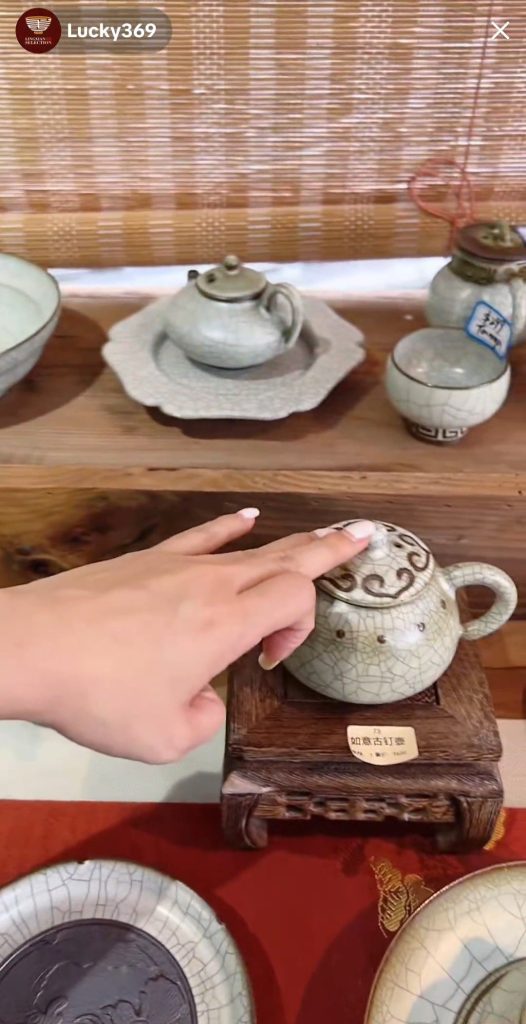
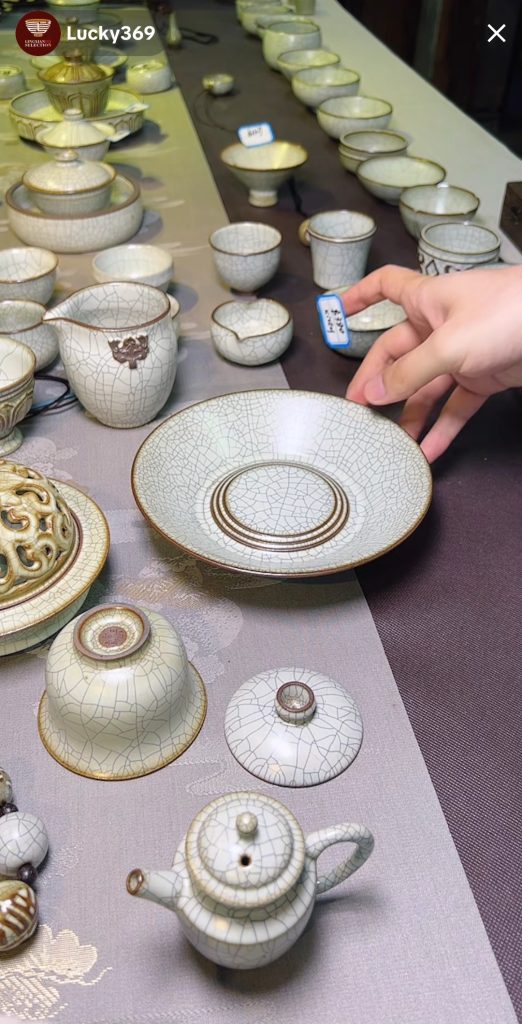
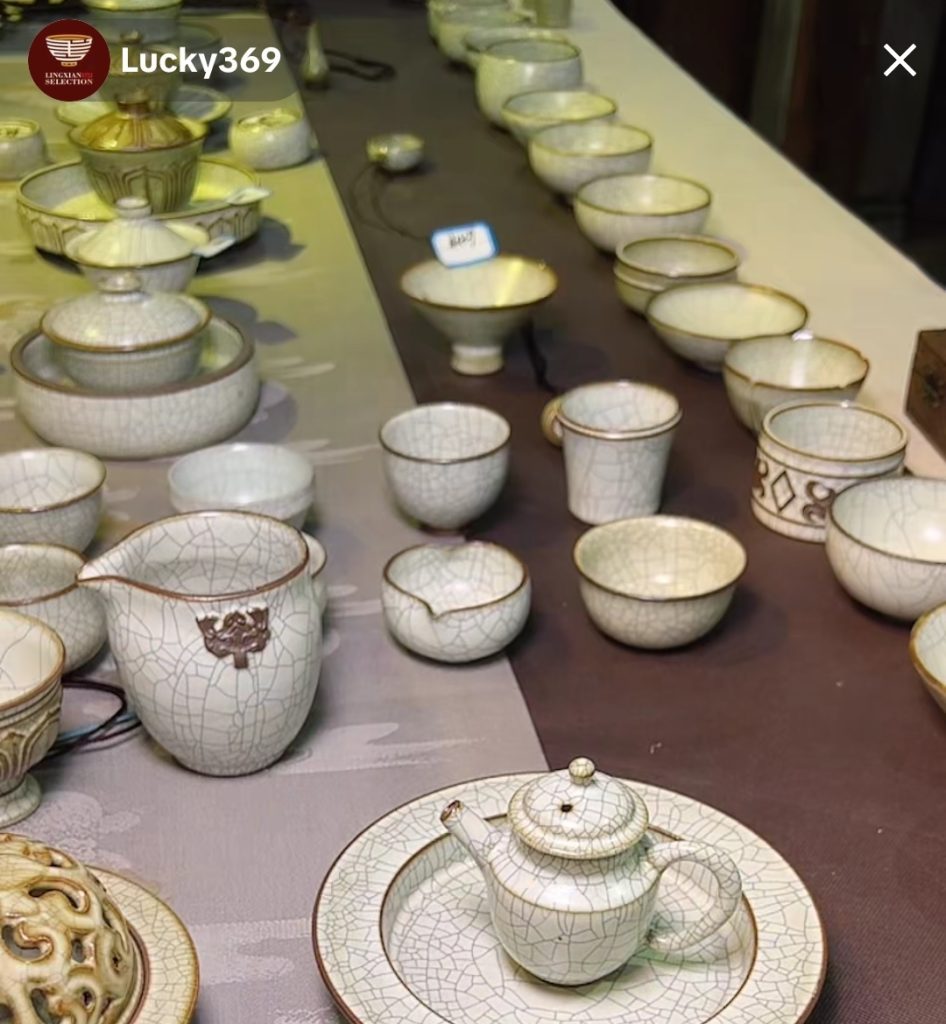
We appreciate lucky369’s visit, which has provided us with examples of his work.