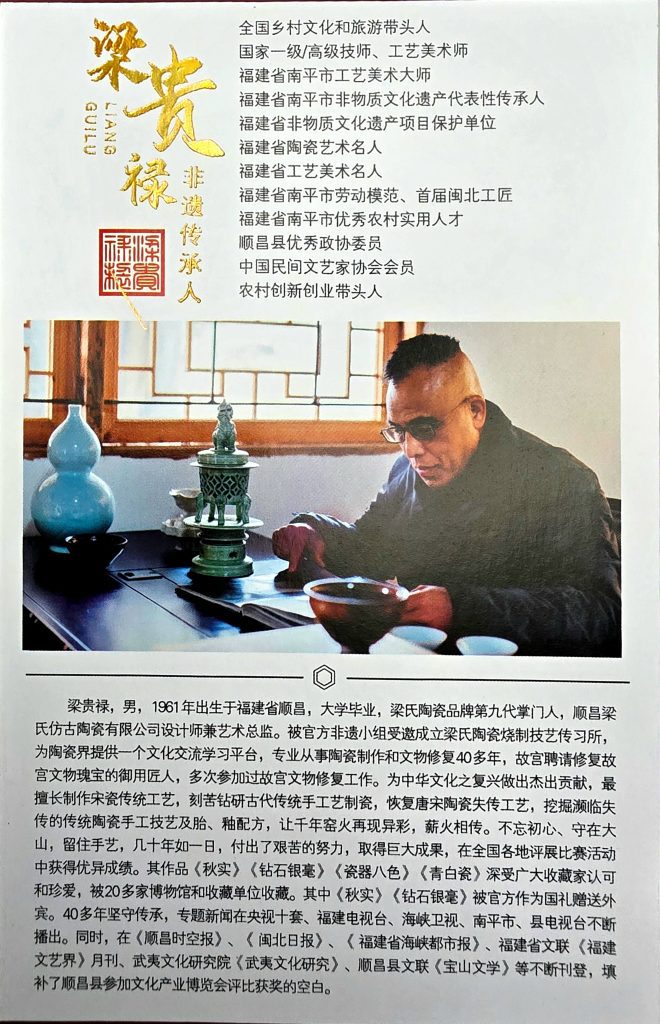
Liang Guilu (梁贵禄)
Liang Guilu (梁贵禄), born in 1961 in Shunchang County, Fujian Province, is a nationally recognized ceramic artist, researcher, and cultural heritage preservationist. As the ninth-generation inheritor of the Liang family ceramic tradition, he has spent more than four decades studying, recreating, and preserving China’s ancient ceramic technologies.
Unlike many contemporary ceramic artists who focus on a single style, Liang Guilu is known for researching historic Chinese ceramics across multiple dynasties. His work combines archaeological research, traditional craftsmanship, historical restoration, and modern ceramic artistry. Through years of experimentation, he has successfully recreated numerous ancient ceramic techniques that were once believed to be lost.
Titles & Honors
- Representative Inheritor of Fujian Province Intangible Cultural Heritage
- National First-Class / Senior Arts & Crafts Master
- Fujian Province Arts & Crafts Master
- Fujian Province Ceramic Art Master
- Leading Figure in Rural Culture and Tourism
- Nanping City Model Worker
- Outstanding Rural Practical Talent
- Member of the China Folk Literature and Art Association
- Leader in Rural Innovation and Entrepreneurship
Research & Restoration
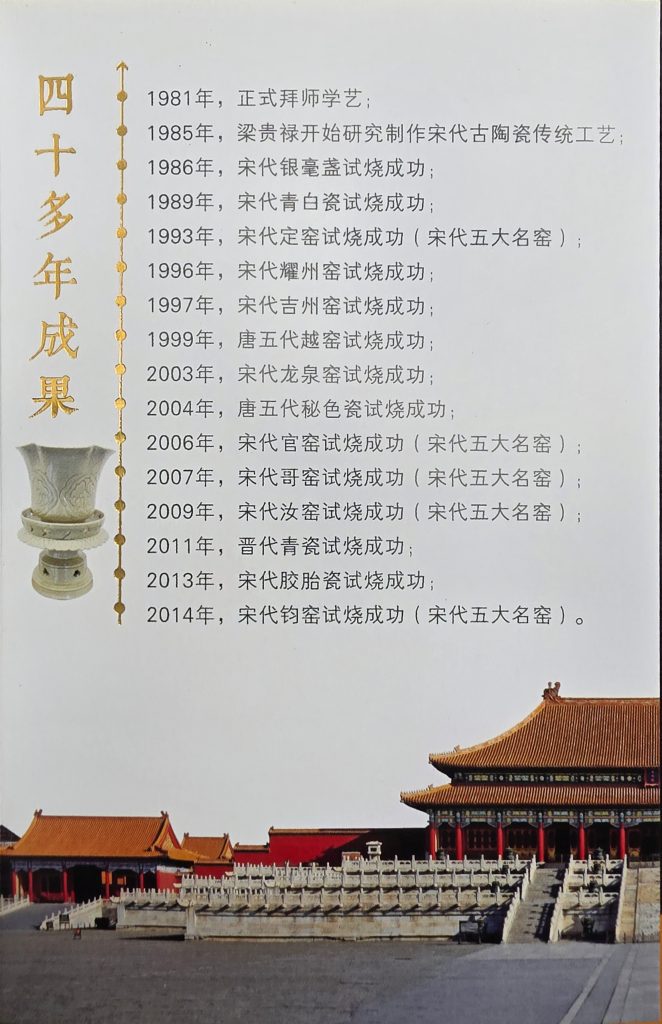
Liang Guilu formally began his apprenticeship in 1981 and has dedicated his career to researching and reviving ancient Chinese ceramic traditions. His work extends beyond creating ceramics, including the restoration of historic artifacts and the preservation of traditional firing methods.
According to his official biography, he has participated in ceramic restoration projects associated with the Palace Museum (Forbidden City) and has devoted over forty years to protecting and passing on traditional Chinese ceramic craftsmanship.
Historic Ceramic Revivals
Over the course of his career, Liang Guilu has successfully recreated numerous historic ceramic traditions, including:
- Song Dynasty Silver Hare’s Fur glaze
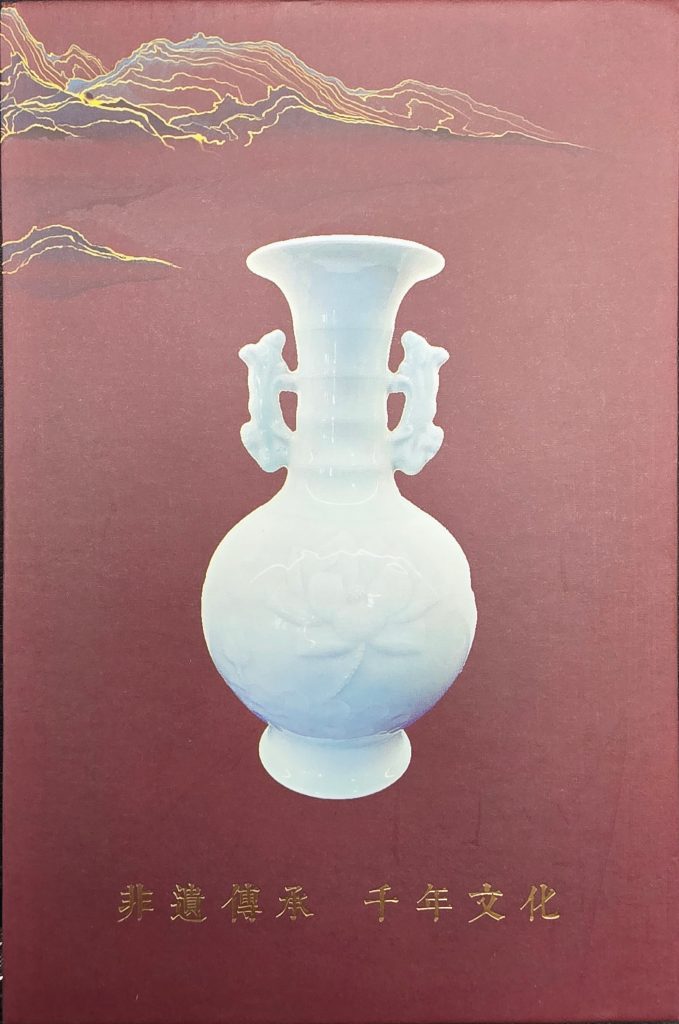
- Song Dynasty Qingbai porcelain
- Ding Ware
- Yaozhou Ware
- Jizhou Ware
- Yue Ware
- Longquan Celadon
- Secret Color Porcelain (Mi Se Ci)
- Guan Ware
- Ge Ware
- Ru Ware
- Jun Ware
- Jin Dynasty Celadon
- Song Dynasty Jiaotai Porcelain
These recreations represent decades of historical research and kiln experimentation, helping preserve ceramic technologies that had disappeared for centuries.
Awards & Collections
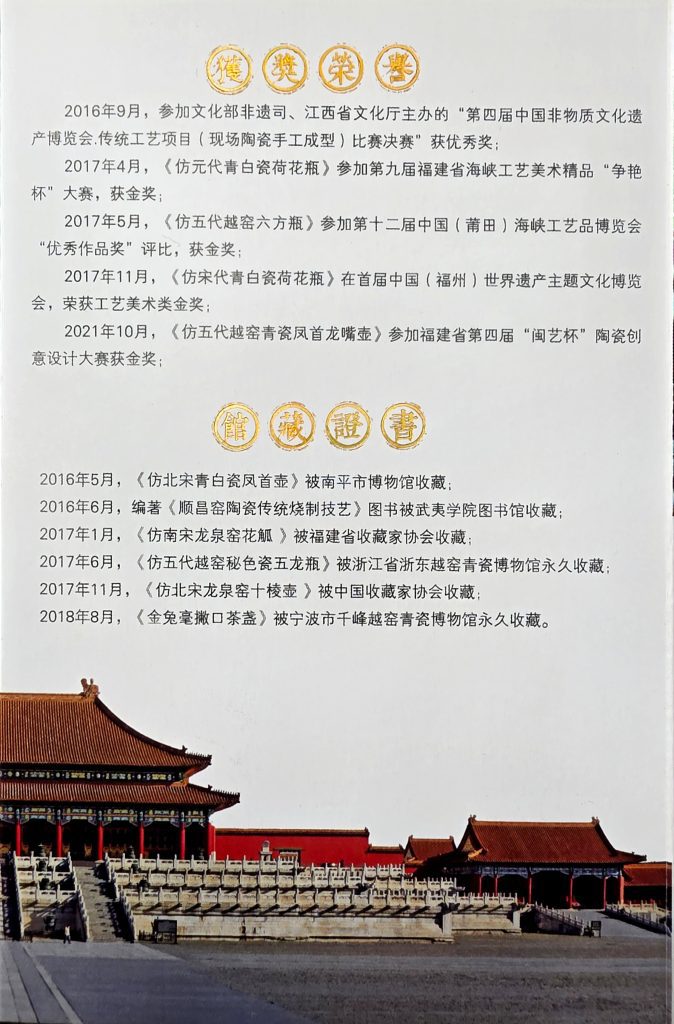
Liang Guilu has received numerous provincial and national awards for traditional ceramic craftsmanship. His works have been exhibited widely and are held in museums and permanent collections throughout China, including the Nanping Museum, Zhejiang Yue Celadon Museum, China Collectors Association, and several other public institutions.
His recreated historical ceramics have also received Gold Awards at major Chinese arts and cultural heritage exhibitions.
Publications
Liang Guilu is the author of Traditional Ceramic Firing Techniques of Shunchang County (顺昌县陶瓷传统烧制技艺), documenting traditional ceramic production methods and helping preserve knowledge for future generations.
Artistic Style
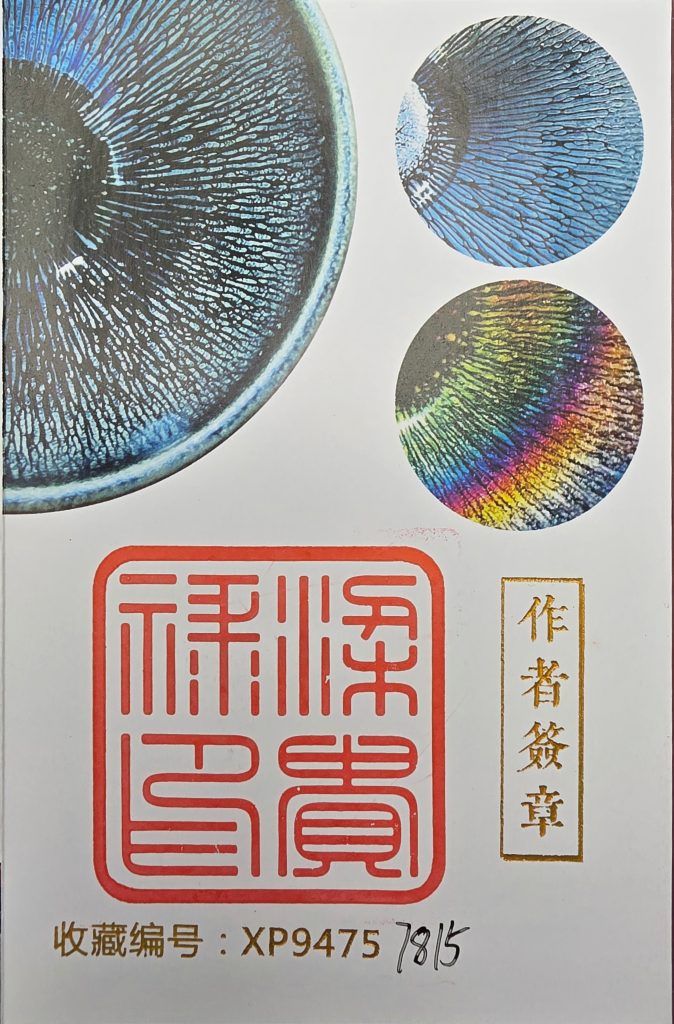
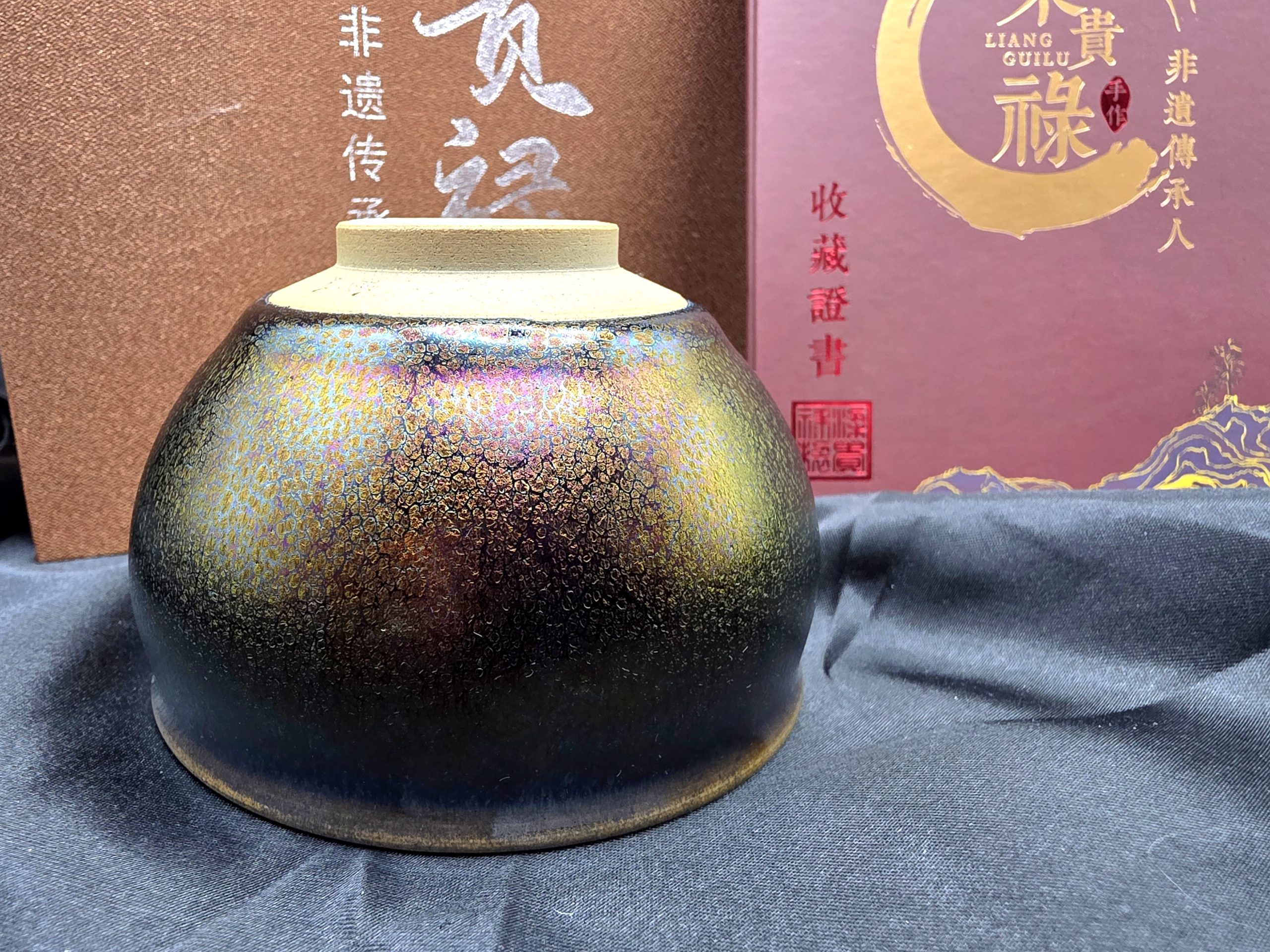
While Liang Guilu is best known for recreating historic Chinese ceramics, he also produces contemporary artistic works. His modern ceramics include richly colored crystalline and iridescent glazes that demonstrate exceptional technical control while reflecting his deep understanding of traditional firing techniques.
Legacy
Today, Liang Guilu is recognized as one of Fujian Province’s leading ceramic preservationists. His lifelong dedication to research, restoration, education, and craftsmanship has helped revive many of China’s most important historic ceramic traditions while inspiring a new generation of ceramic artists.
References
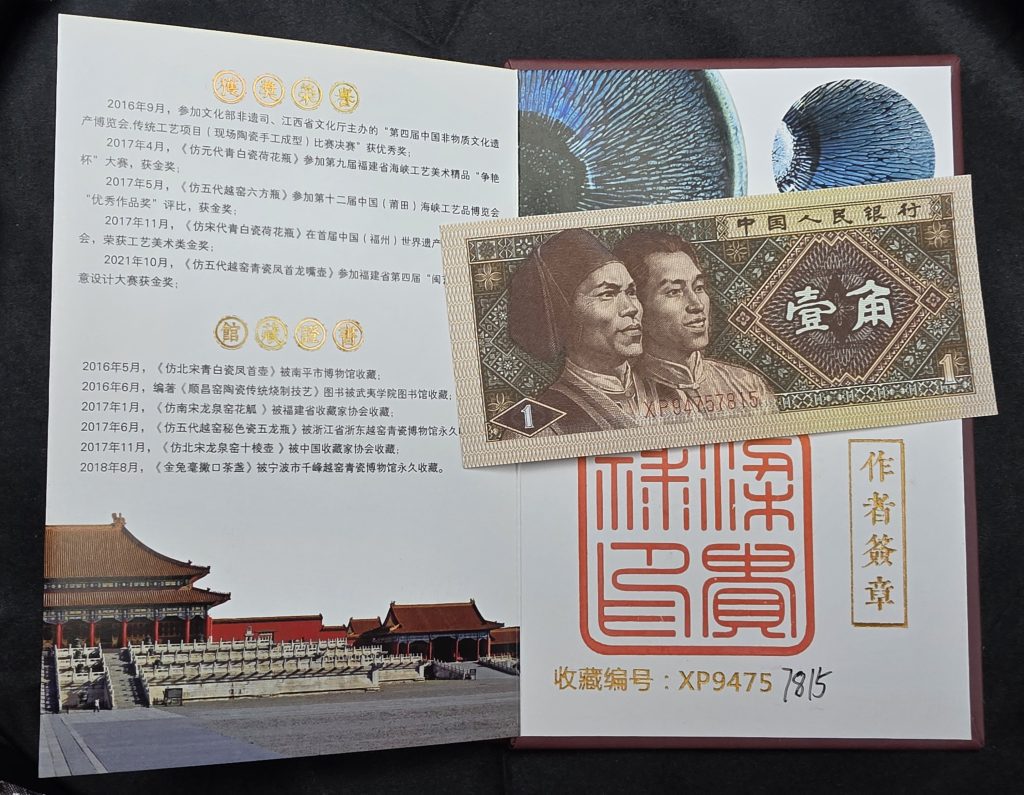
- Official Liang Guilu Certificate of Authenticity and artist biography (Collection Certificate XP9475-7815).
- Official Liang Guilu promotional brochure and timeline of ceramic research.
- Taiwan collector profile summarizing Liang Guilu’s career and historic ceramic recreations.
- Chinese Intangible Cultural Heritage resources describing the Representative Inheritor system and preservation of traditional crafts.