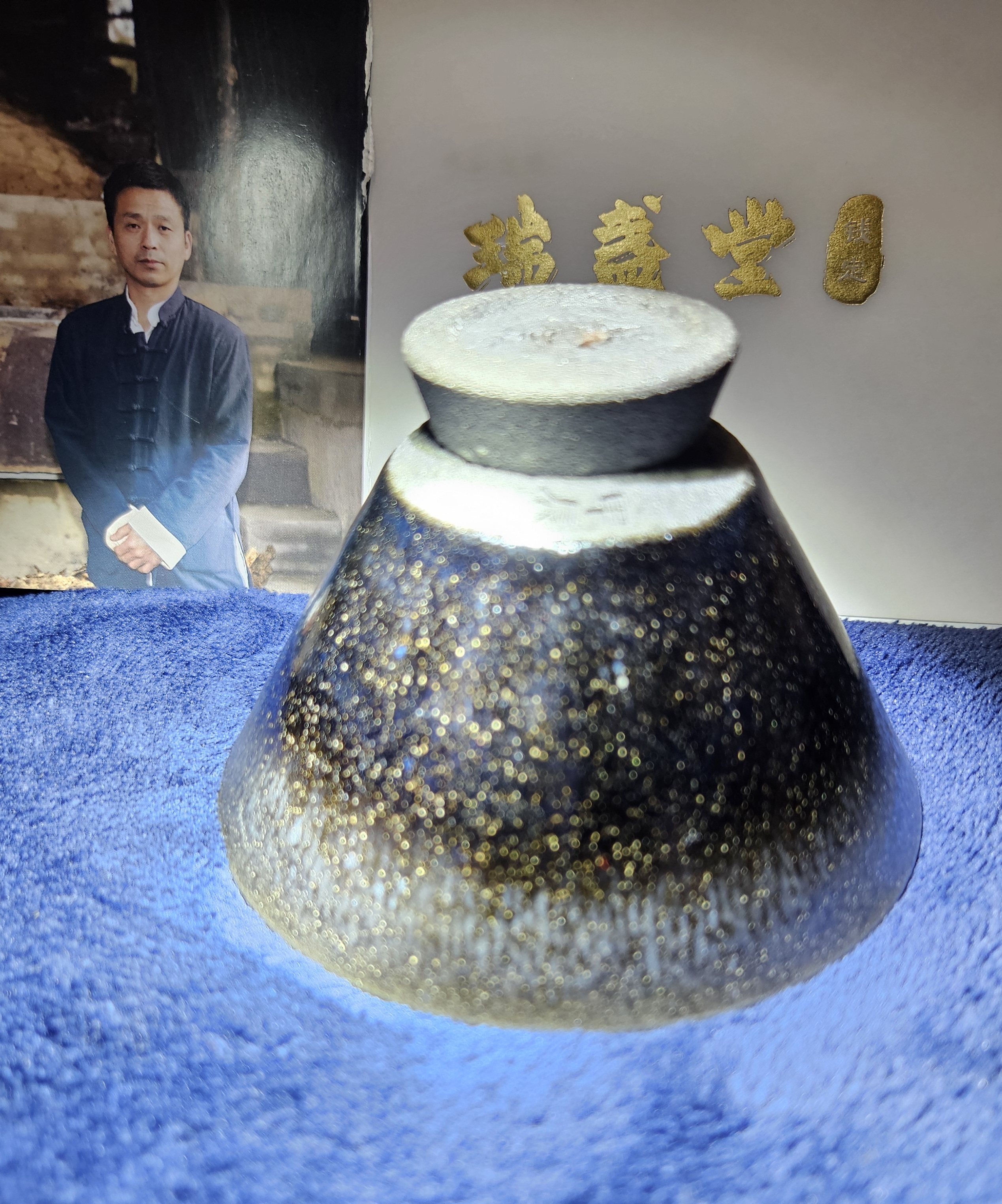
Qian Ding
钱定Ruizhantang 瑞盏堂 · dragon-kiln wood firing · controlled modern firing research
Biography
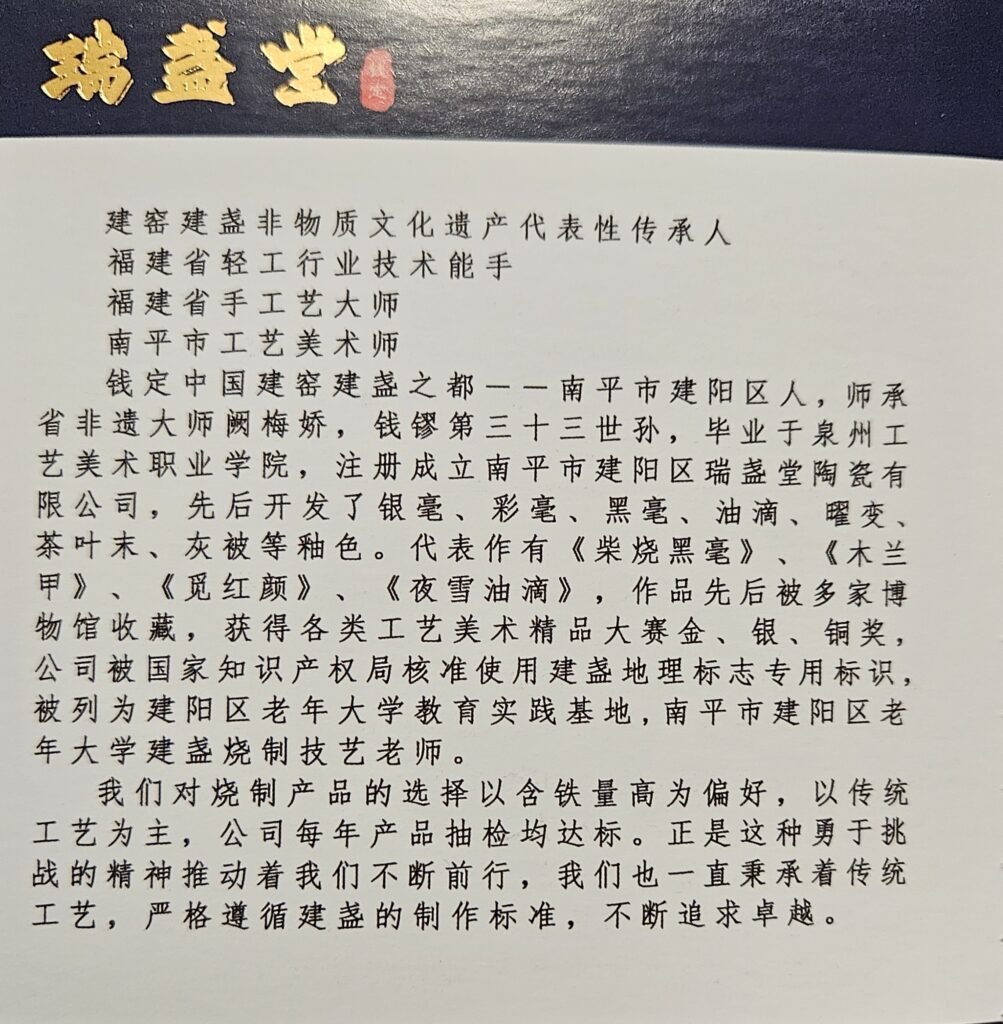
Qian Ding (钱定), born in May 1981 in Jianyang, is a Jian Zhan artist and the founder of Ruizhantang (瑞盏堂). He began studying Jian Zhan firing under Que Meijiao (阙梅娇) in August 2004, progressing from forming and trimming through glazing and firing. In 2008 he established Nanping Jianyang District Ruizhantang Jian Zhan Ceramics Co., Ltd. (南平市建阳区瑞盏堂建盏陶瓷有限公司).
Dragon Kiln & Ruizhantang
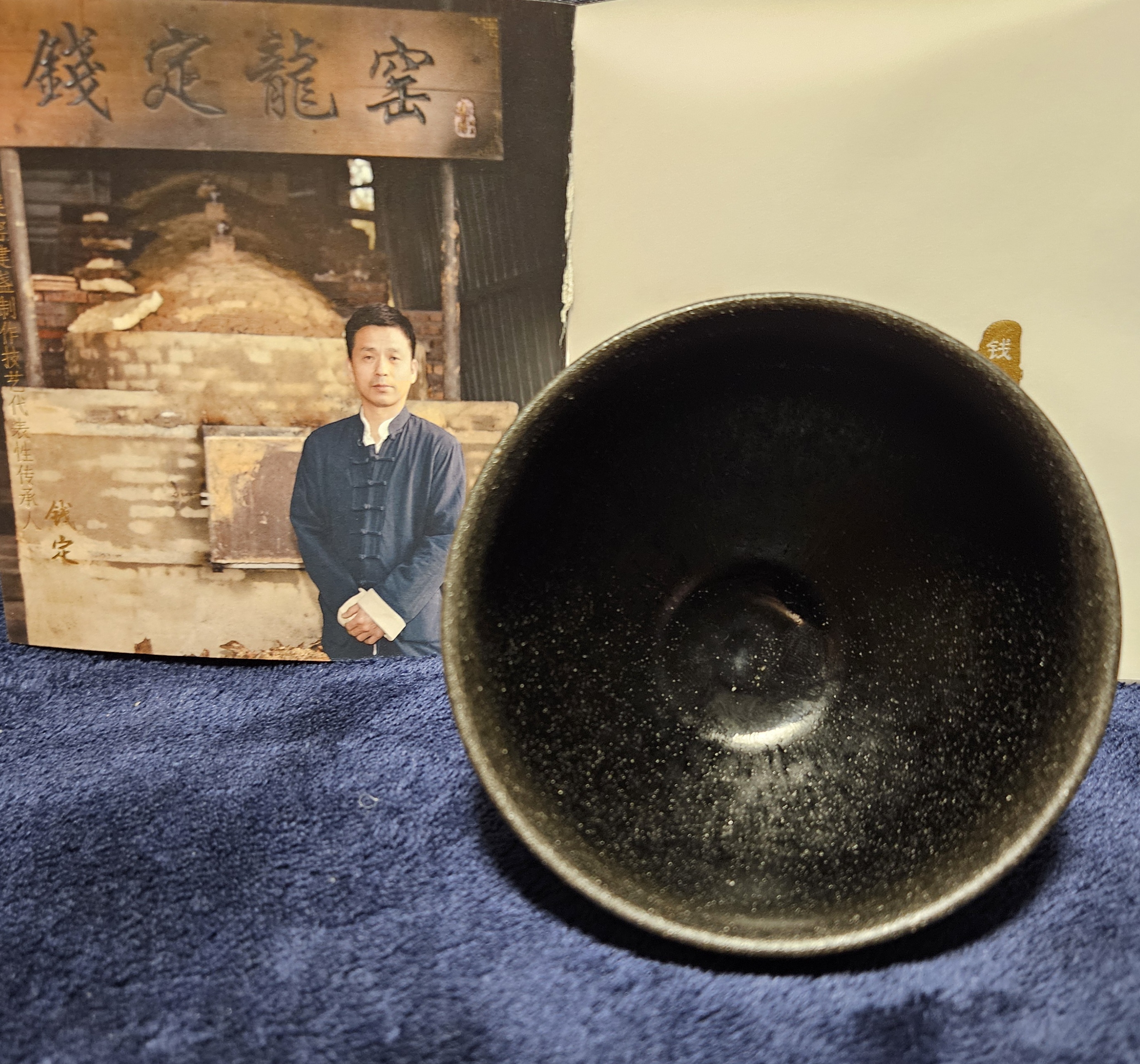
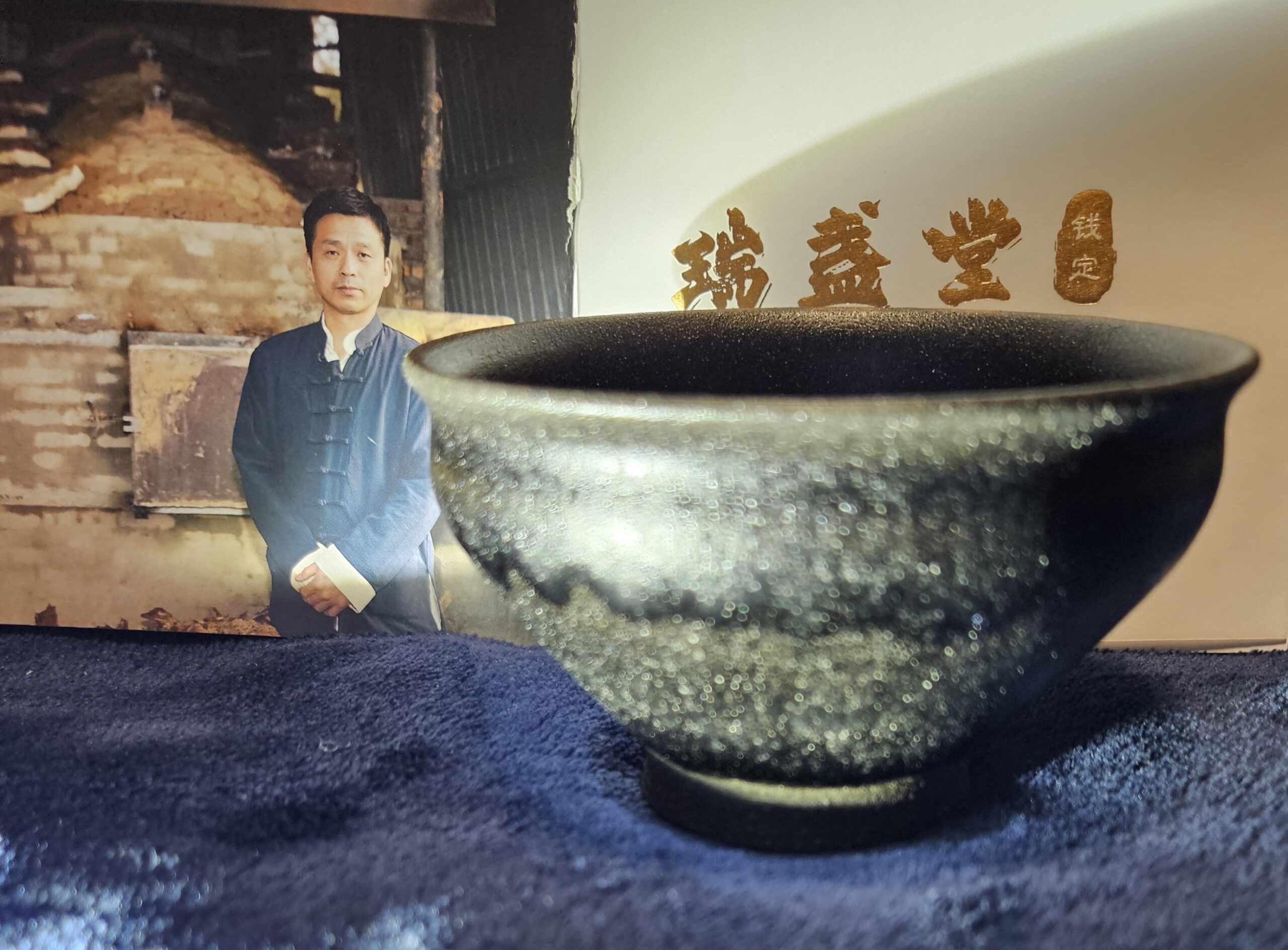
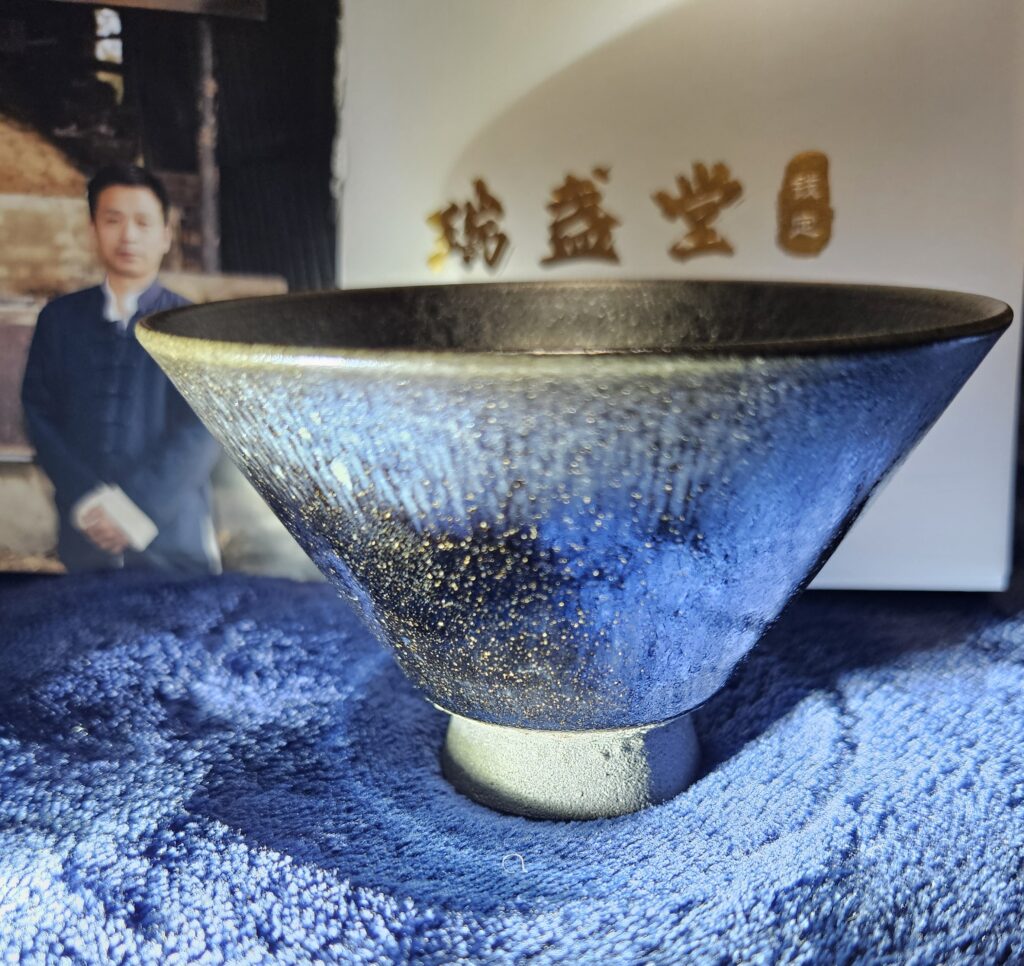
Ruizhantang material documents the 钱定龍窯, or Qian Ding Dragon Kiln, and identifies work fired by traditional dragon-kiln wood methods. Qian’s catalog includes wood-fired hare’s fur, oil spot, tea-dust, persimmon-red, partridge-feather and purple-gold Jian Zhan alongside work produced through controlled modern firing.
Glazes & Named Works
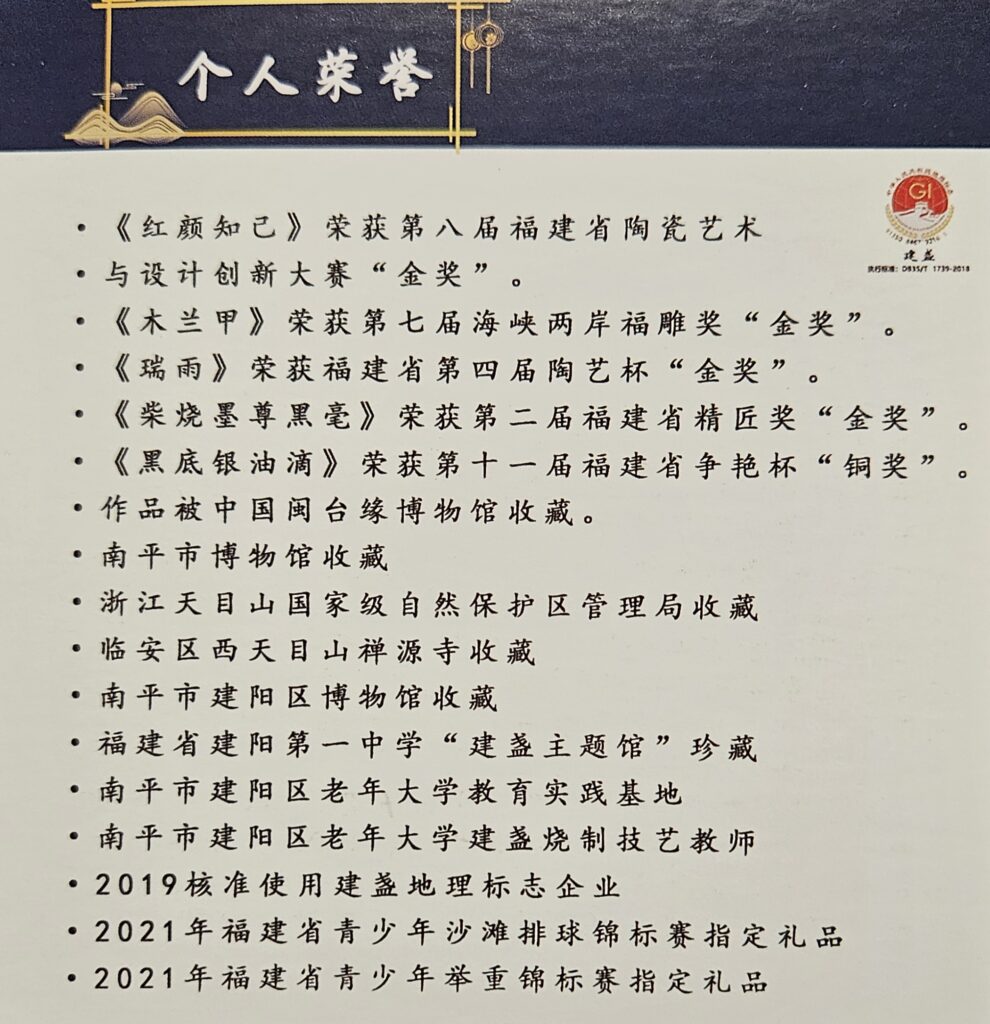
Qian’s documented glaze families include 银毫, 彩毫, 黑毫, 油滴, 曜变, 茶叶末, 灰被 and multiple wood-fired variants. Named works include 《柴烧黑毫》, 《木兰甲》, 《觅红颜》, 《夜雪油滴》, 《瑞雨》, 《红颜知己》, 《柴烧墨尊黑毫》 and 《黑底银油滴》.
Technical Research
Qian is the inventor named on Chinese patent application CN115385659A, 彩毫建盏的制备工艺, assigned to Ruizhantang. The process uses an electric kiln with staged temperature control and reduction, while also introducing resin-rich firewood during selected stages. The patent identifies red clay and kaolin from Shuiji and glaze stone from Nanlin Village among the materials.
He also authored 《建盏烧制技艺探讨与实践》 (“Discussion and Practice of Jian Zhan Firing Techniques”), published in Jiangsu Ceramics in 2023.
Recognition & Collections
Documented awards include gold awards for 《红颜知己》, 《木兰甲》, 《瑞雨》 and 《柴烧墨尊黑毫》, plus a bronze award for 《黑底银油滴》 at the 11th Fujian Zhengyan Cup in 2021. Ruizhantang’s biography also records works entering the China Fujian-Taiwan Kinship Museum, Nanping Museum, Jianyang No. 1 Middle School Jian Zhan Theme Museum and other institutional collections.
Marks & Identification
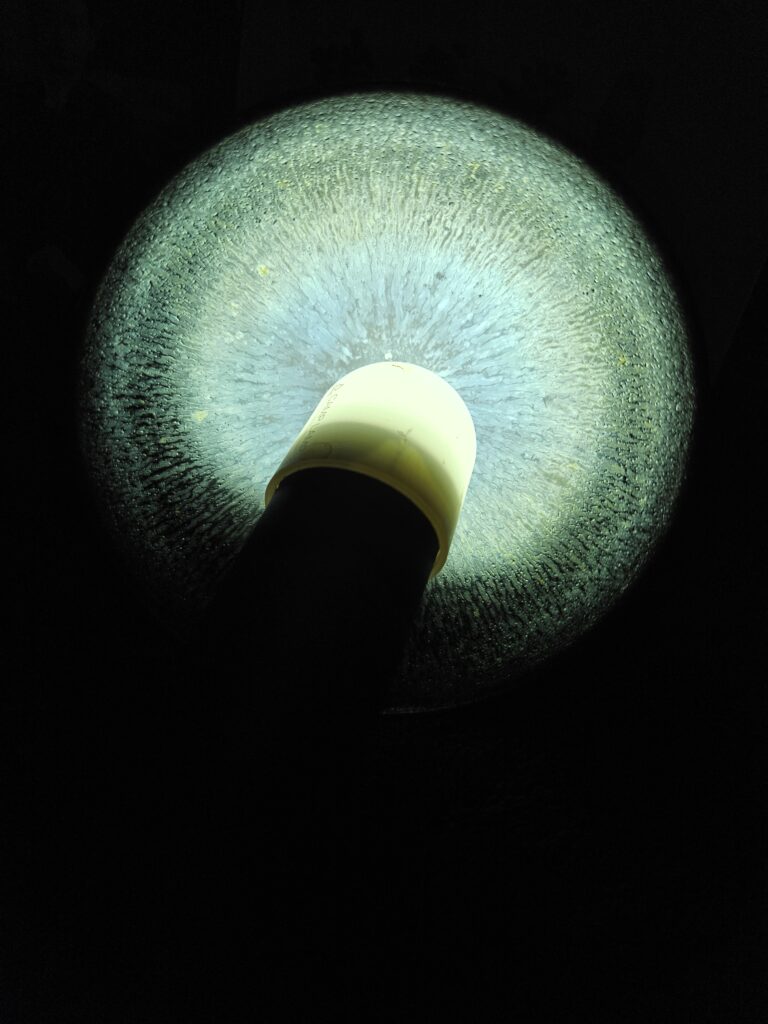
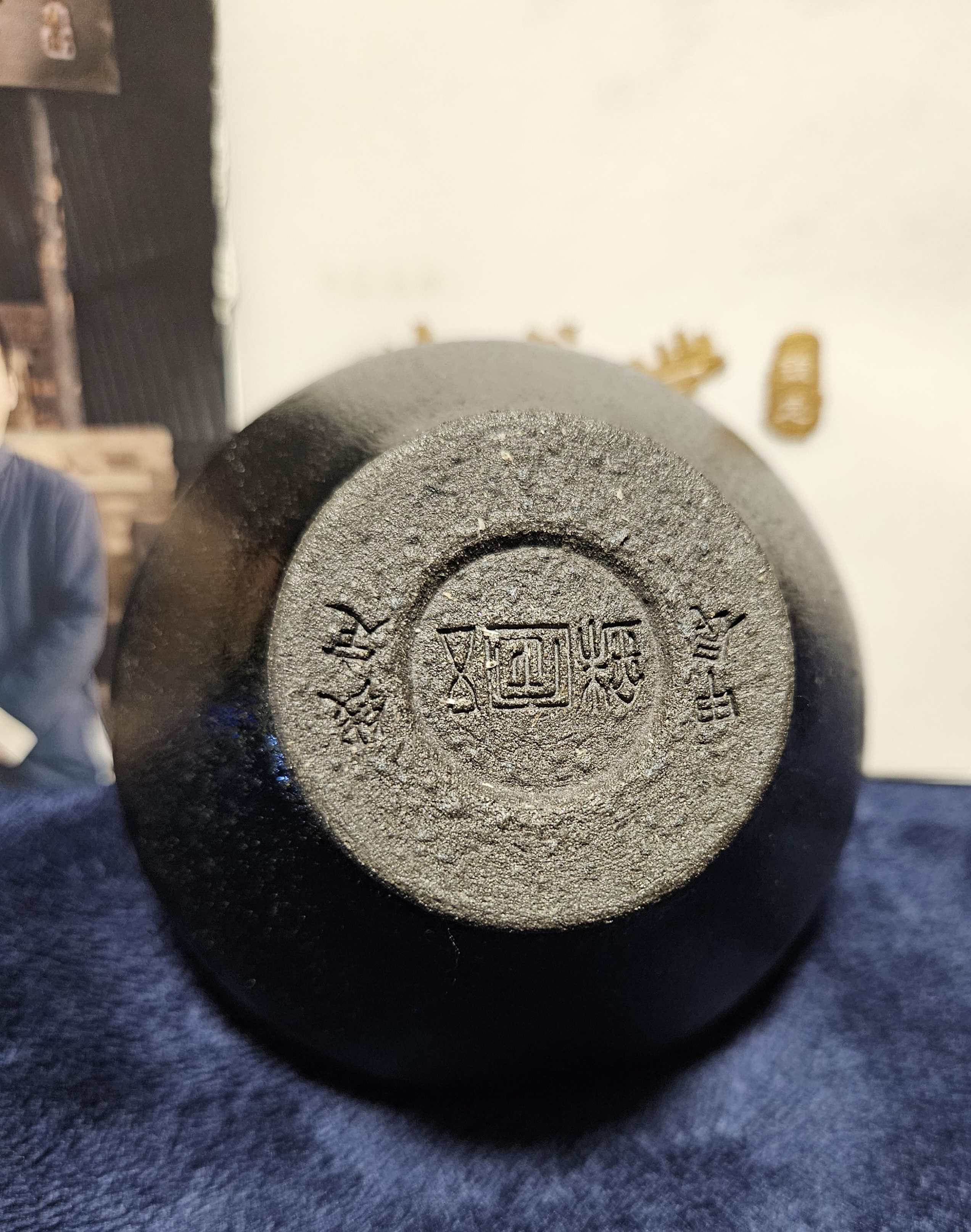
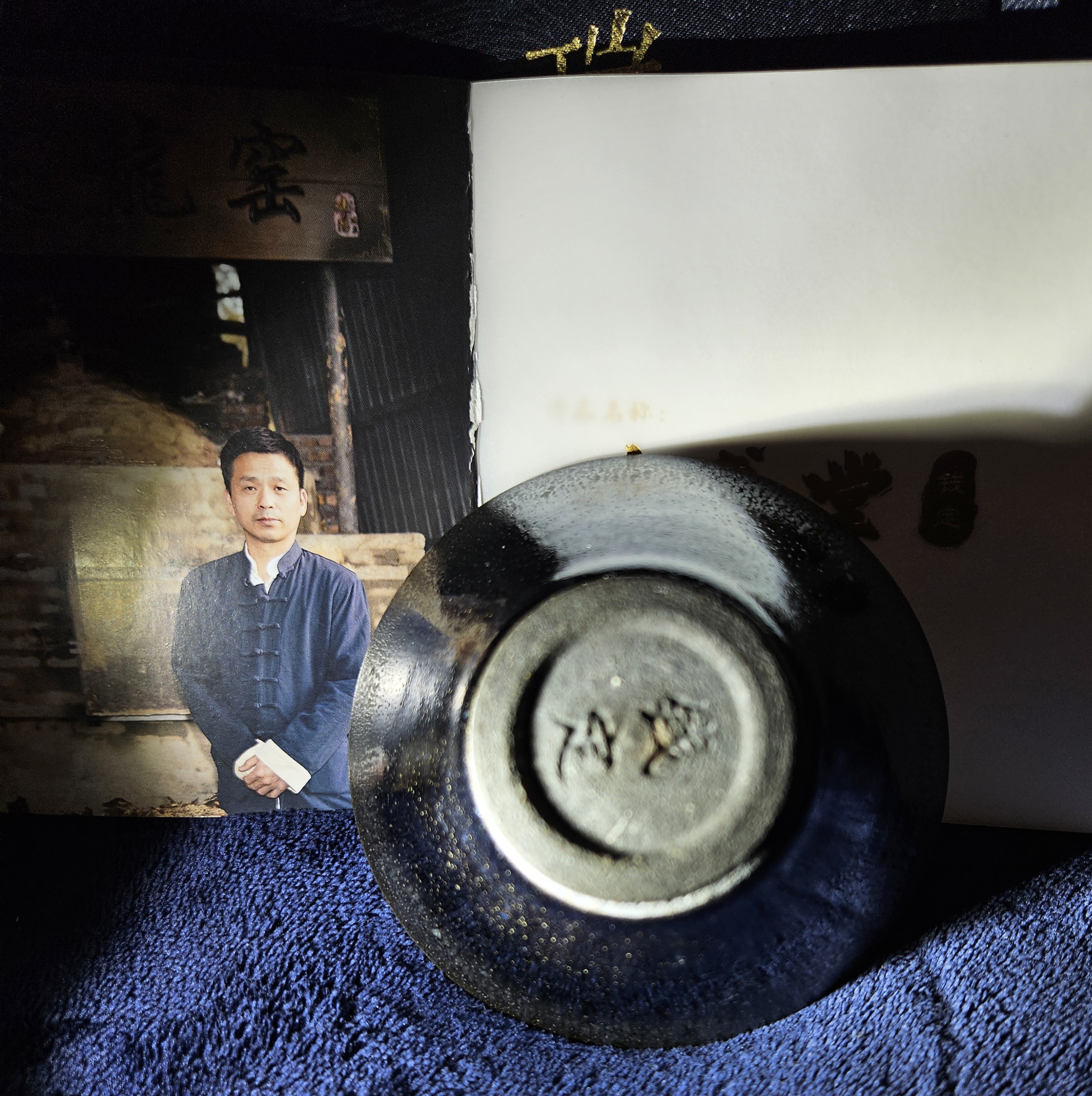
More than one foot-mark format is documented on Qian Ding pieces. Identification should compare the mark with body, foot construction, glaze, form, box, certificate and provenance rather than requiring one single stamp style.
Artist Media & Documentation
References
Ruizhantang · Official siteOfficial studio source for Qian Ding, Ruizhantang, biography, work catalog, awards and collections.View reference →Google Patents · CN115385659APrimary patent record naming Qian Ding as inventor and Ruizhantang as assignee for a colored hare’s-fur Jian Zhan firing process.View reference →Fujian Daily · 11th Zhengyan Cup resultsCompetition record listing Qian Ding’s 黑底银油滴 among Jian Zhan bronze-award recipients.View reference →CNIPA · Jian Zhan geographical-indication authorizationOfficial record supporting Ruizhantang’s authorization to use the Jian Zhan geographical-indication special mark.View reference →Fujian Market Regulation · product inspectionProvincial product-quality testing record that includes Ruizhantang Jian Zhan.View reference →Works & Tagged Posts