
Fire Samples in Jian Zhan
火样 · Huǒ YàngA glimpse inside the kiln while it is still burning. Fire samples allow a potter to examine the development of Jian Zhan during the firing itself, before the rest of the kiln has cooled.
What Is a Fire Sample?
A fire sample is a test piece used to examine the progress of an active ceramic firing. In some Jian Zhan kilns, an actual glazed cup is positioned near a special opening where it can be accessed and removed while the rest of the kiln continues firing.
When the maker wants to check the firing, the sample cup is carefully withdrawn from the extremely hot kiln. At this moment, it may be glowing bright red or orange from the intense heat.
The cup is allowed to cool so its glaze can be examined. This helps the maker judge how the firing is progressing and whether the desired glaze effects are developing.
These are working kiln samples, not simply experimental cups made with unusual glazes.
How Fire Sampling Works
Although exact methods vary between kilns and makers, the process can involve four main stages.
A glazed cup is placed inside the kiln near an accessible opening so that it can be retrieved during firing.
While the kiln is still operating, the maker uses suitable kiln tools to withdraw the sample. The cup may be glowing red-hot.
The sample is left to cool. As it loses its glow, the glaze surface becomes easier to examine under normal lighting.
The maker inspects the glaze and the degree of firing, using the sample to help evaluate what is happening inside the kiln.
Why Not Just Look Through the Kiln Window?
Inside a firing kiln, everything is exposed to extreme heat and intense light. The red-hot glow of a cup makes it difficult to judge the final appearance of its glaze.
Removing and cooling a sample allows the potter to inspect the surface more closely. This can reveal information that is difficult to assess while the piece remains glowing inside the kiln.
The maker can use this information alongside their experience and other firing measurements to decide how to continue the firing.
What Can a Fire Sample Tell the Maker?
- Glaze development: whether the surface is progressing toward the desired appearance.
- Firing maturity: whether the clay body and glaze have reached an appropriate stage of firing.
- Surface effects: how spotting, glaze movement and other kiln-related patterns are developing.
- Firing decisions: whether the kiln may need additional time or adjustments, based on the sample and other observations.
One sample represents the conditions it experienced at the moment it was removed. Different locations in the kiln can behave differently, so the sample is an important clue rather than a complete picture of every cup inside.
Why Fire Sample Cups Can Look So Different
A cup removed partway through a firing may preserve an intermediate stage of glaze development rather than the result that would appear after the full firing cycle.
Depending on when it is withdrawn, the glaze may have incomplete patterns, less-developed color or other unusual characteristics.
Some fire samples are beautiful, while others look unfinished or irregular. Their appearance can provide a record of what was happening inside the kiln at a particular moment.
That is what makes them especially interesting to collectors who enjoy understanding the firing process.
A Historical Connection: 火照
The idea of removing test pieces during a firing has a long history in Chinese ceramics.
Traditional firing indicators known as 火照 (huǒ zhào) were placed where kiln workers could retrieve them through an observation opening. They were used to evaluate firing progress and ceramic maturity without opening the entire kiln.
Historical fire indicators were often specially shaped ceramic test pieces or shards rather than complete tea bowls. Modern makers may instead use small cups as firing samples.
Both practices reflect the importance of direct observation in ceramic firing, although the terminology and methods can differ.
Historical reference: Peking University Museum of Archaeology and Art
Are Fire Sample Cups Finished Cups?
Not necessarily. Because a sample may be removed before the intended firing cycle is complete, it should not automatically be treated as an ordinary finished Jian Zhan cup.
Its condition depends on when it was withdrawn and how far the clay and glaze had developed. Some pieces may be unsuitable for holding tea or other liquids.
Unless the maker specifically confirms that a sample is suitable for drinking, it is best regarded as a collector’s or educational piece.
Why Collect Fire Samples?
Fire samples are fascinating because they represent a particular moment in the life of a kiln firing.
They allow collectors to see results that might never appear in fully completed cups. Instead of simply representing an artist’s finished work, they can also preserve evidence of the technical decisions and observations involved in creating it.
Their significance comes from their connection to the firing process, their maker, and the information known about their use. They should not automatically be treated as rare or valuable simply because they are fire samples.
Fire Sample From the FSOC Archive
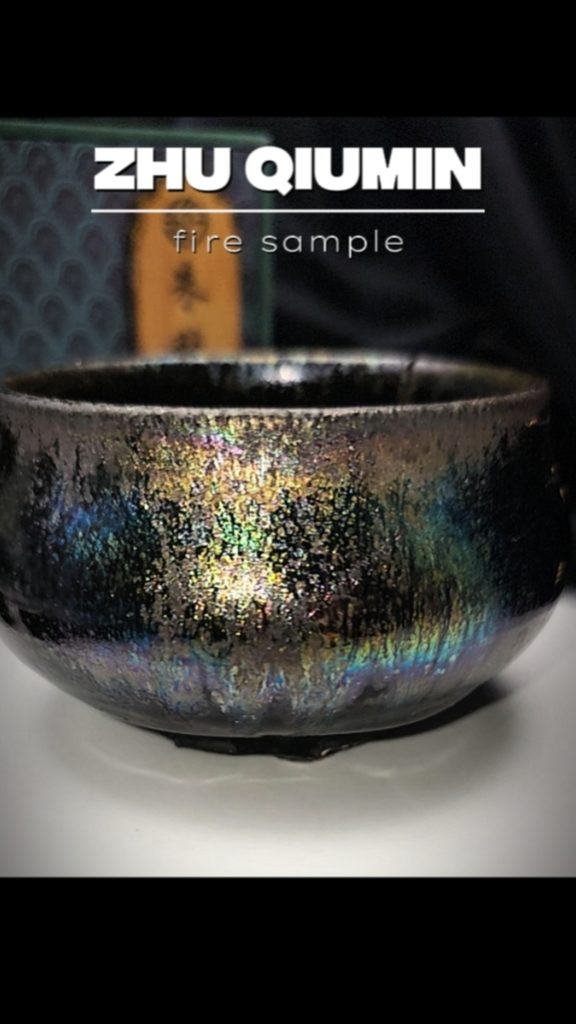
Fire Sampling in Action
Watch the original video from the FSOC archive to see an example of the fire sampling process.
A Moment Captured From the Kiln
For collectors, a fire sample is more than an unusual-looking cup. It is a record of a specific stage in the firing process, removed from the heat so the maker can see what is happening before the firing is complete.
Every sample offers a small glimpse into the decisions, experience and observation behind the finished Jian Zhan we enjoy.
Fire Sample Gallery
Explore fire samples documented by the Fifty Shades of Clay community. Publicly published cup posts tagged firesample appear here automatically.