ARTIST & KILN
Wang Li Qing 王立芹
Jianzhan ceramic artist · Jianyang, Fujian
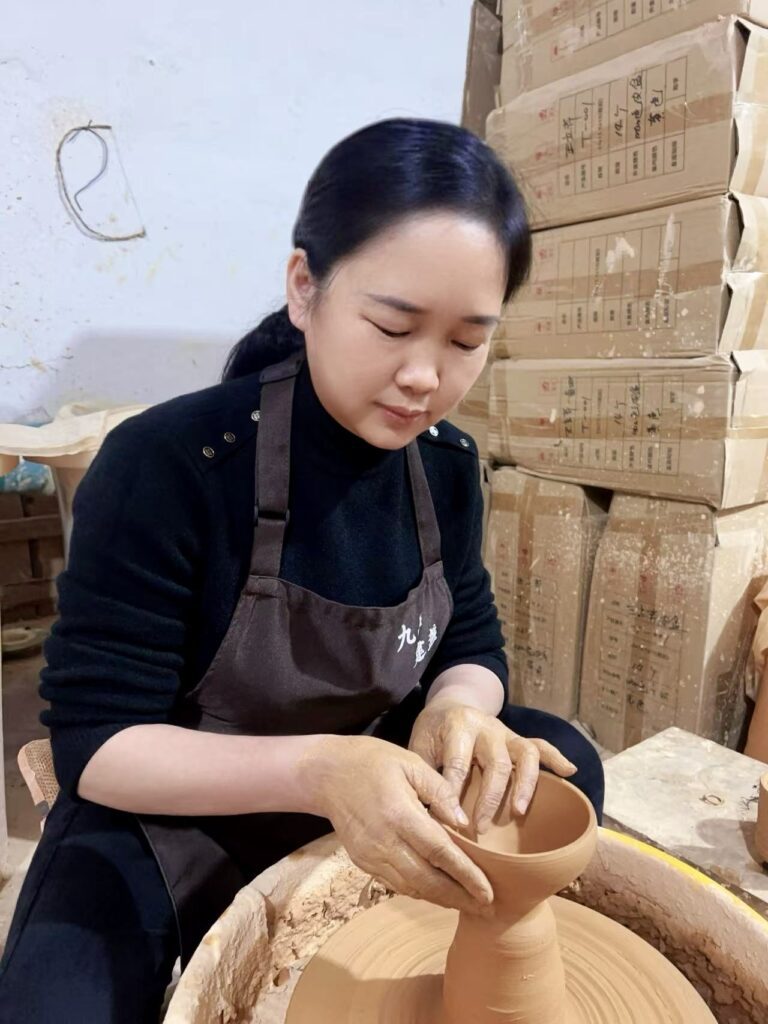
About Wang Li Qing
Wang Li Qing 王立芹 is a contemporary Jian ware artist working in Jianyang, Fujian, the historic home of Jianzhan production.
Her work belongs to the modern continuation of Jian ware, a ceramic tradition known for iron-rich bodies and dark glazes that develop their final pattern and color through the interaction of glaze composition, heat, atmosphere, and cooling inside the kiln.
Published collector material has included Wang Li Qing among contemporary practitioners of Jianzhan and has illustrated a work attributed to her under the name 十六滴泪建盏, or “Sixteen Tears” Jian ware.
Wang Li Qing is also part of a ceramic family. Her husband,
Wang Yongling 王永龄,
is a Jian ware artist whose work includes oil-spot, rabbit-hair, purple-gold, and other glaze effects.
Their daughter,
Wang Jing,
also works in ceramics.
Work and Glaze Characteristics
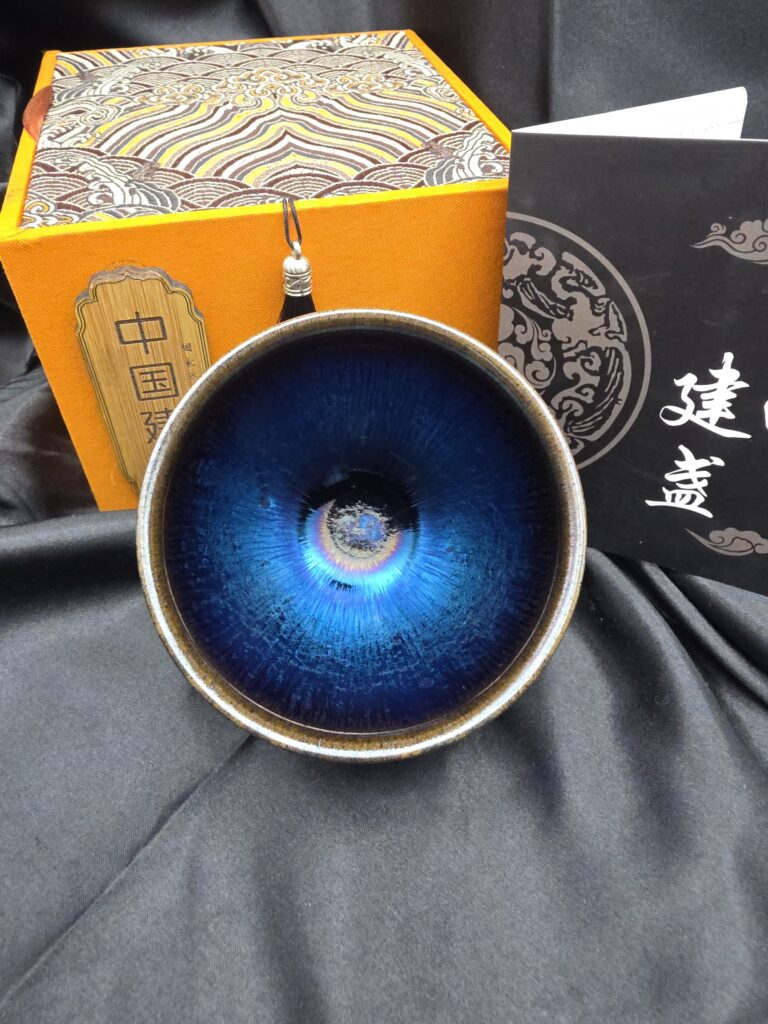
Examples attributed to Wang Li Qing appear in several recognizable Jian ware surface traditions. Publicly documented and commercially archived pieces have been described using terms including silver hare’s-fur, purple-gold oil spot, oil-spot effects, and highly patterned crystalline surfaces.
These terms are useful when studying the range of work associated with her name, although seller descriptions should not automatically be treated as official artist-assigned glaze names.
Across these works, the visual emphasis is often on the contrast between a dark iron-bearing ground and brighter metallic or crystalline markings. Depending on the firing and glaze, these markings may appear silver, gold, bronze, blue, or violet under changing light.
Known and Documented Work Names
The following names or glaze descriptions have appeared in published or archived references connected with Wang Li Qing’s work:
-
十六滴泪建盏
“Sixteen Tears” Jian ware. This title appears with a work attributed to Wang Li Qing in a published collection of contemporary Jianzhan practitioners. -
十六泪垂珠钵
A bowl name appearing in commercial archives and associated with Wang Li Qing. The name refers to a pattern evocative of sixteen descending tear or bead-like marks. -
紫金油滴
Purple-gold oil spot. Pieces sold under Wang Li Qing’s name have been documented with this glaze description. -
银毫
Silver hare’s-fur. Commercial archives also associate this Jian ware surface with her work. -
八釉珠油滴
A seller-used description appearing on multiple archived examples attributed to Wang Li Qing. Because this terminology comes from commercial listings, FSOC treats it as reference information rather than a confirmed official glaze title.
Jian Ware and the Kiln
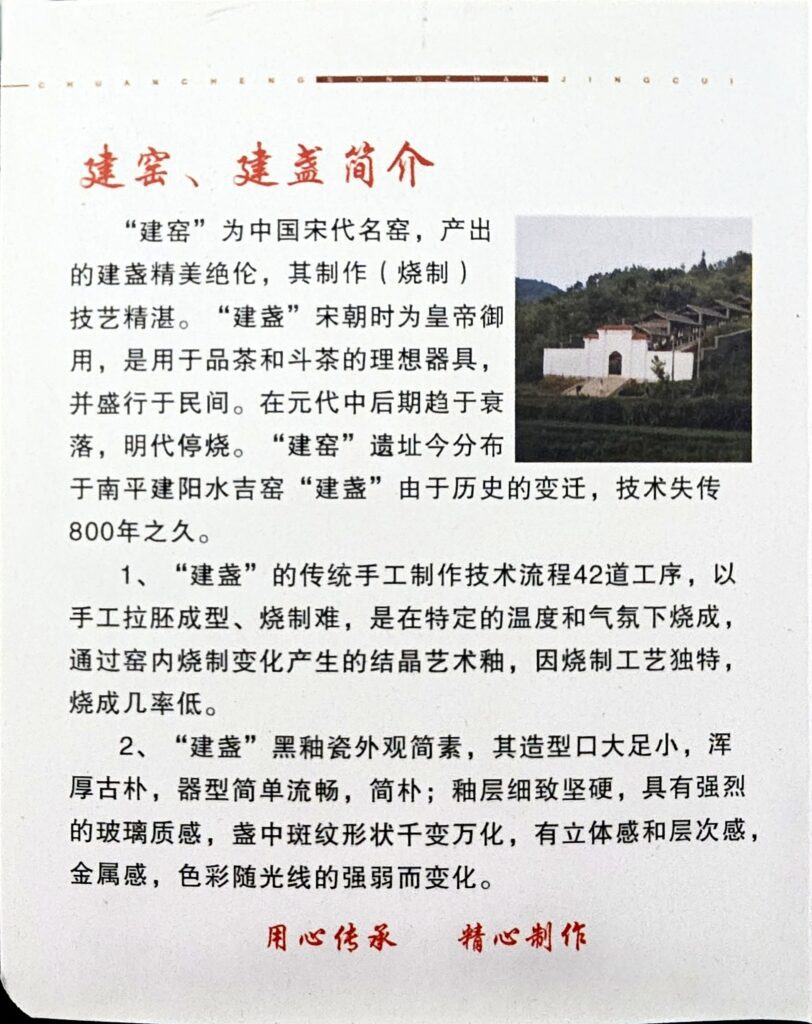
Jianzhan developed at the Jian kilns of Fujian and became especially celebrated during the Song Dynasty. Its dark iron-rich glaze was prized for tea drinking and for the naturally occurring patterns that emerged during firing.
Traditional visual categories include rabbit-hair, oil-spot and related crystalline effects. Contemporary artists continue to work within this material language while experimenting with glaze formulation, vessel form, firing schedules, kiln atmosphere, and cooling.
Because these surfaces are produced through kiln chemistry rather than painted decoration, even closely related pieces can show substantial variation. A single firing may produce differences in spot size, streaking, metallic color, iridescence, and the movement of glaze across the vessel.
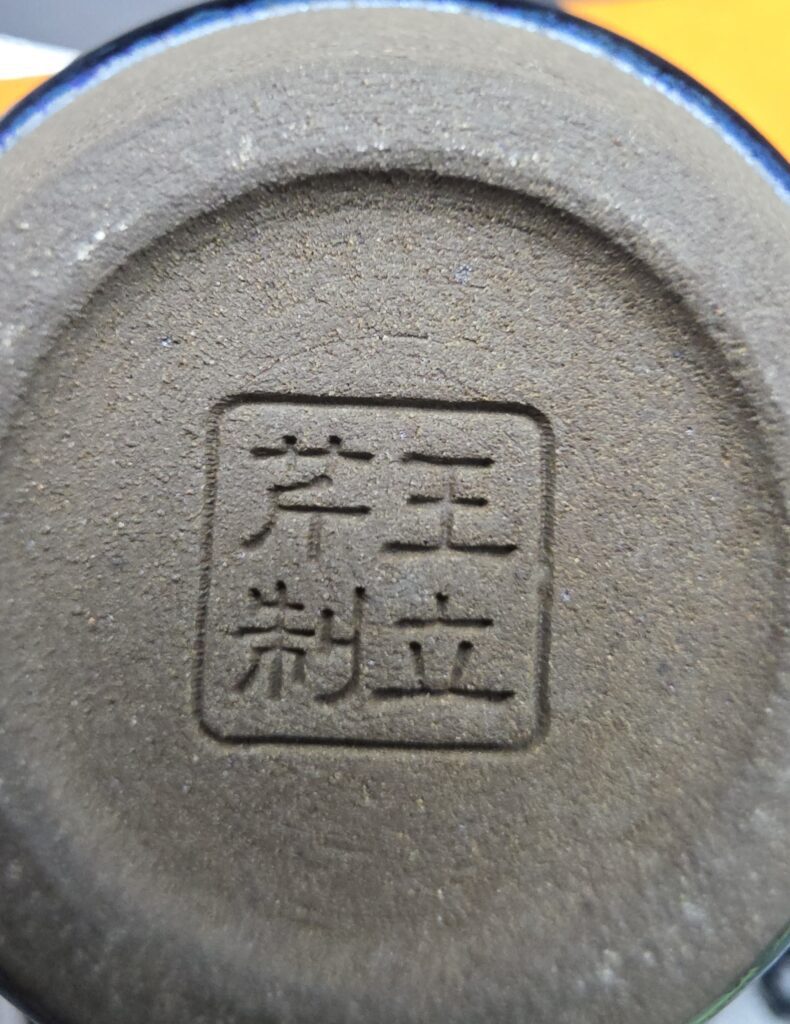
Artist’s Mark
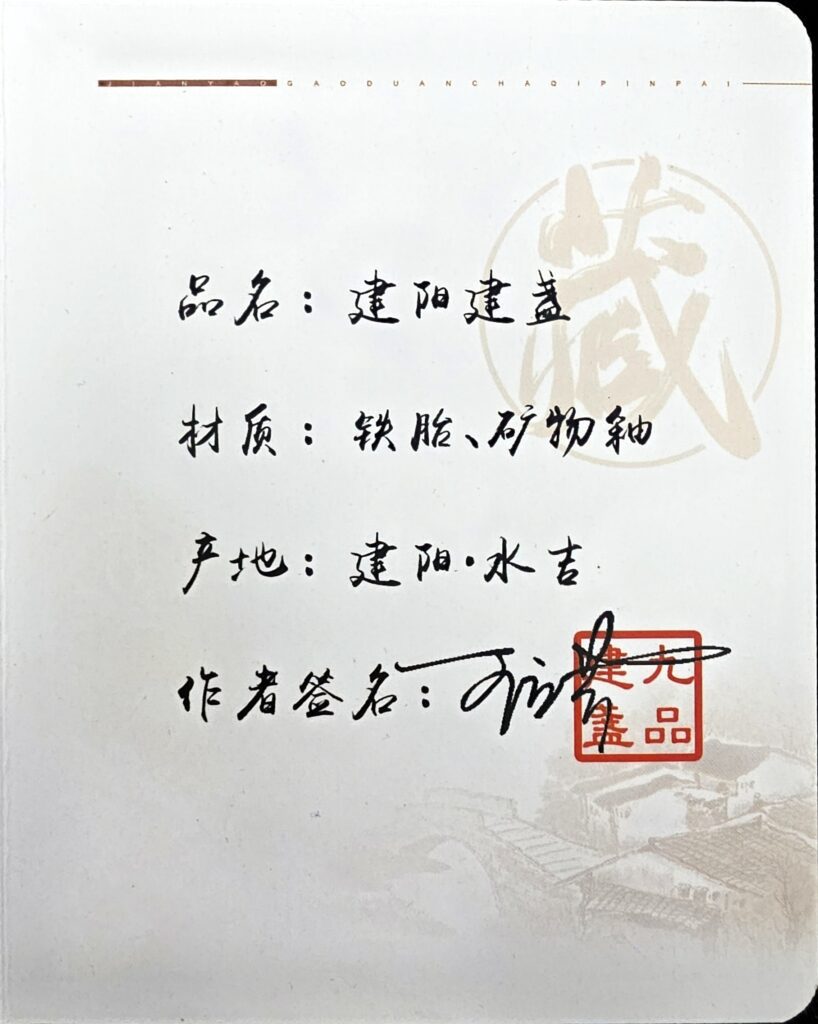
The mark documented here reads 王立芹制, meaning “Made by Wang Li Qing.”
Marks are useful when studying attribution, but FSOC compares the mark together with the vessel, accompanying documentation, provenance, and other available information rather than relying on a seal alone.
Family of Jian Ware Artists
Wang Li Qing’s family provides an interesting example of Jian ware knowledge continuing within a working ceramic household.
Research Notes
Information about many contemporary Jian ware artists is scattered across artist documentation, exhibition material, collector publications, marketplace archives, interviews, and individual works.
FSOC distinguishes between information supported by artist documentation and published references, and terminology found only in commercial listings. Additional verified biographical information, exhibition records, awards, workshop history, or artist-provided glaze names can be added as stronger primary sources become available.
Works in the FSOC Archive
Explore collection posts and reference images tagged with Wang Li Qing’s name.
 Wang Li Qin blue oil spot
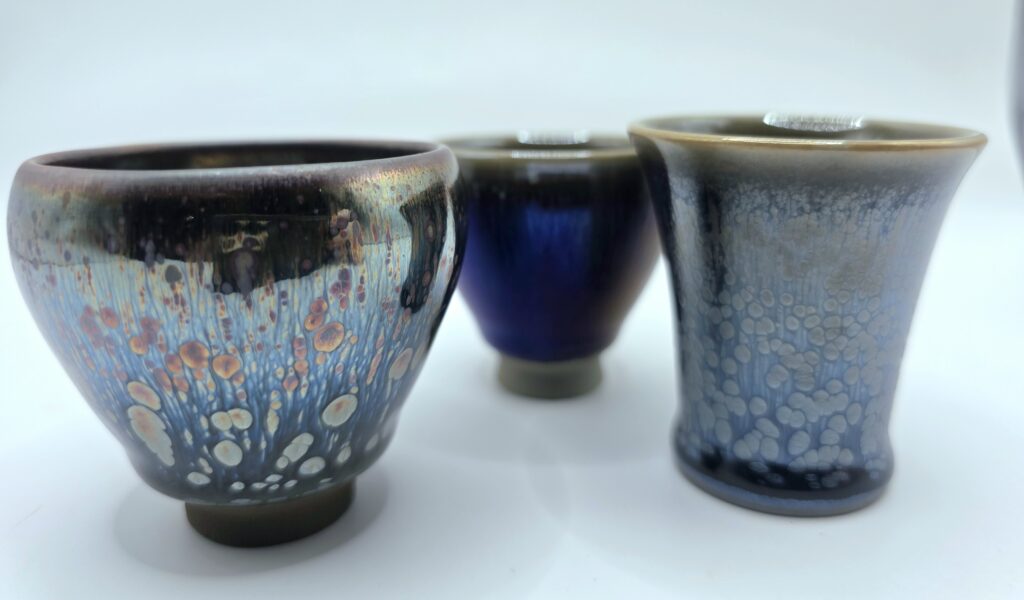 Wang Jing & WANG LI QIN shotglasses
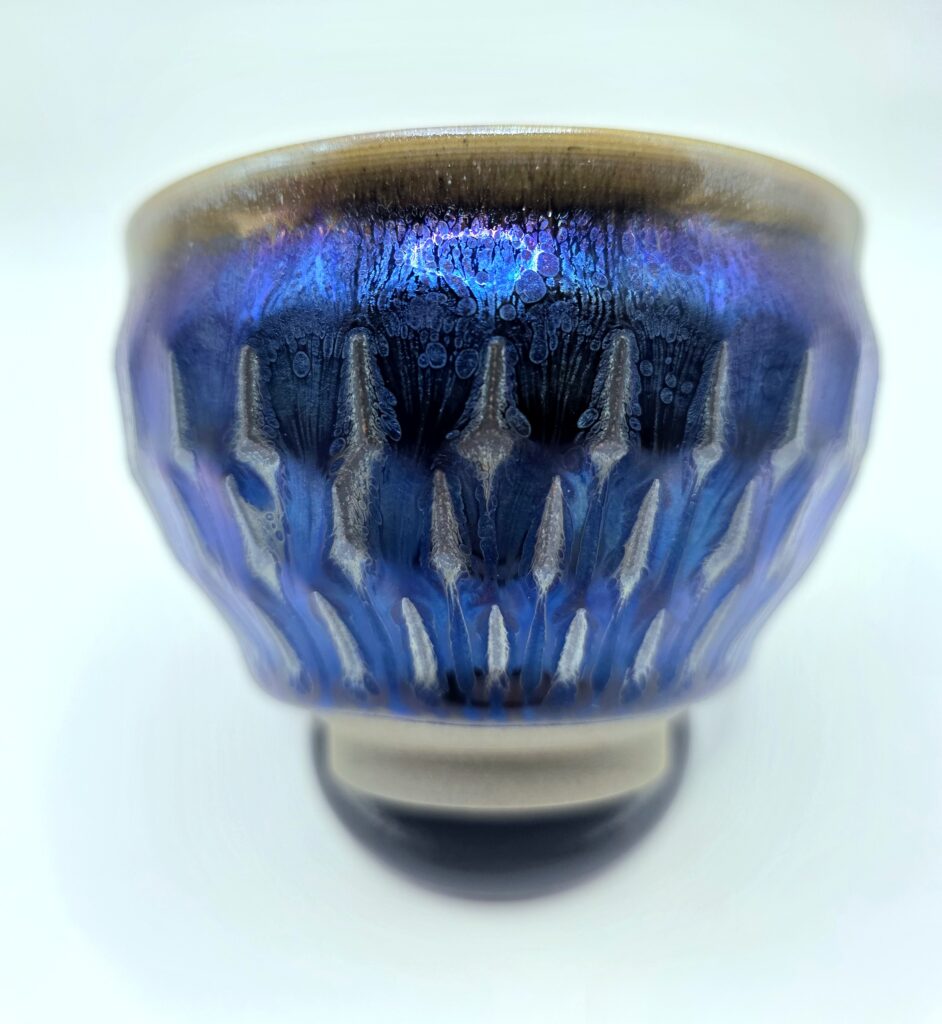 Wang Li Qin daggers cup
 Wang Li Qin extreme drip
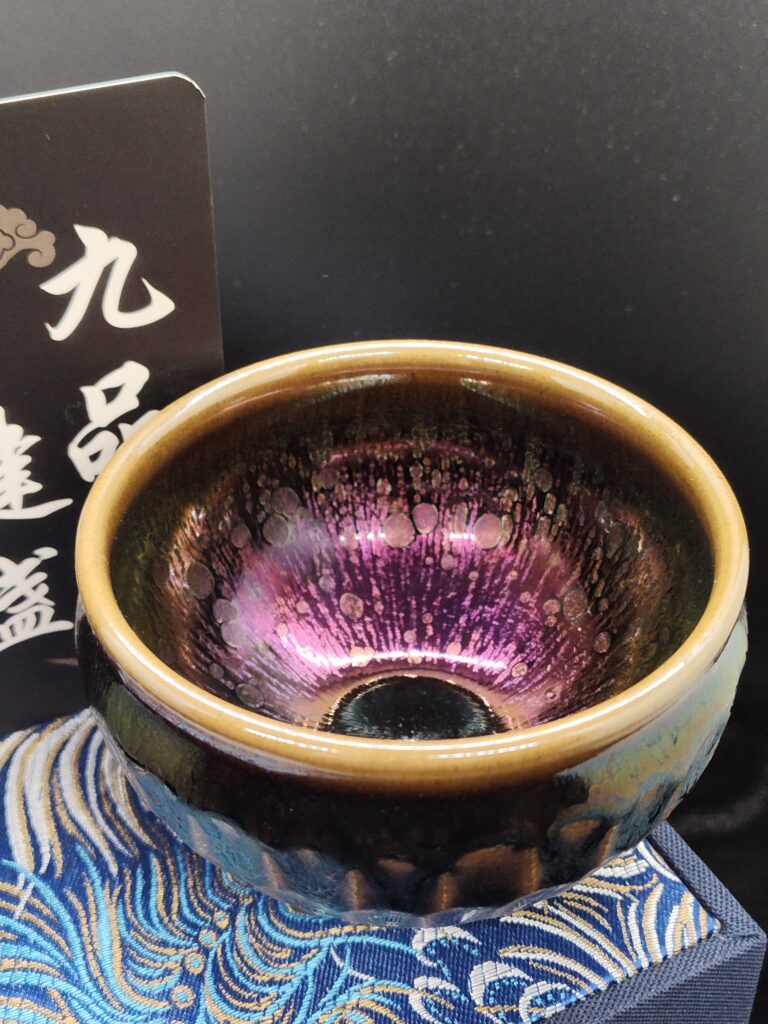 Wang Li Qin: Obsidian Transformation Dancing Dagger, Jumping Knife, General Shape
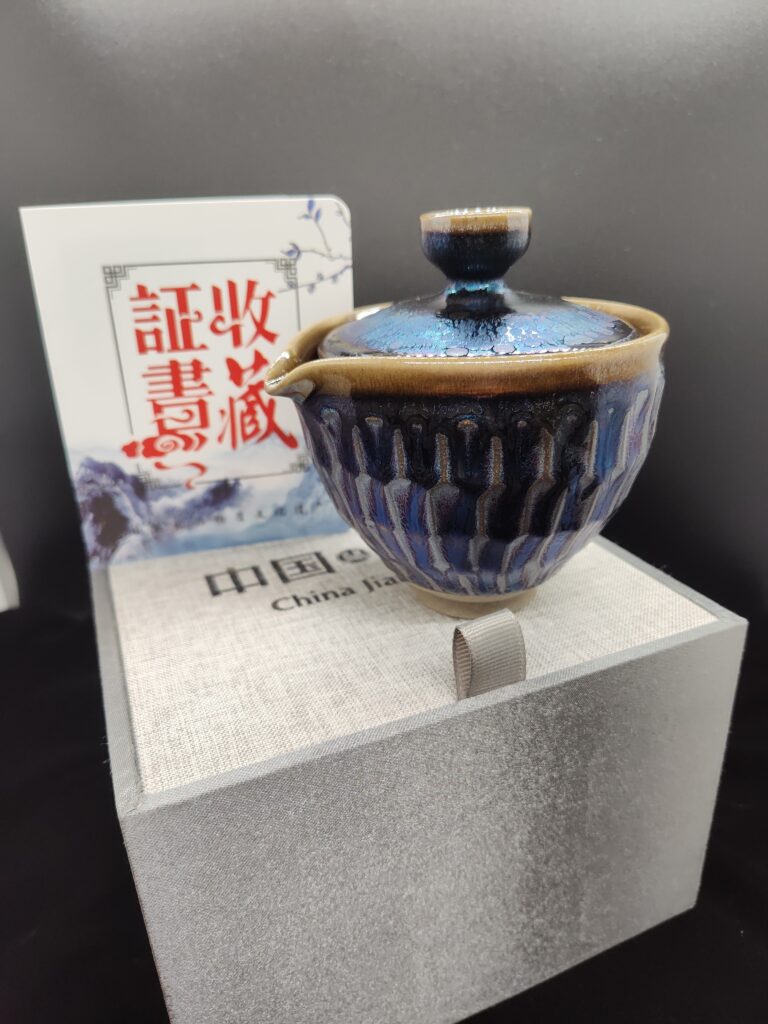 Wang Li Qin: Obsidian Transformation, Dancing Dagger, Jumping Knife Quick Pot
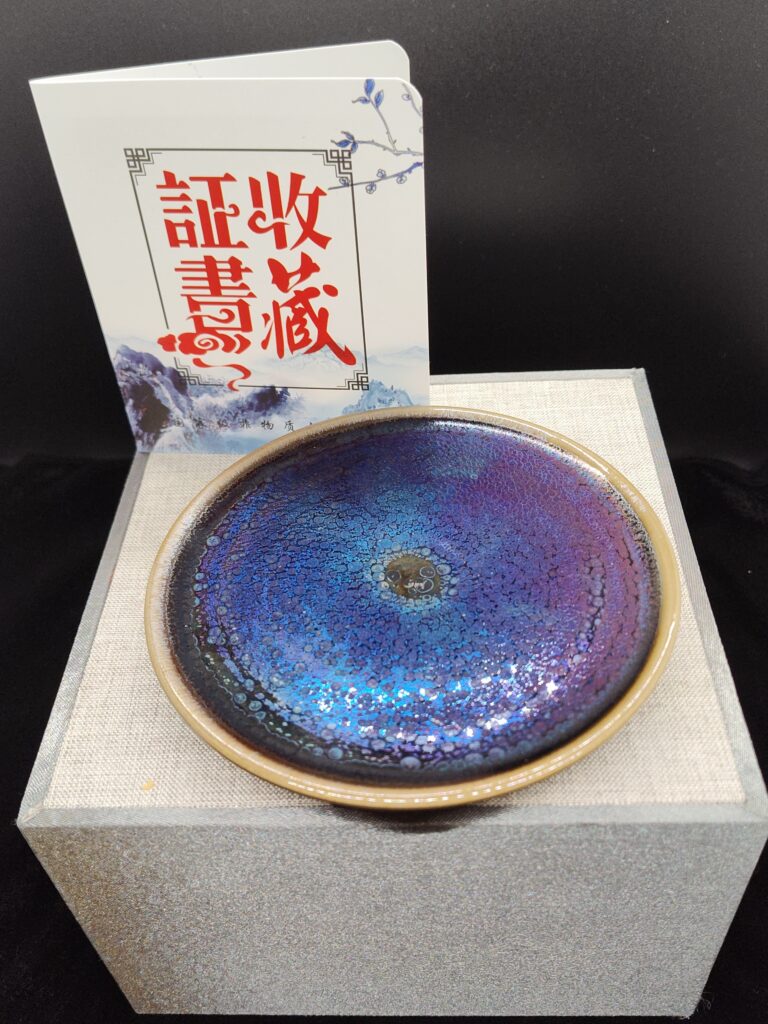 Wang Li Qin: Obsidian Transformation Plate
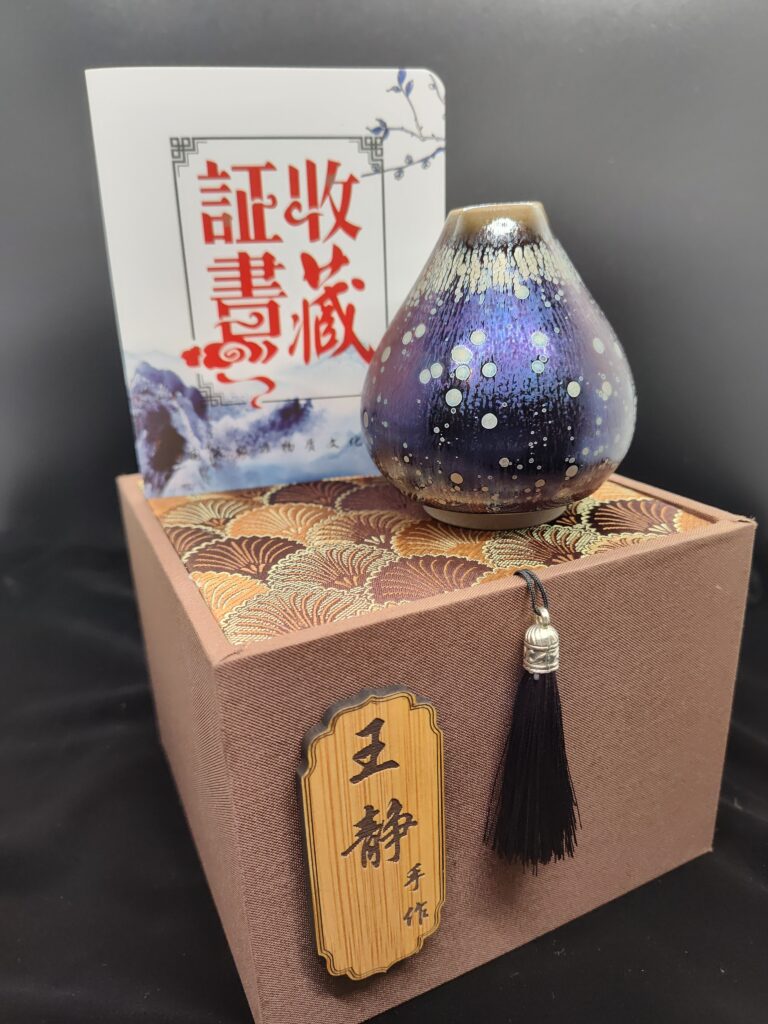 Wang Li Qin: Obsidian Transformation Vase