Wu Zhoufu
Jian kiln region of Jianyang, known particularly for
oil-drop crystallization, modern yaobian experimentation,
and the distinctive Jinsi Wanlü / Jinlü
family of glazes.
About Wu Zhoufu
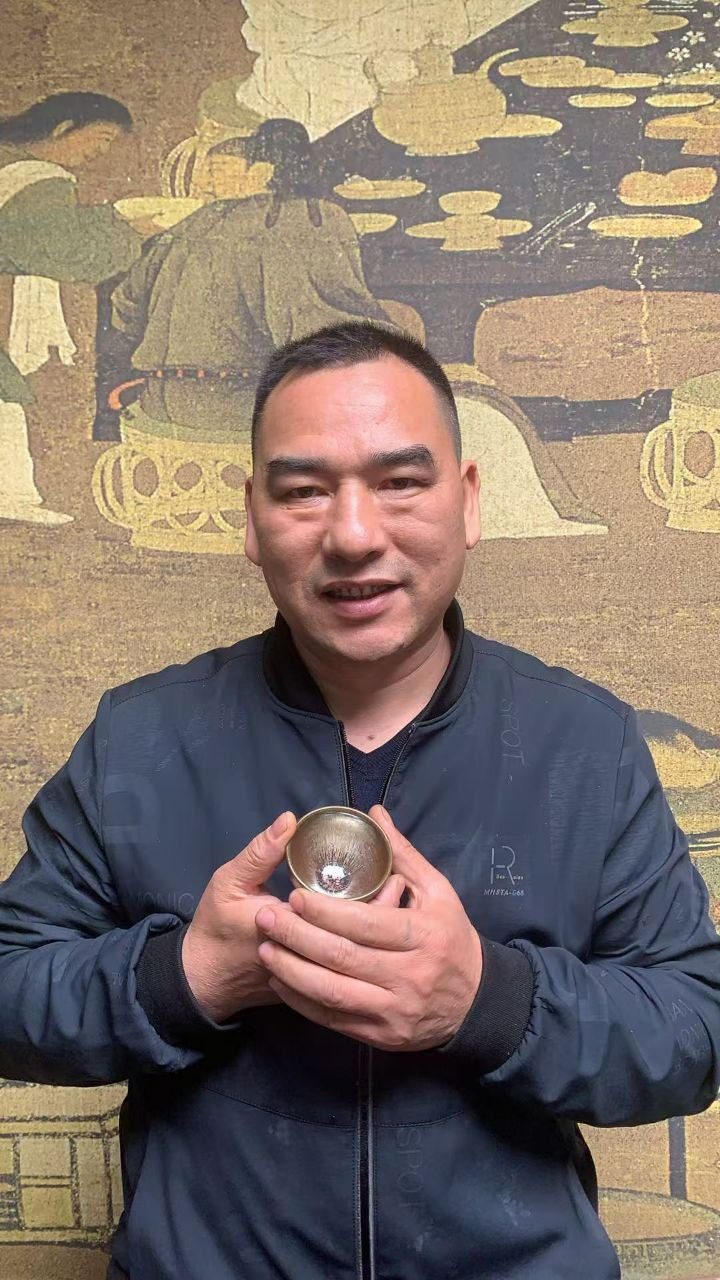
Wu Zhoufu (吴周福) is a contemporary Jian Zhan ceramic artist
associated with Jianyang, Fujian Province. Chinese biographical
sources place his birth in November 1975 in Houjing Village,
Shuiji Town, an area closely connected with the historic Jian kiln
complex.
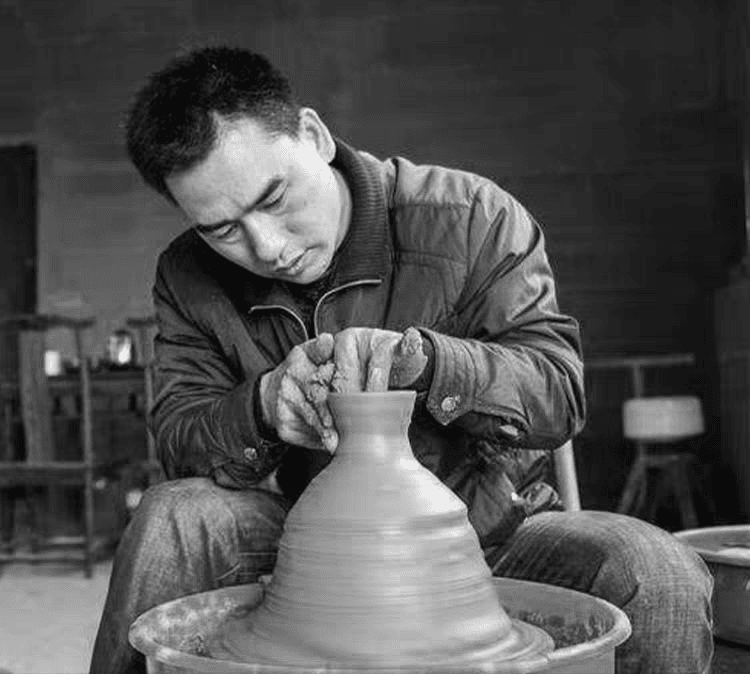
He grew up within the cultural landscape of the Jian kilns and
spent many years collecting and studying Jian ware before turning
increasingly toward its production and technical research.
Published profiles state that he began studying Jian Zhan firing
under Xu Jiayou (许家有) around 2010 and
established the Fulao Jian Zhan workshop
(福佬建盏) in 2011.
Wu Zhoufu is particularly associated with iron-rich crystalline
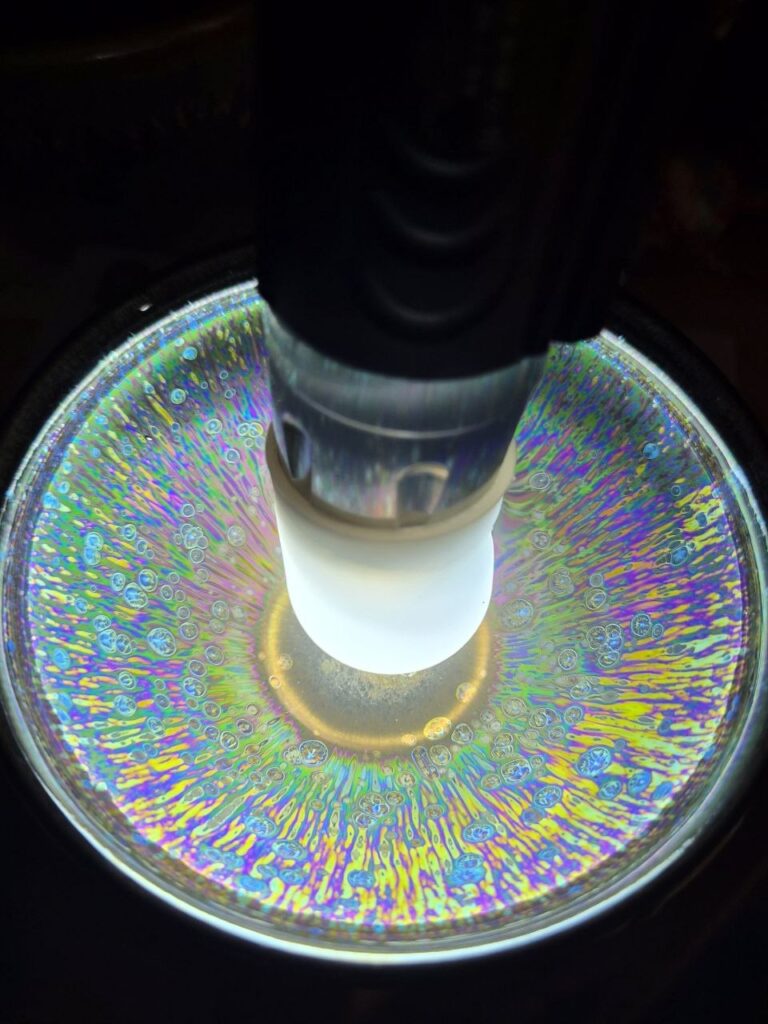
glazes, large oil-drop patterns, luminous blue-ringed crystals,
multicolored surfaces and experimental modern
曜变 (yàobiàn) effects.
The Artist & His Craft
Research into Yaobian 曜变
Yaobian has become one of the most technically ambitious areas of
contemporary Jian Zhan research. The effect is associated with
luminous rings, iridescence and changes of color around crystalline
markings produced through the interaction of iron-rich glaze,
temperature and kiln atmosphere.
Jianyang reporting on Wu Zhoufu describes his long experimentation
with oil-drop glazes and his interest in the blue halos that can
appear around large crystalline spots. Those visual effects
encouraged further experimentation with surfaces intended to evoke
characteristics associated with historic yaobian Jian ware.
In March 2019, Xinhua News Agency photographed Wu Zhoufu during a
feature on contemporary Jianyang craftsmen researching yaobian
firing. Xinhua specifically documented him displaying his work
《金丝万缕》 Jīnsī Wànlǚ.
油滴 Oil Drop
金丝万缕 Jinsi Wanlü
金缕 Jinlü
彩滴 Color Drops
Fuyao 福曜 & Color-Drop Work
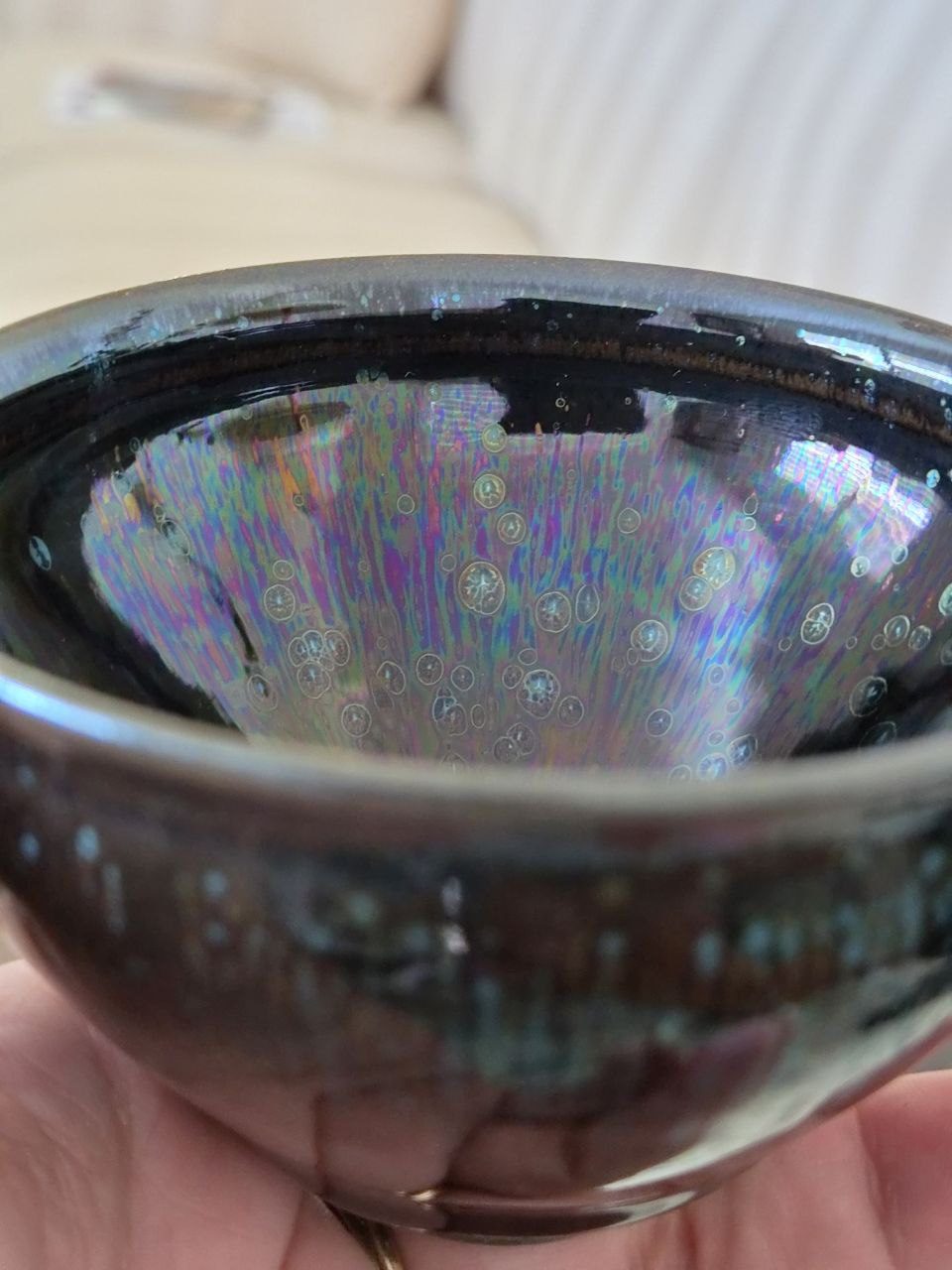
showing circular crystalline formations surrounded by blue and
cyan halos.
Contemporary sales and collector materials associated with Wu
Zhoufu use terms including 福曜 (Fúyào) and
水母彩滴 (shuǐmǔ cǎidī) for some of his
intensely colorful yaobian work.
水母彩滴 literally translates approximately as
“jellyfish color drops.” The description refers to
rounded crystalline formations whose luminous outlines and internal
structures can resemble small translucent jellyfish floating across
an iridescent field.
These are modern descriptive or commercial terms associated with
contemporary work and should not be confused with formal
Song-dynasty glaze classifications.
金丝万缕 · Jinsi Wanlü
One of Wu Zhoufu’s most recognizable bodies of work is
金丝万缕 (Jīnsī Wànlǚ), a name suggesting
countless or myriad golden threads.
These surfaces combine elongated crystalline streaks, fine
hair-like lines and rounded oil-drop structures. Depending upon
lighting, the glaze may reveal purple-gold, bronze, silver and
other iridescent colors.
A particularly important independent record of Wu Zhoufu’s glaze
research exists in the Chinese patent system.
Title: 金缕建盏制备工艺
English: Jinlü Jian Zhan Preparation Process
Inventor: 吴周福 · Wu Zhoufu
Filed: June 18, 2020
Granted: June 17, 2022
The patent describes a Jian Zhan glaze containing several related
forms of crystalline marking:
- 毫 (háo) — fine, hair-like markings
- 缕 (lǚ) — elongated thread-like markings
- 滴 (dī) — rounded drop-like formations
The patented process states that the 缕 markings
are thicker than fine hare’s-fur lines yet more elongated than
conventional oil-drop spots. It describes a predominantly
purple-gold glaze with multiple colors, clear three-dimensional
crystalline texture and a lustrous golden rim.
The patent is also notable for documenting regional materials,
including red clay from Houjing Village, kaolin from Nanshan
Village and glaze ore from the Jianyang area.
Technique & Visual Characteristics
Wu Zhoufu’s body of work cannot be reduced to a single glaze.
Collectors may encounter substantially different pieces bearing his
name or Fulao mark.
Characteristics associated with his work include:
- Large silver or blue oil-drop crystals
- Blue and cyan halos surrounding crystalline spots
- Purple, gold, green and blue iridescence
- Fine thread-like crystalline structures
- Dense golden markings
- Modern yaobian-style optical effects
- Strong changes in appearance under different lighting
The common thread throughout these different styles is an interest
in controlling the interaction of iron-rich Jian clay and glaze,
crystalline growth, reduction atmosphere, temperature changes and
light.
Marks & Seals
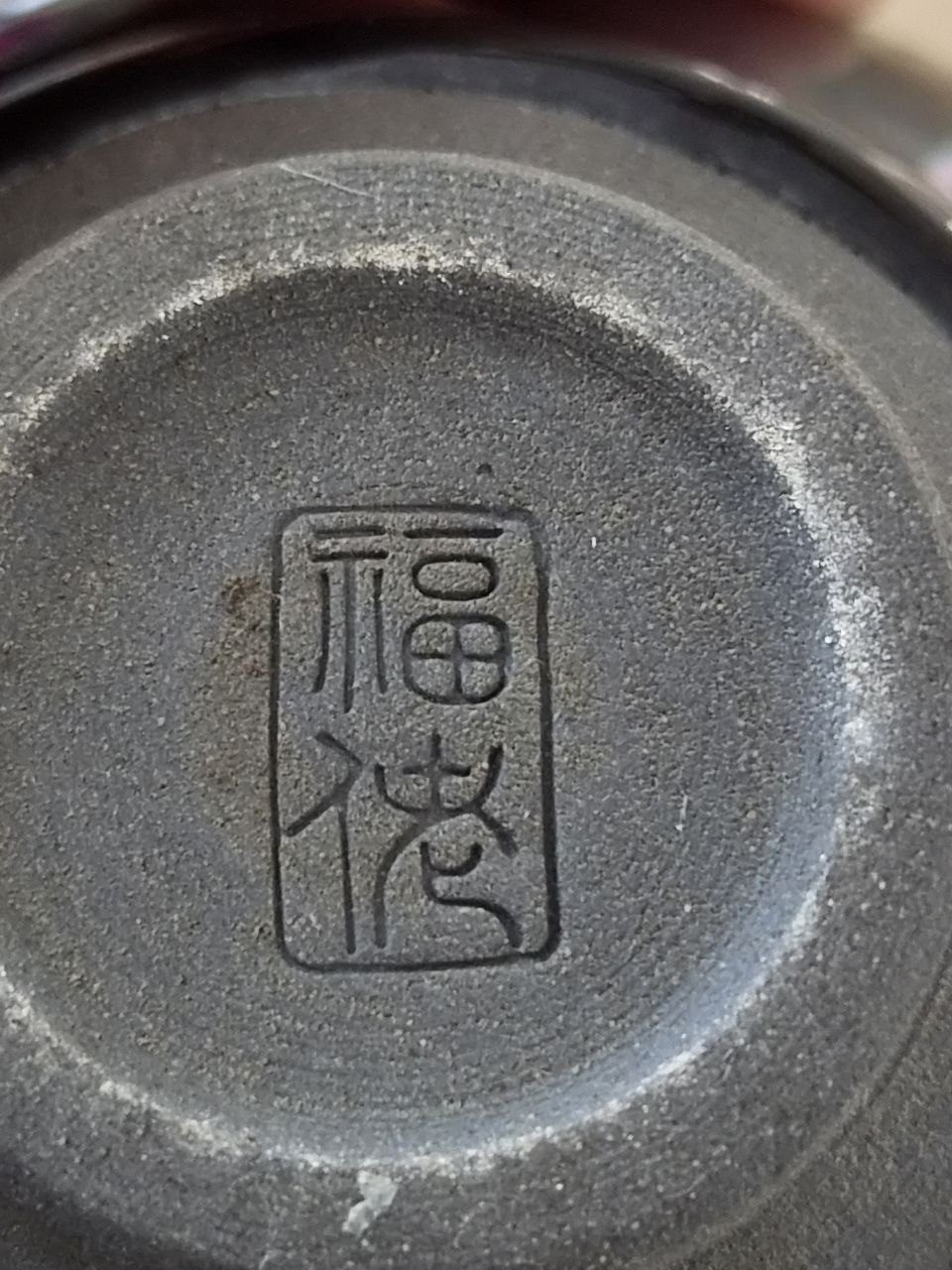
Wu Zhoufu’s work is commonly associated with the
福佬 (Fúlǎo) name.
Known examples may carry a rectangular
福佬 impressed seal as well as smaller
circular marks.
Documentation and packaging associated with known works also
use the 福佬 name in connection with Wu Zhoufu and his
workshop.
A seal alone should never be treated as absolute proof of
authenticity. Marks should be considered together with
provenance, certificates, packaging, glaze characteristics
and comparison with documented examples.
Career & Recognition
-
1975
Born in November in the Jian kiln region of Jianyang, Fujian. -
2010
Published biographical material states that Wu began studying
Jian Zhan firing with Xu Jiayou (许家有). -
2011
Established the Fulao Jian Zhan workshop
(福佬建盏陶瓷厂), according to published artist profiles. -
2014
Jianyang reporting describes successful experimentation with
blue and silver oil-drop effects and his increasing interest in
yaobian-related crystalline halos. -
2017
Wu Zhoufu was identified as a third-batch representative
inheritor of the Jian kiln / Jian Zhan firing technique in
Jianyang District. -
2018–2019
Artist and exhibition materials record multiple awards for
works in the 金丝万缕 series. -
March 2019
Xinhua News Agency documented Wu Zhoufu during a feature on
contemporary yaobian research and photographed him displaying
《金丝万缕》. -
2020
Wu Zhoufu filed the patent application for his
金缕建盏 preparation process. -
2022
Chinese patent CN111848120B was granted with
吴周福 listed as inventor.
Additional artist biographies and commercial materials list later
professional titles, exhibition awards and institutional collection
claims. Where an independent museum, government or archival record
has not yet been located, Fifty Shades of Clay treats those claims
separately from independently verified documentation.
Collector Notes
Wu Zhoufu is particularly useful to study through a combination of
physical marks, accompanying documentation and glaze comparison.
His documented output includes both relatively traditional
oil-drop work and considerably more colorful experimental pieces.
Collectors should therefore avoid assuming that every Wu Zhoufu
bowl will have the same visual appearance.
The presence of the 福佬 mark, original
certificates or presentation material can help establish
provenance, but these should always be evaluated alongside the
individual object’s workmanship and known documented examples.
References & Research Sources
Sources are presented with stronger archival, news and patent
documentation given greater weight than promotional or marketplace
material.
-
Local News
Jianyang News — 吴周福:曜变绝技的探秘者
Early profile covering Wu Zhoufu’s workshop, oil-drop
experimentation and pursuit of yaobian effects. -
Xinhua
福建建阳:苦研曜变建盏烧制技艺的匠人
Xinhua photographic reporting from March 2019 documenting Wu
Zhoufu and his 《金丝万缕》 work. -
Patent
CN111848120B — 金缕建盏制备工艺
Chinese patent naming 吴周福 as inventor and documenting the
Jinlü Jian Zhan preparation process. -
Biography
建盏名家系列 — 吴周福
Secondary biographical source containing birth information,
teacher lineage and workshop history. -
Secondary
建盏非遗传承人吴周福:因为热爱建盏,所以倾注一生
Later biographical material containing additional awards and
professional recognition.
Research Note
Modern Jian Zhan biographies are frequently reproduced across
galleries, seller listings and promotional material. For
Fifty Shades of Clay, claims supported by
independent news archives, patents, museum records or government
documentation are given greater evidentiary weight.
Titles, awards and museum collection claims that currently appear
only in artist or commercial materials are identified as reported
claims rather than treated automatically as independently verified
facts.