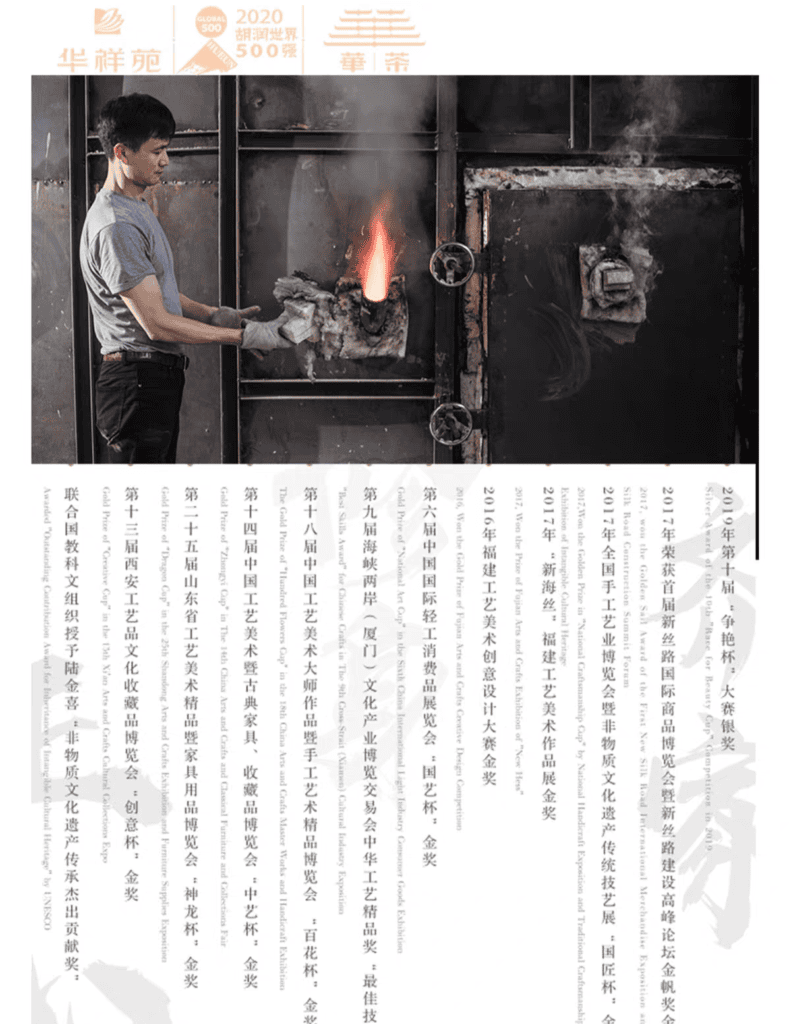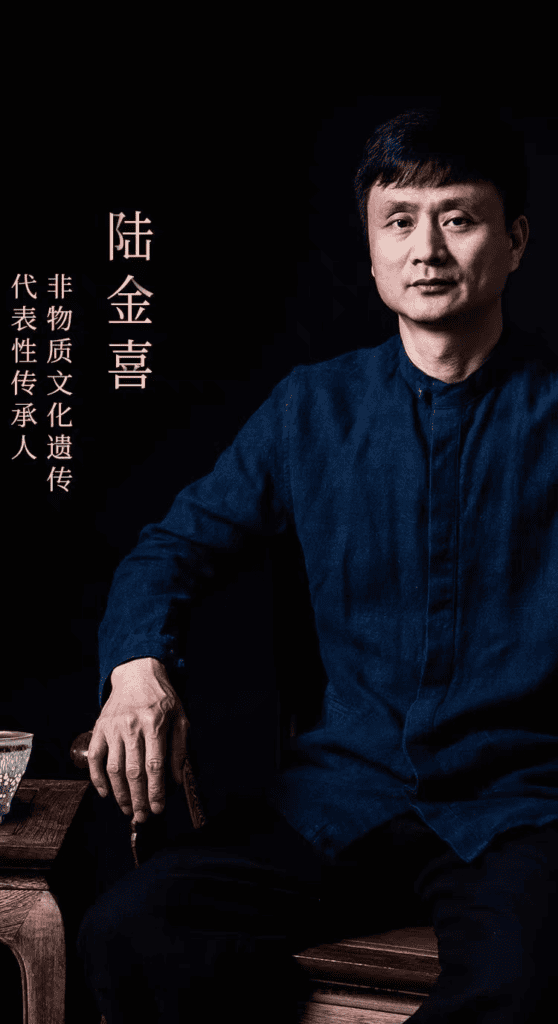
Lu Jinxi 陆金喜
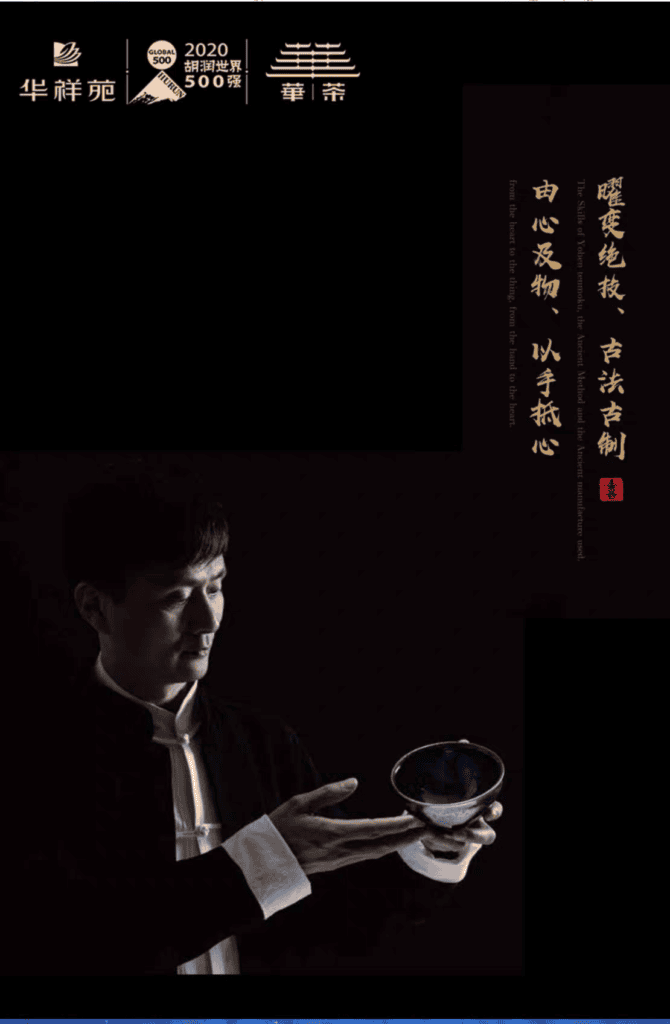
Lu Jinxi is a contemporary Jian ware artist and researcher associated with the Nanping Yaobian Ceramic Research Institute. He is particularly known for his work with Yaobian-style effects, iridescent crystalline glazes, hare’s-fur and oil-drop patterns, and experimental wood-fired Jian ware.
Quick Facts
陆金喜
Lu Jinxi
Nanping / Jianyang, Fujian, China
Nanping Yaobian Ceramic Research Institute
南平市曜变陶瓷研究院
正高级工艺美术师
Confirmed 2022
2020 State Council Special Government Allowance
Lu Jinxi National-level Skills Master Studio
Yaobian, hare’s fur, oil drop, iridescent effects and wood-fired work
晦翁 or 放翁, often with a separate 喜 side mark
CN108585771B
CN110981420B
Biography & Career
Lu Jinxi is a contemporary Jian ware artist and ceramic researcher based in Fujian. Official provincial records associate him with the Nanping Yaobian Ceramic Research Institute (南平市曜变陶瓷研究院).
In the Fujian Provincial Government’s list of recipients of the 2020 State Council Special Government Allowance, Lu Jinxi appears among the province’s recognized high-skilled professionals, with the Nanping Yaobian Ceramic Research Institute listed as his work unit. [1]
In 2022, Fujian authorities formally confirmed Lu Jinxi as a 正高级工艺美术师, the senior professional rank within the provincial arts and crafts professional-title system. [2]
A 2024 Fujian Provincial Government report describing an official visit to Jianyang specifically refers to the Lu Jinxi National-level Skills Master Studio (陆金喜国家级技能大师工作室). [3]
Published artist and heritage biographies state that Lu began studying Jian ware firing with Chen Hui 陈辉 in 1995, independently produced hare’s-fur ware by 1998 and oil-drop ware by 2000, and later concentrated heavily on the study and reconstruction of Yaobian effects. [6]
Yaobian Research 曜变
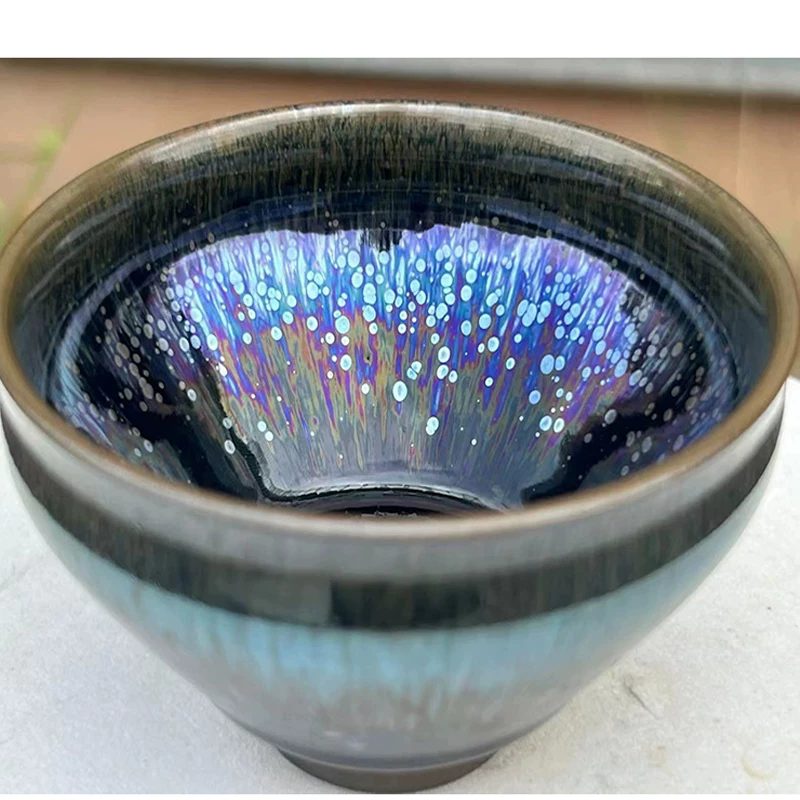
Lu Jinxi is particularly associated with modern research into Yaobian-style Jian ware. In this context, 曜变 refers to dramatic optical effects in which dark iron-rich glazes develop spots, halos, iridescence and other markings that change visibly with lighting and viewing angle.
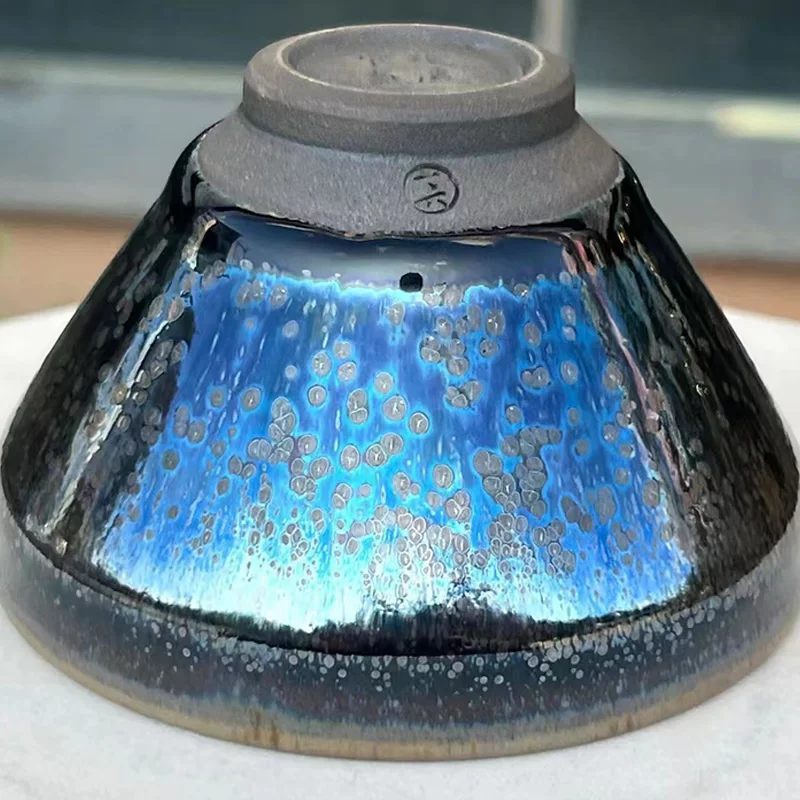
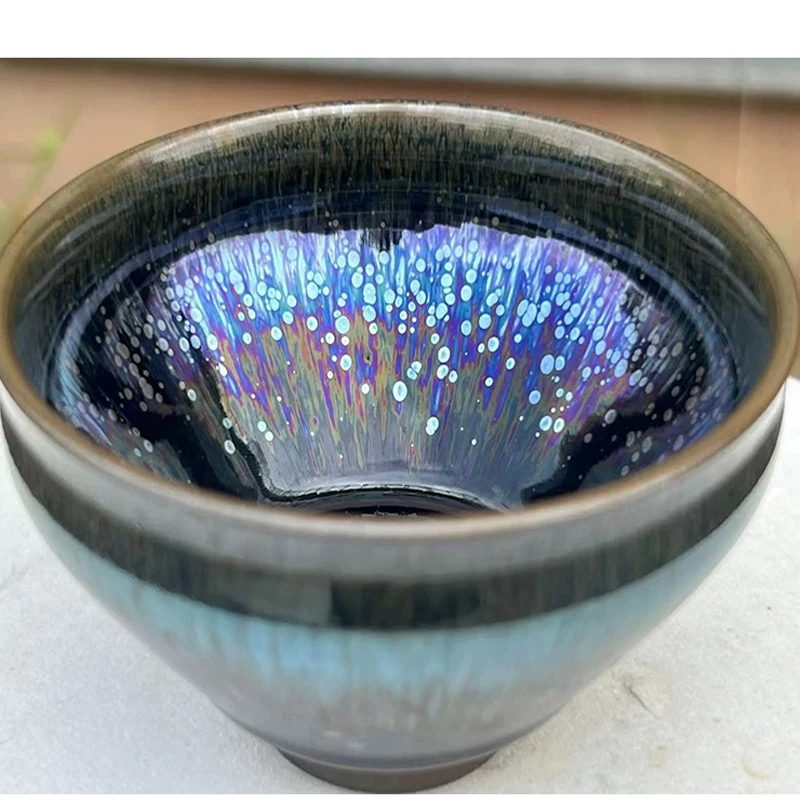
Lu’s patents provide unusually detailed information about the effects he was attempting to create. Patent CN108585771B describes a finished surface with clusters of differently sized spot nuclei, predominantly circular in form, surrounded by colored halos that change with the light. It also describes colored hare’s-fur-like structures within the broader Yaobian appearance. [4]
His work therefore combines traditional Jian ware materials and iron-rich glazes with extensive experimentation in kiln atmosphere, temperature, cooling and reduction.
Patented Firing Processes
Two Chinese invention patents provide detailed primary-source information about Lu Jinxi’s approach to modern Yaobian Jian ware.
A Yaobian Jian Ware and Preparation Process
Inventor: Lu Jinxi 陆金喜
Assignee: Nanping Yaobian Ceramic Research Institute
Filed: May 9, 2018
Granted: August 25, 2020
The patent specifies an iron-rich body and mineral glaze formulation followed by high-temperature firing at approximately 1355 to 1365°C.
After holding at peak temperature, the kiln is cooled at a controlled rate to approximately 1175 to 1185°C, followed by a strong low-temperature reduction stage.
The stated objective is the formation of clustered Yaobian markings, crystalline structures and colored halos that respond visibly to changes in illumination. [4]
Yaobian Jian Ware Firing Process
Inventor: Lu Jinxi 陆金喜
Filed: December 10, 2019
Granted: June 17, 2022
This later patent describes an even more detailed firing cycle. The kiln is progressively heated to approximately 1350 to 1360°C and held at peak temperature for three hours.
During subsequent stages, the process calls for repeated additions of 油柴, resin-rich wood traditionally associated with pine roots or other highly resinous fuel, together with deliberate opening and closing of an oxygen window to alter the kiln atmosphere.
These reduction stages are described as contributing to the development of oil-drop and hare’s-fur structures and to colored halos surrounding the crystalline markings. [5]
The glaze formulation in the patent also includes lychee wood ash together with glaze stone, feldspar and limestone. [5]
CN110981420B repeatedly uses the general term 窑炉, meaning kiln or furnace. It describes wood additions and carefully controlled changes in kiln atmosphere, but it does not identify the kiln as a 龙窑, dragon kiln. The patent therefore documents Lu Jinxi’s use of wood in the firing process but does not, by itself, establish dragon-kiln firing. [5]
Wood-Fired Work 柴烧
Lu Jinxi has also produced works specifically identified as 柴烧, wood-fired Jian ware. This work should be considered separately from the firing processes described in his Yaobian patents.
Lu’s 2020 天赋异彩 series is described as being fired above 1300°C using resin-rich pine wood, producing dark Jian glazes with shifting blue, purple, red and green effects. [7]
The series included several vessel forms, including smaller Linglong cups, and demonstrates that Lu’s body of work includes dedicated wood-fired Jian ware in addition to his patented Yaobian research.
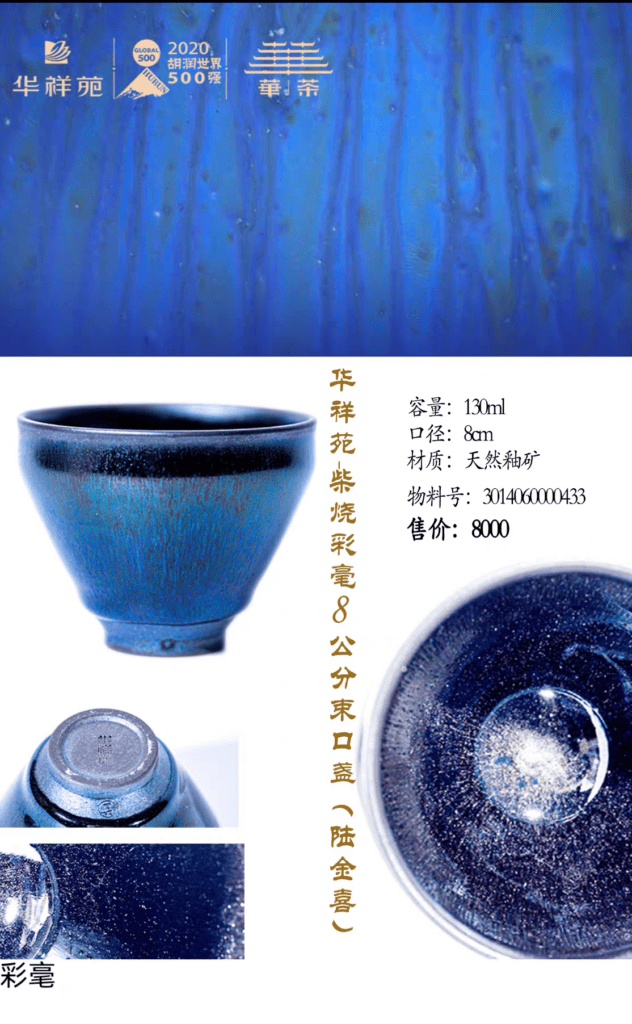
Other works attributed to Lu Jinxi are described with names such as 柴烧彩毫 (wood-fired colored hare’s fur), 柴烧彩滴 (wood-fired colored drops), 柴烧银毫 (wood-fired silver hare’s fur), and other wood-fired crystalline glaze variations.
Glazes & Visual Characteristics
Lu Jinxi’s documented and attributed work covers several related families of iron-crystalline Jian ware. Depending on the individual series and firing, examples may show:
Dark glaze with clustered spots, colored halos and iridescent optical effects.
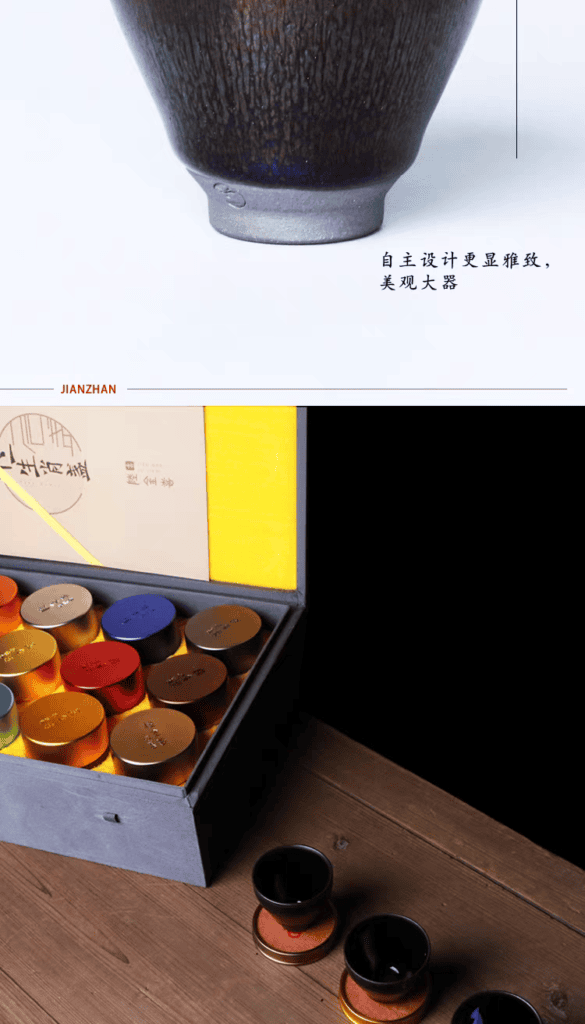
Fine vertical crystalline streaks developing through the iron-rich glaze.
Rounded crystalline markings ranging from small specks to larger metallic spots.
Hare’s-fur structures accompanied by blue, violet or other changing colors.
Dark surfaces showing shifting colored highlights associated with Lu’s wood-fired work.
Marks & Signatures
Collector and specialist references document a distinctive marking system on many Lu Jinxi works.
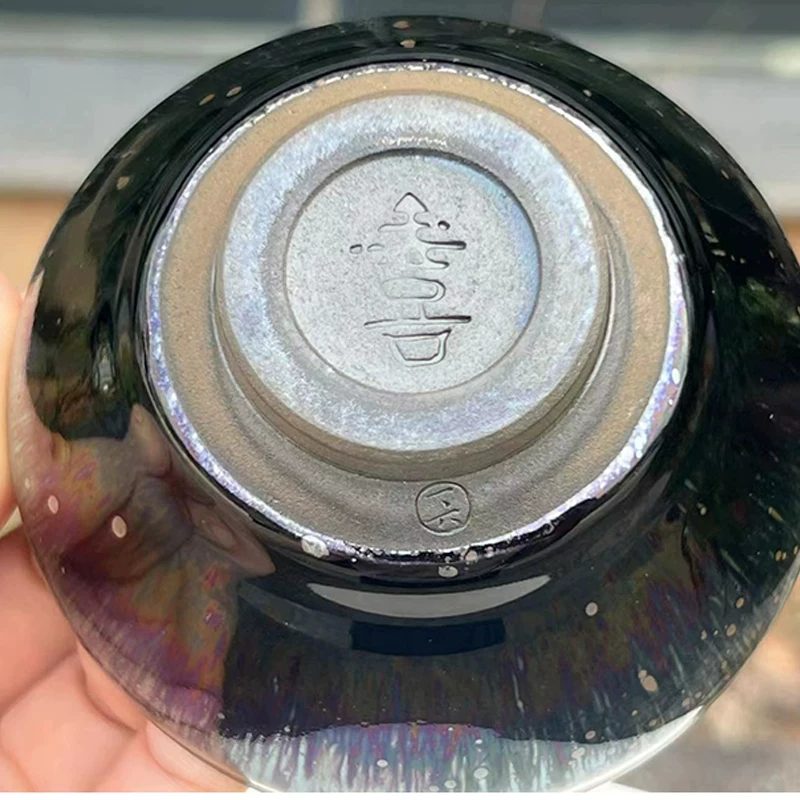
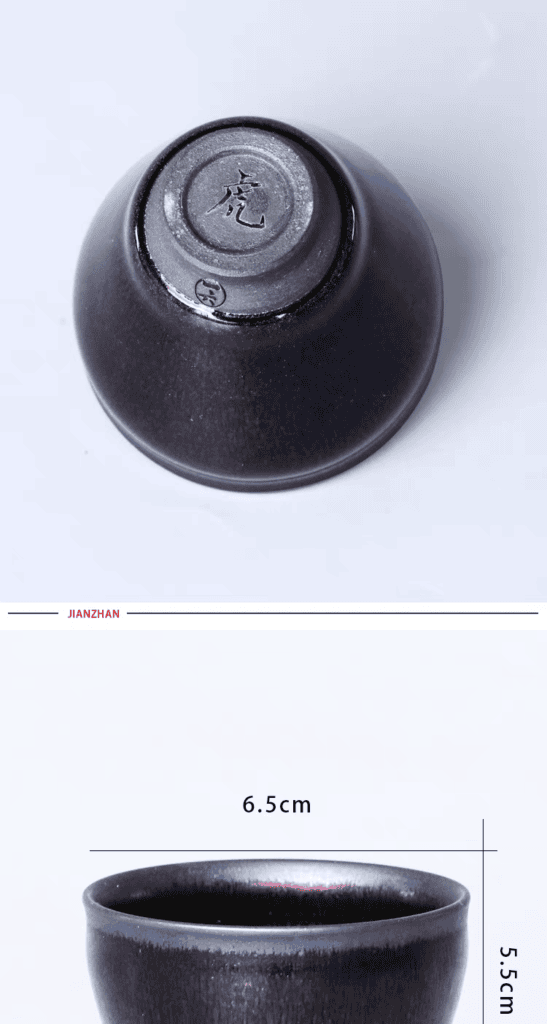
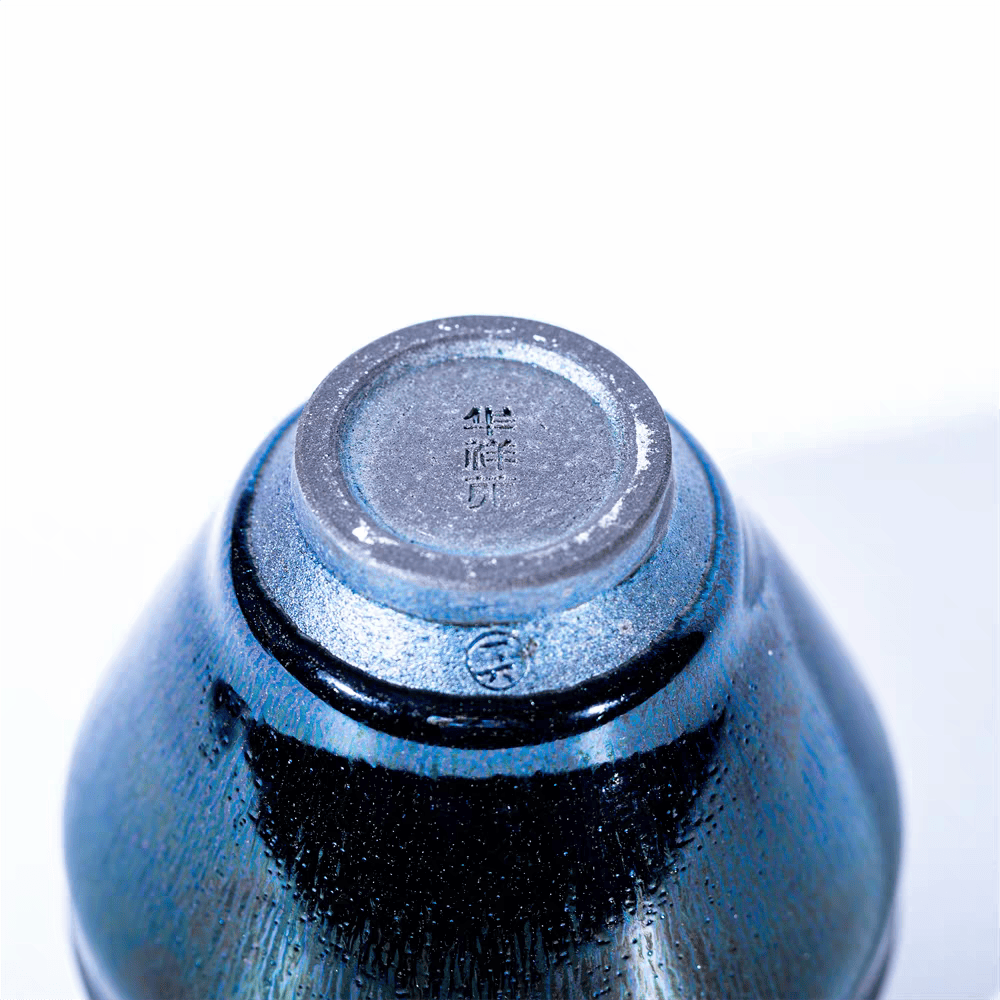
One documented Lu Jinxi base mark. “Huiweng” was a sobriquet associated with the Song dynasty scholar Zhu Xi.
An alternative documented base mark. “Fangweng” was the sobriquet of the Song dynasty poet Lu You.
A small separate “Xi” mark frequently documented on the exposed clay at the side of the foot. 喜 is the final character of Lu Jinxi’s name.
Specialist collector references describe combinations such as 晦翁 + 喜 or 放翁 + 喜. [8] Commercial catalog examples also document the Huiweng/Fangweng base marks together with the separate Xi side mark. [9]
Certificates, Boxes & Provenance
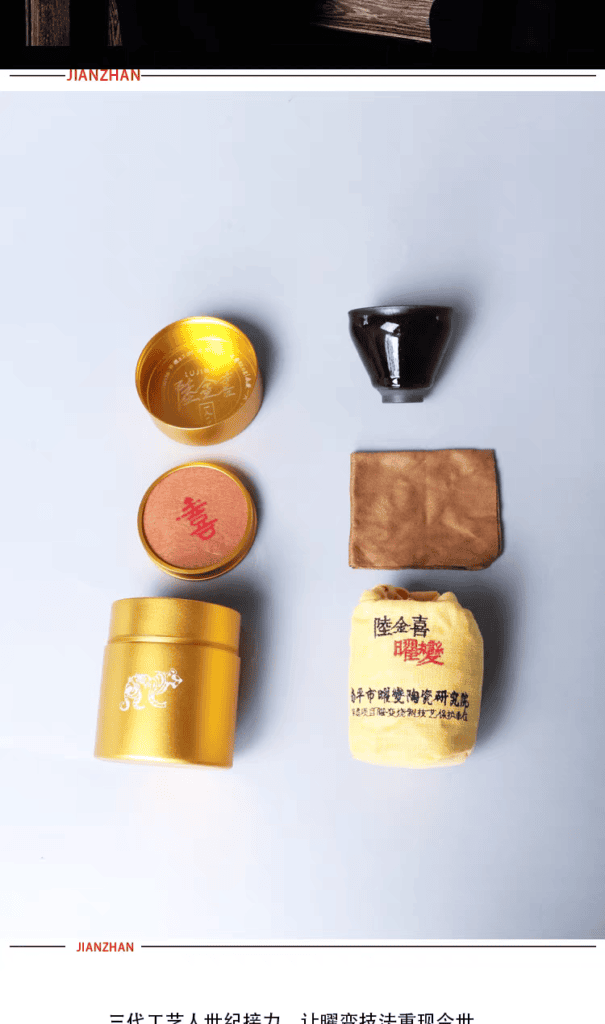
Some documented Lu Jinxi collector pieces were sold with presentation boxes, certificates, anti-counterfeit features or individual numbering. Descriptions of some of his wood-fired releases likewise mention signed collection certificates.
Original documentation can be particularly useful when identifying individual editions, glaze series and firing methods. Dated marks, certificates, work numbers and original presentation boxes can also help connect a piece to a documented release.
Institutional Collection
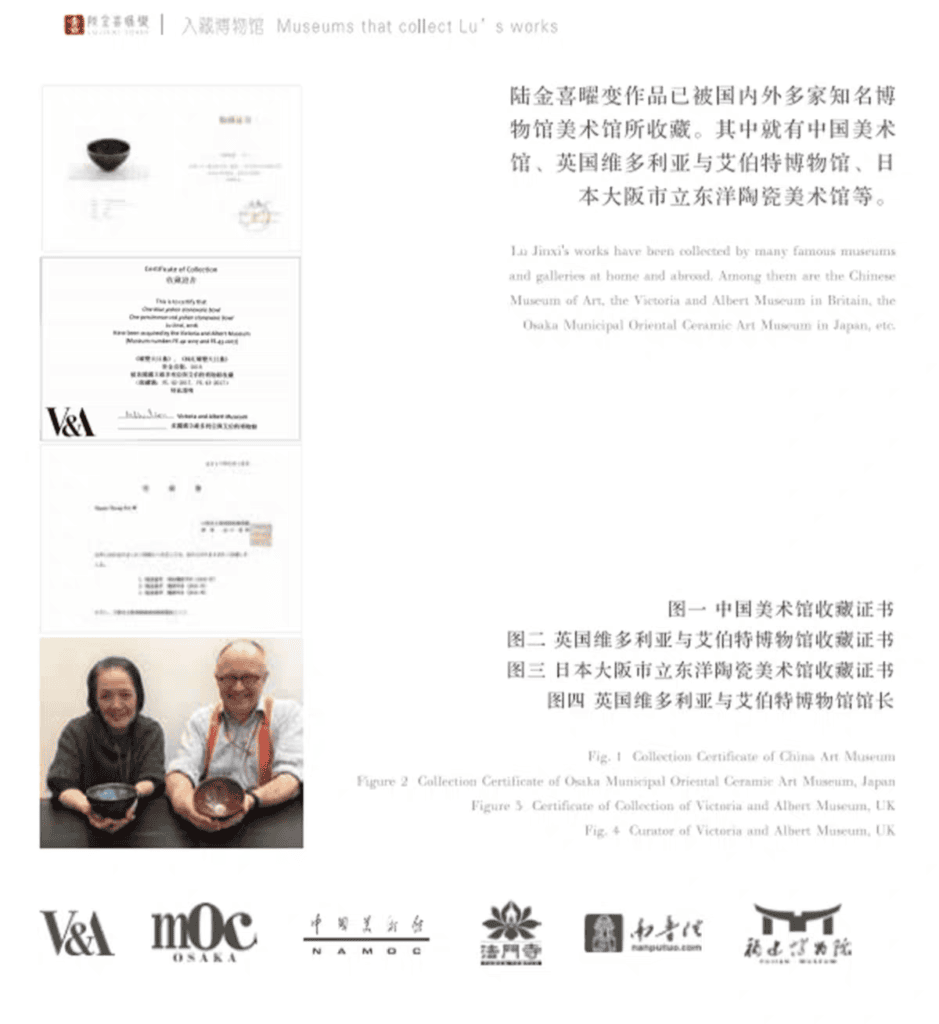
A 2018 report from Sina Collection states that the National Art Museum of China acquired Lu Jinxi’s Yaobian Shukou Cup (Huiweng) [曜变束口盏(晦翁)] in November 2017. [10]
Collector Notes
Wood-fired and dragon-kiln fired are not interchangeable terms.
柴烧 identifies wood firing broadly. 龙窑 specifically identifies a
dragon kiln. Lu Jinxi has documented wood-fired Jian ware, while his
published Yaobian patents do not identify the kiln used as a dragon kiln.
The patented Yaobian process and Lu’s dedicated wood-fired series are distinct documentation trails.
His patents describe tightly controlled temperature, cooling, reduction
and wood-addition stages. Separately, Lu has produced works and series
specifically identified as 柴烧.
Series identification can matter.
Lu Jinxi has produced numerous glaze families, vessel shapes and experimental
firings. Dated marks, original certificates, work numbers and named series
can help establish which process or release an individual cup belongs to.
Small cups are part of Lu Jinxi’s documented output.
His body of work includes smaller drinking-cup forms in addition to
conventional Jian bowl shapes, including small wood-fired collector cups.
References
-
Fujian Provincial People’s Government.
Notice publishing the list of Fujian recipients of the 2020
State Council Special Government Allowance. Lu Jinxi is listed
among the high-skilled recipients and affiliated with the
Nanping Yaobian Ceramic Research Institute.
View source -
Fujian Provincial Department of Industry and Information Technology.
Confirmation of the arts and crafts professional-title evaluation results.
Lu Jinxi is listed as a 正高级工艺美术师, with qualification confirmed
in October 2022.
View source - Fujian Provincial People’s Government. 2024 government reporting identifying the 陆金喜国家级技能大师工作室, Lu Jinxi National-level Skills Master Studio.
-
Chinese Invention Patent CN108585771B.
一种曜变建盏及制备工艺
A Yaobian Jian Ware and Preparation Process.
Inventor: Lu Jinxi. Assignee: Nanping Yaobian Ceramic Research Institute. Filed May 9, 2018. Granted August 25, 2020.
View patent -
Chinese Invention Patent CN110981420B.
曜变建盏烧制工艺
Yaobian Jian Ware Firing Process.
Inventor: Lu Jinxi. Filed December 10, 2019. Granted June 17, 2022. Documents high-temperature firing, controlled kiln atmosphere, oxygen-window adjustments and staged additions of 油柴.
View patent -
Feiyiw / Intangible Heritage Network.
Published biographical profile of Lu Jinxi, used for his reported
early training and career chronology.
View source -
2020 Tianfu Yicai 天赋异彩 release material.
Description of Lu Jinxi’s wood-fired series, including pine-wood
firing, temperatures above 1300°C, vessel forms and changing
multicolor glaze effects.
View source -
Guanfu Jianzhan.
Collector reference documenting Lu Jinxi works with 晦翁 or 放翁
base marks together with the separate 喜 side mark.
View source - Zisha.com specialist catalog. Lu Jinxi catalog material documenting Huiweng/Fangweng base marks and the separate Xi mark on attributed works.
-
Sina Collection.
2018 report stating that the National Art Museum of China acquired
Lu Jinxi’s 曜变束口盏(晦翁) in 2017.
View source