
Que Meijiao
阙梅娇Black Peony 黑牡丹 · rabbit-hair · silver oil-drop · Jianyang, Fujian
Biography
Que Meijiao (阙梅娇), born in 1964, is a Jian Zhan artist from Jianyang, Fujian and director of the Jianyang Jianyao Ceramics Research Institute. Her connection with ceramics began in childhood. Her father worked at the Jianyang Chizhong Porcelain Factory, and she grew up surrounded by clay, ceramic production and kiln culture.
That early familiarity developed into a long career devoted to Jian ware. Que became especially respected for her work with rabbit-hair and oil-drop glazes. Her rabbit-hair pieces are characterized by clear, elongated markings across the dark glaze, while her oil-drop work is particularly associated with finely developed silver oil-drop crystallization.
Before 2004, her studio received visits from then-provincial leaders Xi Jinping and He Guoqiang. As her reputation developed, Que became vice president of the Jianyang Jian Kiln Association and one of the recognized representative inheritors of the Jian kiln / Jian Zhan firing tradition.
Black Peony · 黑牡丹
Among Que Meijiao’s most distinctive contemporary works is Black Peony (黑牡丹). The glaze develops flower-like silver and silver-blue crystalline markings across a deep black Jian glaze, giving the impression of blossoms opening from within the surface.
The pattern can vary considerably from piece to piece. Some examples develop compact flower-like clusters, while others form broader petals or scattered crystalline blooms. The visual effect comes from the firing and crystallization of the glaze rather than painted decoration.
Black Peony has become one of the strongest visual signatures associated with Que Meijiao’s work.
Rabbit-Hair & Oil-Drop Work
Que’s rabbit-hair Jian Zhan is described for its clearly defined streaking, with narrow markings extending through the darker glaze in a pattern traditionally compared with the fine fur of a rabbit.
Her oil-drop work is another major part of her practice. She is particularly associated with silver oil-drop Jian Zhan, where rounded metallic crystals develop against a black or dark glaze ground. These pieces became especially popular among collectors and tea enthusiasts.
Other documented works include partridge-spot and wood-fired Jian Zhan, as well as pieces in warmer persimmon-red and kiln-transformed glaze families.
Institute & Jian Ware Research
Que Meijiao directs the Fujian Jianyang Jianyao Ceramics Research Institute, an organization associated with the study, production and continuation of Jian ware.
In 2011, the institute was designated a Cultural Industry Demonstration Base by the Jianyang municipal government. Through the institute and her own studio practice, Que has continued to work with traditional Jian ware materials, hand-forming methods and glaze firing while also developing contemporary forms and surface effects.
Recognition & Awards
Que Meijiao’s career includes recognition in both Jian ware heritage and contemporary arts and crafts.
Teaching & Transmission
Que Meijiao has also contributed to the continuation of Jian ware through teaching and transmission. Qian Ding 钱定 identifies Que Meijiao as his principal teacher in Jian Zhan firing.
Her career therefore spans both her own ceramic production and the transmission of Jian ware knowledge to later makers working in Jianyang.
Marks & Identification
When identifying a Que Meijiao piece, the maker mark should be considered together with the complete vessel, clay body, glaze, certificate, packaging and provenance. Black Peony and silver oil-drop surfaces are strongly associated with her work, but glaze appearance alone should not be treated as definitive authentication.
Artist Media & Documentation
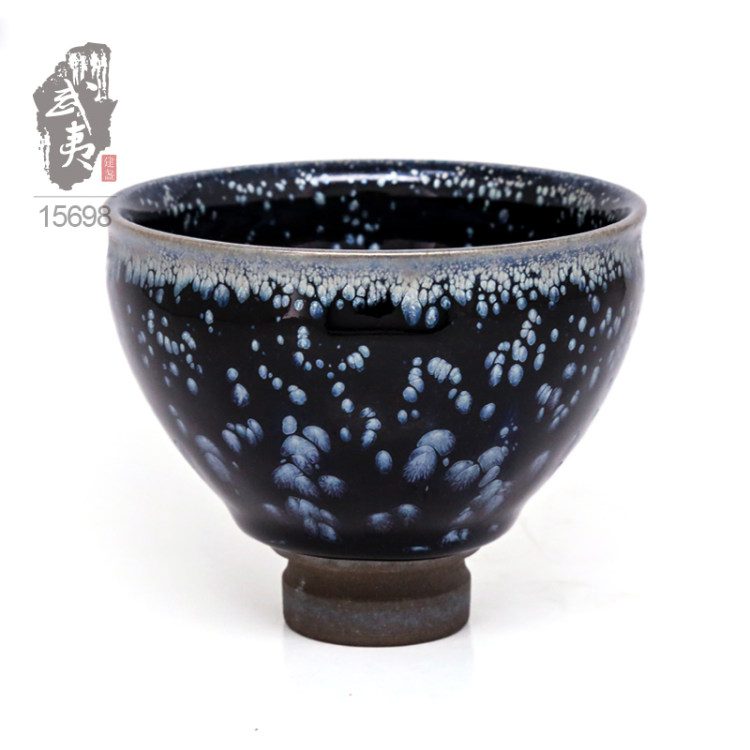
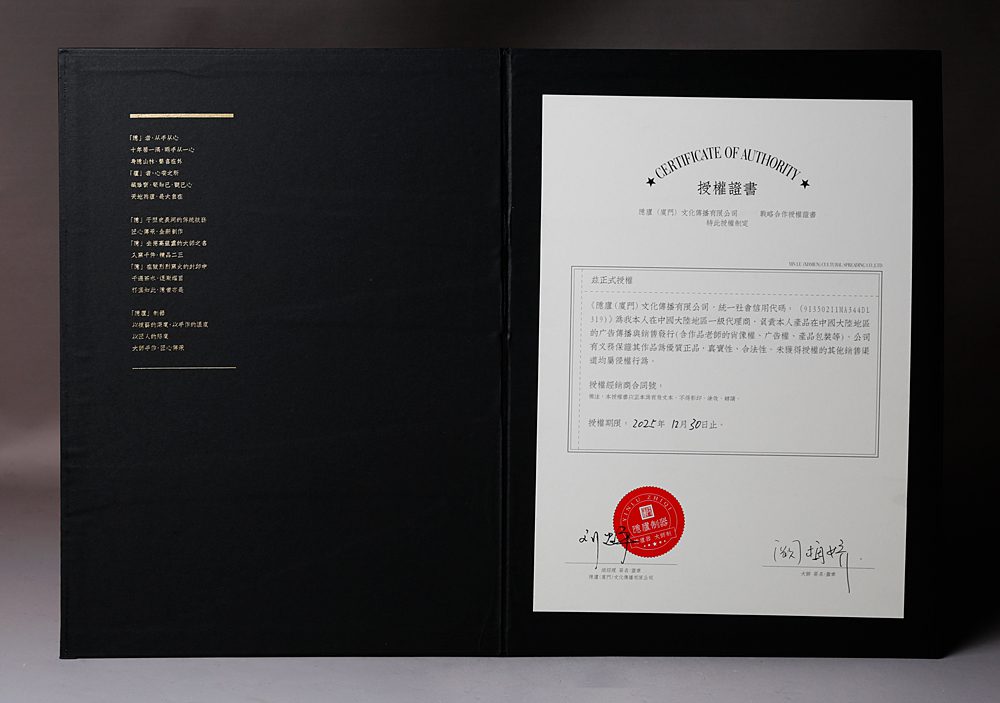
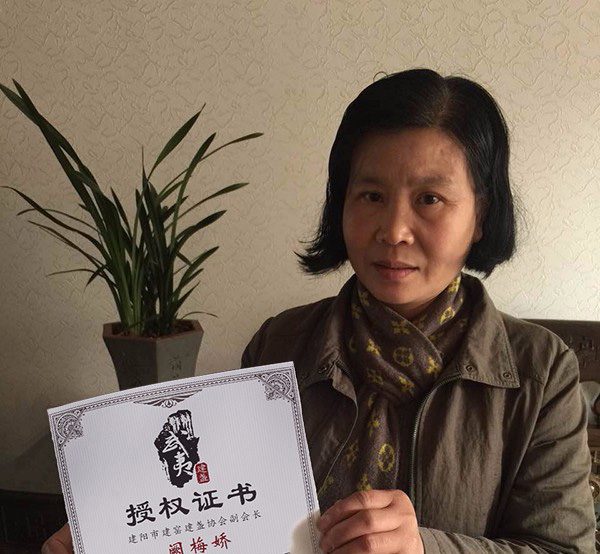
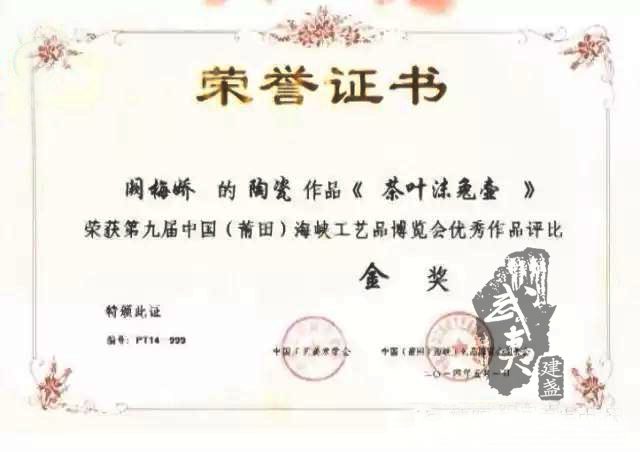
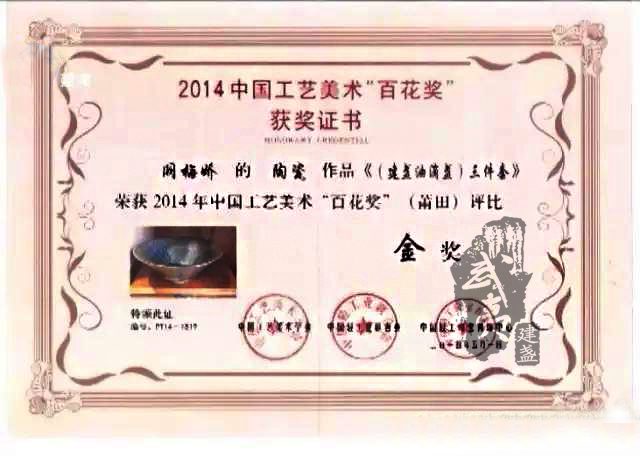
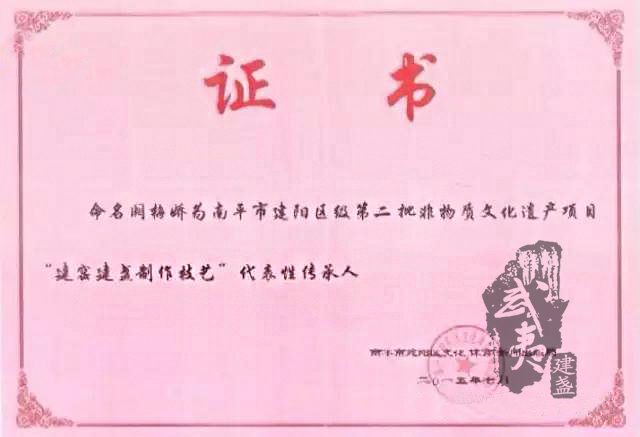
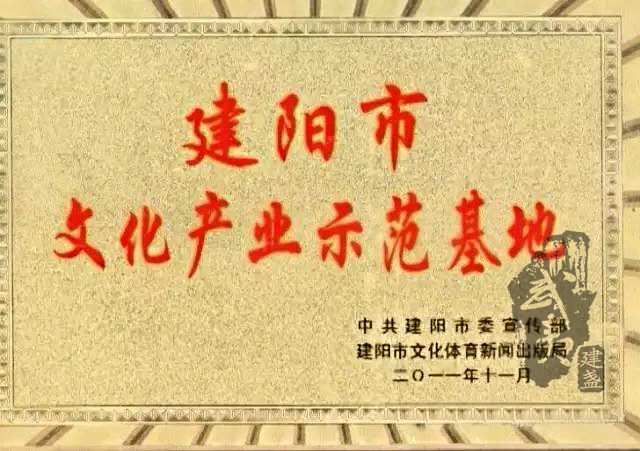
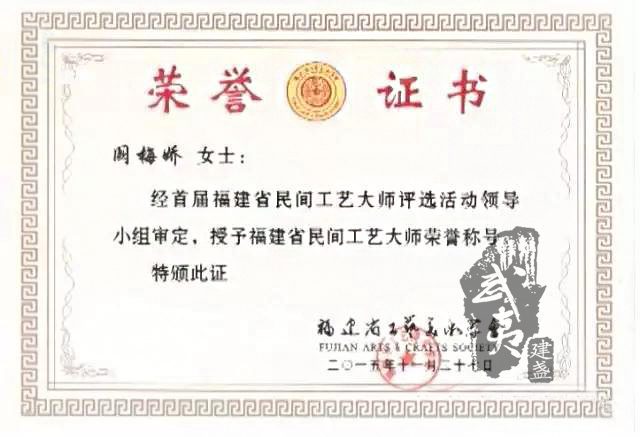
Photo Credit
The artist and work photographs above were originally published by Yinlu / Wuyi Jianzhan (隐庐器) in documentation and listings for Que Meijiao and her work. They are reproduced here with source attribution for artist documentation.
Yinlu / Wuyi Jianzhan · Que Meijiao Original published source for the Que Meijiao artist and work photographs used above. View photo source →