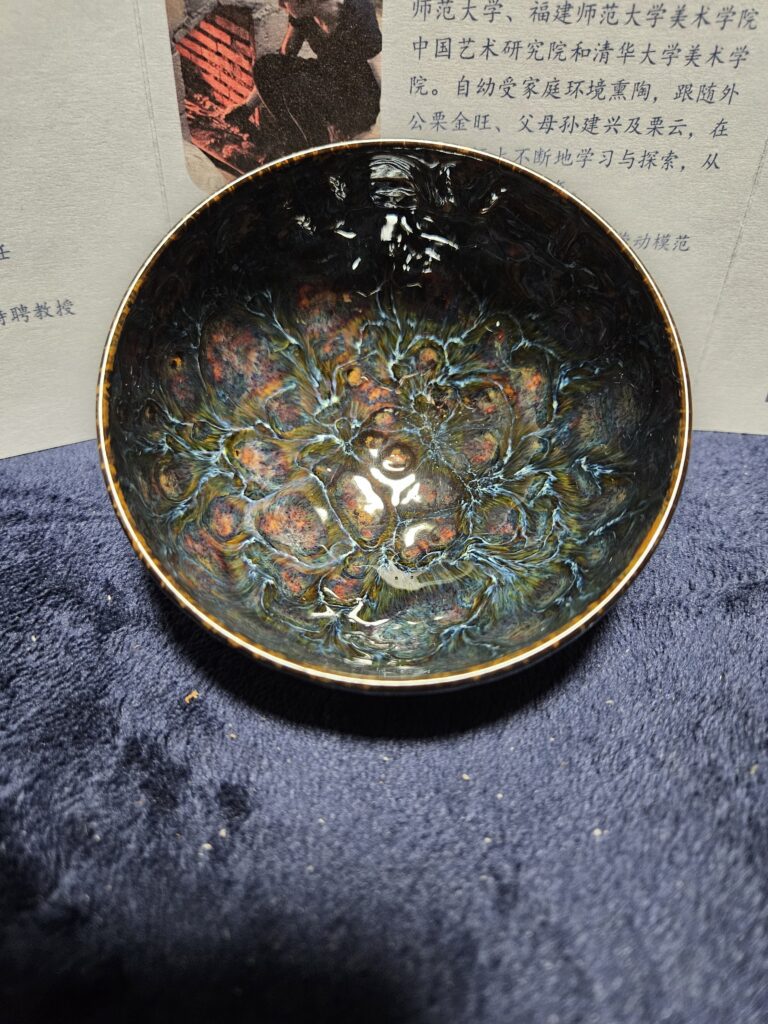

Sun Li
孙莉Fujian provincial representative inheritor · Jian Zhan artist · Sun Jianxing lineage
Biography
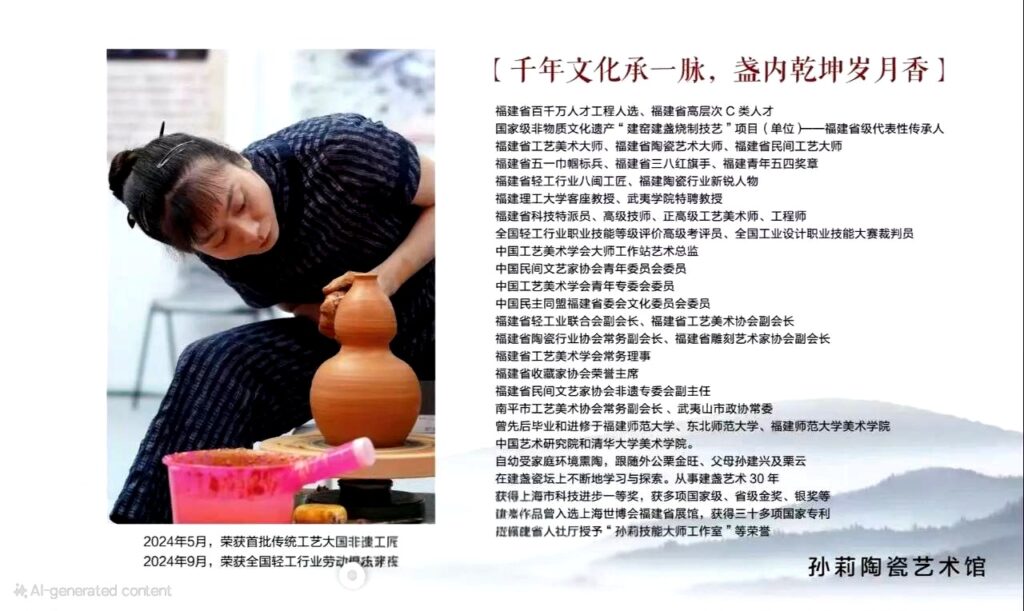
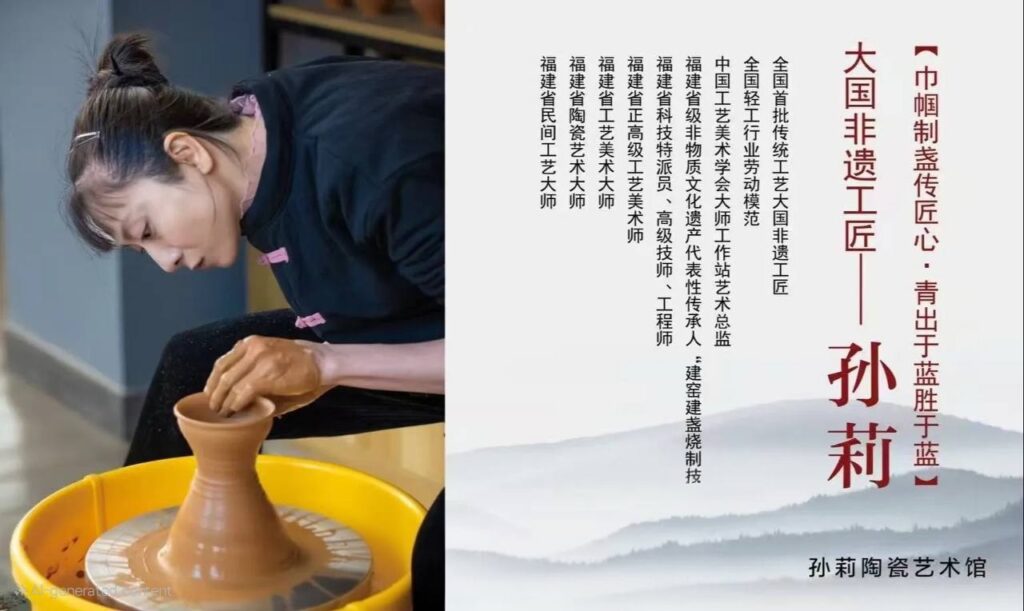
Sun Li (孙莉), born in 1982, is a Jian Zhan artist and Fujian provincial representative inheritor of the Jian kiln/Jian Zhan firing technique. She grew up in a ceramic family and trained within the lineage of her father Sun Jianxing (孙建兴), the national representative inheritor associated with the modern restoration of Jian ware. Her maternal grandfather Li Jinwang (栗金旺) and her mother Li Yun (栗云) also form part of that family ceramic background.
Education & Training
Sun studied and undertook advanced training at Fujian Normal University, the China National Academy of Arts and Tsinghua University Academy of Arts & Design. Her practice combines family-based workshop training with formal study in art and design.
Glazes & Artistic Practice
Her representative Jian Zhan work includes oil spot (油滴), hare’s fur (兔毫), rainbow-gold hare’s fur, rainbow oil spot, rainbow wood-leaf, gold-thread partridge spot and Yaobian. Later work moves beyond strictly traditional dark surfaces toward more individualized color and multi-technique glaze effects while retaining the iron-rich body and kiln-developed patterning of Jian ware.
Professional Recognition
Sun’s documented titles include Fujian provincial representative inheritor, Fujian Arts & Crafts Master, Fujian Ceramic Arts Master and Fujian Folk Arts Master. She has also been recognized with Fujian labor, youth and skilled-craft honors and has led a provincially recognized Sun Li Skills Master Studio.
Collections & Awards
Published professional profiles record Sun Li’s work in the collections of the National Art Museum of China, China Arts & Crafts Museum, Fujian arts institutions, the Fujian Intangible Cultural Heritage Protection Center and Nanping Museum. Her work has received national and provincial competition awards and appeared in the Fujian Pavilion at the Shanghai World Expo.
Marks & Identification
Commercial and collector records document dedicated Sun Li base marks on her work. Identification is strongest when the base mark is considered together with vessel form, glaze, certificate, packaging and provenance.
Artist Media & Documentation

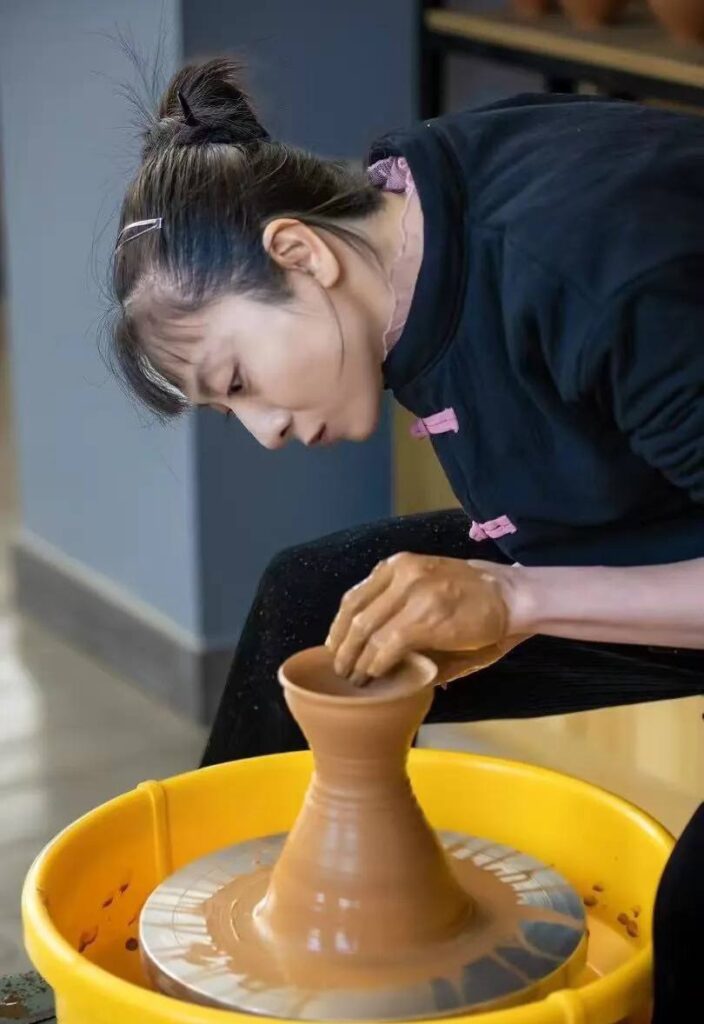
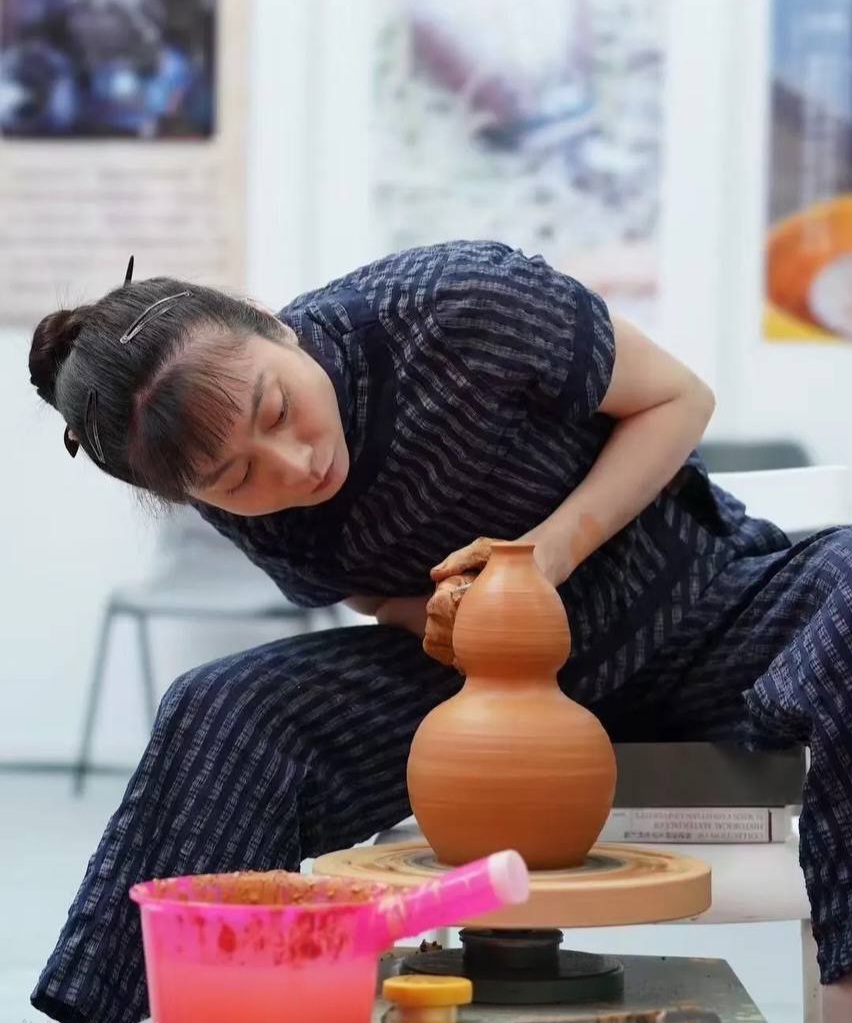
References
China Intangible Cultural Heritage Network · Sun JianxingOfficial national record confirming Sun Li as Sun Jianxing’s daughter and a Fujian provincial inheritor and arts-and-crafts master.View reference →China Arts & Crafts Society · Sun LiProfessional profile documenting family lineage, training, glaze families, career and collections.View reference →Southeast Net Art Channel · Sun LiDetailed artist biography for education, family lineage, professional titles and institutional collections.View reference →Intangible Heritage Network · Sun LiBiographical profile supporting her 1982 birth year, provincial inheritor status, representative glazes and awards.View reference →Works & Tagged Posts