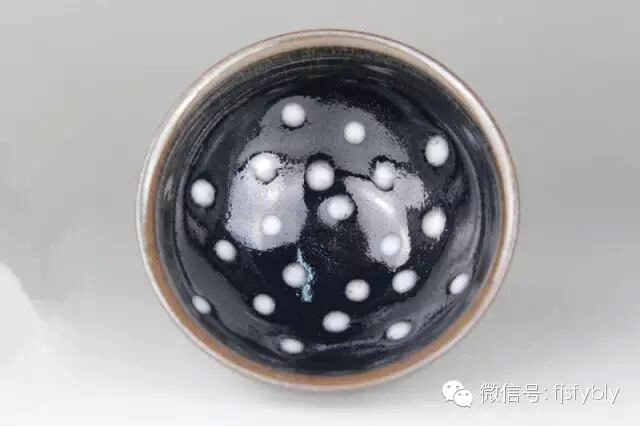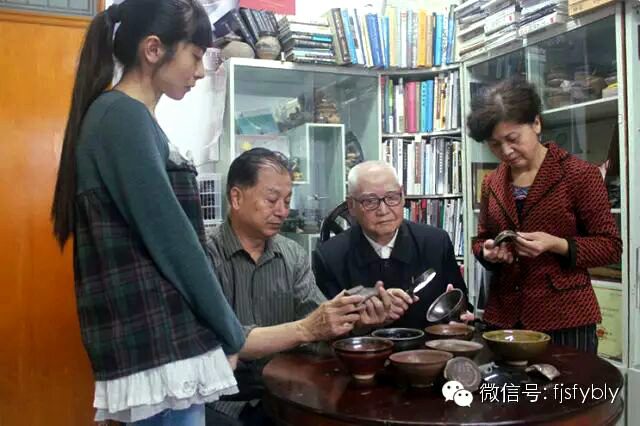
Li Jinwang
栗金旺Pioneer of the modern Jian Zhan revival · Fujian provincial ICH representative inheritor
Biography
The late Li Jinwang (栗金旺), born in September 1926 in Qin County, Shanxi, was one of the foundational figures in the twentieth-century recovery of Jian kiln/Jian Zhan firing techniques. Around 1950, while working in Shuiji, Jianyang, he became deeply interested in the remains of the historic Jian kilns and began studying kiln sites, excavated fragments, clay bodies, glazes and firing conditions.
His role was not limited to producing tea bowls. Li approached Jian Zhan as a research problem requiring archaeology, ceramic chemistry, repeated experimental firing and organized technical work. That combination of historical study and modern ceramic science helped move Jian Zhan from a largely archaeological subject back into living production.
The Modern Jian Zhan Revival
From 1979 onward, Li Jinwang worked with his daughter Li Yun (栗云), son-in-law Sun Jianxing (孙建兴) and later granddaughter Sun Li (孙莉). The group studied thousands of Jian ware fragments, tested thousands of body-and-glaze formulas and carried out repeated firings in the effort to restore effects such as hare’s fur, oil drop and yaobian.
In 1991, Li established the Nanping Xingchen Tenmoku Ceramics Research Institute (南平市星辰天目陶瓷研究所). There he worked with Sun Jianxing and other researchers on the recovery and further development of Jian-style glazes.
Glaze & Firing Research
Research associated with Li Jinwang and the Xingchen institute included 兔毫 (hare’s fur), 油滴 (oil drop), 曜变 (yaobian), 虹彩 (iridescent), 鹧鸪斑 (partridge feather), 木叶 (leaf pattern), 铁锈斑 (iron-rust spot) and 柿天目 (persimmon Tenmoku), among other effects.
Silver hare’s fur, oil spot, leaf-pattern and iridescent Tenmoku products from the institute were subjected to scientific analysis and evaluation by the Shanghai Institute of Ceramics of the Chinese Academy of Sciences, reflecting the unusually technical character of this revival work.
Museum Collections
Several Xingchen research pieces entered the collection of the National Museum of China, including 仿宋建窑兔毫天目盏, 仿宋建窑油滴天目盏 and the 油滴天目龙虎茶具 tea set.
Research & Recognition
Li participated in international conferences on ancient ceramic science and technology beginning in the 1990s and contributed to published research on Jian ware. His academic work included studies of rare excavated oil-spot fragments, iridescent Tenmoku and large imperial Jian bowls.
In 1995, research on reproduction Song-style Tenmoku Jian ware received provincial and municipal science-and-technology progress awards. Yaobian research was established as a Fujian provincial science-and-technology project in 1997, and a related ceramic technology innovation program received recognition at Fujian’s 1999 science-and-education achievements exhibition.
Li Jinwang and Sun Jianxing were recognized in 2009 as Fujian provincial representative inheritors of the Jian kiln/Jian Zhan firing tradition.
Family & Lineage
Li Jinwang’s influence continued through a three-generation family line. His daughter Li Yun (栗云) learned ceramic production from him and worked alongside her husband Sun Jianxing (孙建兴) in the restoration of Song-style Jian ware. Their daughter Sun Li (孙莉) carried the technical lineage into a third generation and became a major contemporary inheritor in her own right.
Legacy
Li Jinwang’s importance lies in the union of historical research, experimental ceramics, institution building and transmission. Through the Xingchen institute and his family, kiln archaeology and laboratory-style ceramic study were translated into a working craft tradition that became part of the broader modern revival of Jian Zhan.
Name & Identification
His surname is 栗. Objects connected with his research era may be identified through institute marks, certificates, inscriptions and documented provenance rather than through a single standardized retail maker seal.
Artist Media & Documentation