
Dragon Kilns 龙窑
The long hillside kilns that helped shape the history of Jian ware, and the wood-firing tradition still explored by ceramic artists today.
How a Dragon Kiln Works Jian Kiln History Understanding Wood FiringWhat Is a Dragon Kiln?
A dragon kiln, or 龙窑 (lóngyáo), is a long ceramic kiln traditionally built up the slope of a hill. Viewed from a distance, its long climbing form resembles a dragon stretched along the mountainside, which gave the kiln its name.
Rather than being a small enclosed furnace, a traditional dragon kiln may extend a considerable distance uphill. Fire begins at the lower end, while heat and combustion gases travel through the kiln toward the upper end.
The sloping landscape becomes part of the kiln’s design. The long chamber allows many ceramic pieces to be fired during the same firing while different areas of the kiln may experience different temperatures, flame movement and atmospheric conditions.
How a Dragon Kiln Works
zone
zone
zone
zone
Fire & Heat
Wood is continually burned to raise and maintain the temperature needed to mature the clay and glaze.
Draft & Atmosphere
Airflow, combustion and the relationship between fuel and oxygen influence the atmosphere developing inside the kiln.
Kiln Position
A vessel’s location inside the kiln can affect the conditions it experiences during firing.
Wood
Fuel is not merely a source of heat. The way wood burns, when it is added and the firing rhythm all become part of managing the kiln.
The Dragon Kilns of Jianyang
Dragon kilns are particularly important to the story of Jian ware (建盏).
The historic Jian Kiln complex is located around Shuiji Town in Jianyang District, Nanping, Fujian Province. The archaeological landscape contains kiln sites distributed across the surrounding hillsides, where Jian ceramics were produced on a remarkable scale.
According to the Fujian Provincial cultural heritage authorities, archaeological work at the Jian Kiln site has documented exceptionally long kiln structures.
The Jian Kiln site produced predominantly black-glazed bowls and became famous for effects associated with Jian ware, including Hare’s Fur and other crystalline and kiln-transformed surfaces.
Archaeological evidence places the development of the Jian Kiln tradition across several centuries, with production reaching its celebrated height during the Song period.
A Short Jian Kiln Timeline
Jian Kiln develops as an important ceramic production center in northern Fujian.
Black-glazed Jian tea bowls flourish alongside the popularity of whisked tea and tea competition. Jian ware becomes highly valued inside and outside China.
Large-scale historical Jian Kiln production declines as tea culture, ceramic markets and production traditions change.
Archaeological investigation and experimental ceramic research help restore knowledge of Jian ware production after centuries of decline.
Jianyang supports a large contemporary Jian ware community. Artists work with electric, gas and wood-fired kilns, while some continue to explore traditional dragon-kiln firing.
What Does “Wood-Fired” Actually Mean?
At its simplest, wood-fired means wood is used as the primary fuel during the ceramic firing.
The phrase tells us how the kiln was heated, but it does not by itself describe one particular glaze appearance.
A wood-fired Jian piece may be dark and restrained, brightly iridescent, strongly transformed by the kiln, or visually similar to pieces produced by other firing methods. The final appearance depends on the clay, glaze, firing schedule, atmosphere, position and conditions experienced by the individual vessel.
Wood Firing Is Not Automatically Natural Ash Firing
This distinction can be confusing when buying modern Jian ware.
Wood combustion naturally produces ash, but that does not mean every vessel inside a wood-fired kiln receives a visible layer of ash. Historically, ceramic firing containers known as saggers (匣钵) were an important part of Jian Kiln production. Large quantities of sagger fragments remain at the archaeological site.
A sagger can separate a vessel from some of the direct flame, ash and kiln debris around it. Modern artists may also choose different loading methods depending on the result they are trying to achieve.
When a modern piece is specifically described as natural ash fired, the artist is usually drawing attention to the interaction between the ceramic surface and ash or flame during firing.
Why Kiln Position Matters
One of the most fascinating characteristics of traditional kiln firing is that the entire chamber is not necessarily one perfectly uniform environment.
Chinese Jian ware specialists have noted that even when the same raw materials are used, differences in season, weather, kiln, kiln position and firing conditions can contribute to different results.
Temperature
Different areas may experience different heating histories.
Atmosphere
Oxygen availability and combustion conditions may change during different stages of the firing.
Flame Path
Flames and hot gases move through the chamber rather than behaving identically around every object.
Placement
Position, neighboring objects and loading decisions become part of the firing environment.
Zhu Qiumin 朱秋敏
Contemporary Jian ware artist Zhu Qiumin (朱秋敏) , also known among collectors as Master Z, is especially associated with dragon-kiln wood firing.
His work provides a useful modern example of how an artist can deliberately prepare the vessel and manage the firing while still allowing the kiln to influence the final surface.
“Every step in his meticulous workflow is executed with precision and passion, from selecting and crushing raw materials, washing and aging the clay, to shaping, trimming, bisque firing, glazing, kiln loading, and the final wood-fired firing. He even tailors the firing process by adjusting the type and moisture content of the wood to achieve the ideal finish.”
Zhu Qiumin firing-process description previously recorded by Fifty Shades of Clay. View the Zhu Qiumin artist archive →
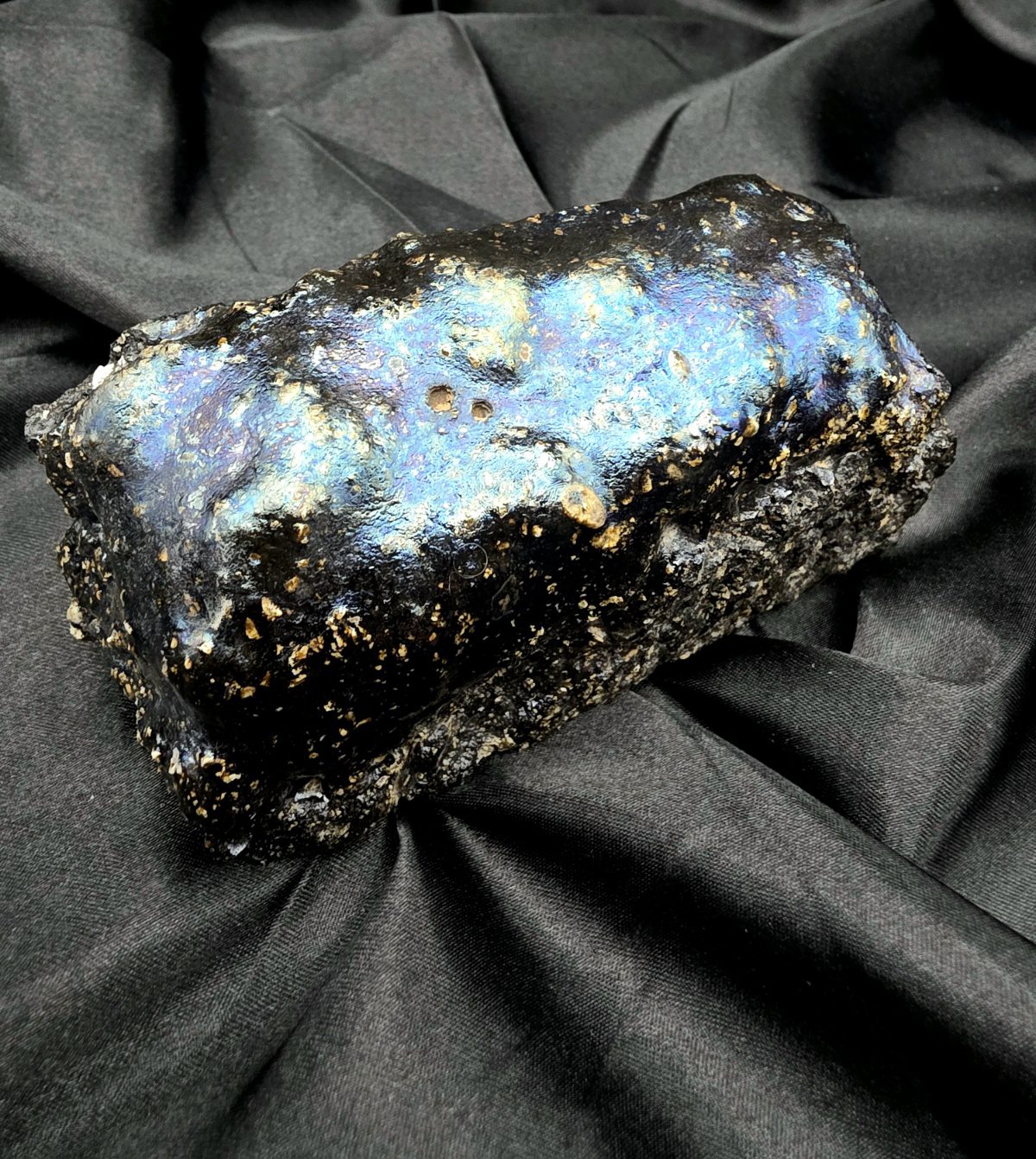
Zhu Qiumin Kiln Door Brick
The collection also preserves a piece from the firing environment itself: the interior edge of a kiln door brick associated with Zhu Qiumin’s kiln.
Objects like this help connect finished Jian ware with the physical kiln in which the ceramics were fired.
Fifty Shades of Clay collection archive.
Dragon Kiln, Electric Kiln & Gas Kiln
Contemporary Jian ware is produced using several types of kilns. The firing method is useful information for collectors, but it should not automatically be treated as a ranking of quality.
| Method | General Character |
|---|---|
| Dragon-kiln wood firing | Fueled with wood in a long climbing kiln. Requires active firing management and can produce significant variation between kiln positions. |
| Other wood-fired kilns | Wood is the primary fuel, but the kiln does not necessarily have the long hillside structure of a dragon kiln. |
| Gas kiln | Gas provides controllable fuel and can be used to create different firing atmospheres. |
| Electric kiln | Electricity provides highly controllable heating without combustion from fuel inside the kiln. |
Why Dragon-Kiln Firing Still Matters
Dragon kilns connect contemporary ceramics with a firing technology that has existed in southern China for centuries.
For Jian ware collectors, their importance is especially tangible. Archaeological dragon-kiln remains still survive at the Jian Kiln site in Jianyang, together with ceramic fragments, kiln furniture, saggers and firing waste left by historical production.
Modern dragon-kiln firing is not simply a recreation of a Song Dynasty production line. Contemporary artists work in a different world, using their own forms, glazes, loading choices and goals.
What continues is the relationship between clay, glaze, fire, atmosphere, position and human judgment. The artist makes countless decisions, but the interior of a wood-fired kiln still retains an element that cannot be reduced to a button or a recipe.
Useful Terms
龙窑 · Lóngyáo
Dragon kiln. A long climbing kiln traditionally constructed on a slope.
柴烧 · Cháishāo
Wood firing. Ceramics fired using wood as fuel.
落灰烧
Natural ash firing, referring to firing in which ash interaction is intentionally part of the resulting ceramic surface.
匣钵 · Xiábō
Sagger. A ceramic firing container used to hold or protect wares during kiln firing.
窑变 · Yáobiàn
Kiln transformation or kiln change, describing effects that develop through conditions during firing.
建窑 · Jiànyáo
Jian Kiln, the historic ceramic production complex associated with Jian ware in present-day Jianyang, Fujian.
References & Further Reading
Preference is given to cultural heritage, archaeological and government sources for historical information.
- Fujian Provincial Department of Culture and Tourism / Fujian Provincial Cultural Heritage Bureau Jian Kiln archaeological site, kiln dimensions, location, chronology and excavated ceramic production.
- China Intangible Cultural Heritage Digital Museum: History of Jian Kiln and Jian Ware Background on Jian ware materials, historical production, kiln variation, the Jian Kiln site and the 135.6-meter dragon kiln.
- China Intangible Cultural Heritage Digital Museum: Ceramic Firing Traditions Overview of Jian ware production procedures and ceramic firing traditions.
- Fujian Department of Culture and Tourism: Jian Ware Heritage Study Program Contemporary documentation of Jianyang dragon-kiln remains, traditional wood-fired dragon kilns, ceramic fragments and historic saggers.
- China Intangible Cultural Heritage Digital Museum: Traditional Wood-Fired Kilns Discussion of wood-firing practice, kiln loading and the differences between traditional wood firing and modern controlled firing methods.
- Fifty Shades of Clay: Zhu Qiumin 朱秋敏 Artist Archive Contemporary dragon-kiln artist profile, collection examples and archived firing material.
Research Note
This page is intended as an educational reference for Jian ware collectors. Historical claims are linked to archaeological, cultural heritage or government sources whenever possible. Contemporary firing terminology may vary between artists and studios.
Research reviewed August 2026.